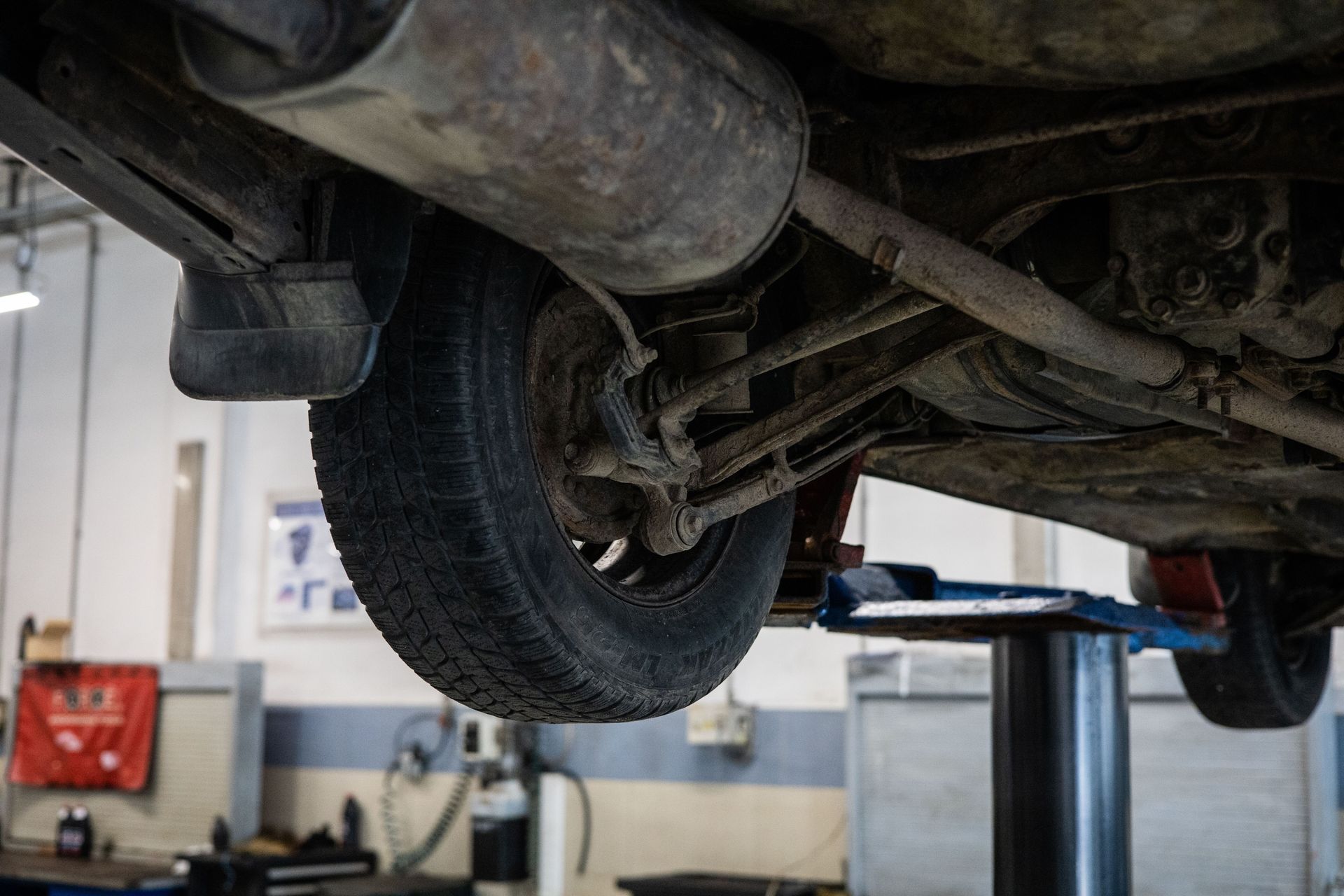
Conducir en Boston: por qué las carreteras de la ciudad desgastan los neumáticos más rápido de lo que imaginas

Conducir en Boston presenta un conjunto único de desafíos que muchos automovilistas subestiman. Desde superficies de carretera irregulares hasta el tráfico constante de arranque y parada, las condiciones urbanas ejercen una presión continua sobre los neumáticos de un vehículo. Aunque el desgaste de los neumáticos es inevitable con el tiempo, la conducción en ciudad puede acelerar este proceso de formas que no siempre son inmediatamente evidentes.


Comprender cómo las carreteras de Boston afectan el rendimiento de los neumáticos puede ayudar a los conductores a adoptar un enfoque más proactivo en el mantenimiento y evitar problemas prevenibles.

A yellow city bus travels down a snowy urban street lined with tall buildings.

Las superficies irregulares generan un estrés constante
Boston es conocida por su infraestructura antigua, y muchas carreteras reflejan años de desgaste, reparaciones y daños estacionales. Los conductores se encuentran con frecuencia con:

  • Baches y pavimento reparado
  • Superficies de carretera irregulares
  • Zonas de construcción y arreglos temporales


Cada una de estas condiciones genera impactos y vibraciones que los neumáticos deben absorber. Cuando un neumático golpea un bache o una superficie irregular, la fuerza puede afectar no solo la banda de rodadura, sino también la estructura interna del neumático.


La exposición repetida a estas condiciones puede contribuir a:

  • Desgaste acelerado de la banda de rodadura
  • Daños en los flancos del neumático
  • Reducción de la vida útil general del neumático


Incluso los impactos menores, cuando ocurren con frecuencia, pueden tener un efecto acumulativo.

A sunny street scene in Boston's North End, featuring red brick buildings, a prominent Bella Vista sign, and parked cars.

El tráfico de arranque y parada aumenta la fricción
La conducción en ciudad rara vez permite mantener una velocidad constante. En Boston, los patrones de tráfico suelen requerir paradas, arranques y giros frecuentes. Este tipo de conducción aumenta la fricción entre el neumático y la carretera.


Cada vez que un vehículo acelera o frena, los neumáticos experimentan un estrés adicional. Con el tiempo, esto puede provocar:

  • Un desgaste más rápido de la banda de rodadura
  • Mayor acumulación de calor
  • Mayor esfuerzo sobre la superficie del neumático


En comparación con la conducción en autopista, donde las velocidades son más constantes, la conducción urbana impone exigencias más frecuentes a los neumáticos en distancias más cortas.

A bronze equestrian statue of George Washington stands on a stone pedestal in the Boston Public Garden.

Los giros cerrados y el estacionamiento aumentan el desgaste
Circular por las calles de Boston a menudo implica giros cerrados, calles estrechas y maniobras de estacionamiento frecuentes. El estacionamiento en paralelo, en particular, puede ejercer una presión adicional sobre los neumáticos.


Factores comunes incluyen:

  • Girar el volante mientras el vehículo está detenido
  • El contacto con los bordillos al estacionar
  • Giros bruscos repetidos en espacios reducidos


Estas acciones pueden desgastar áreas específicas del neumático de manera desigual, lo que reduce su rendimiento con el tiempo.

A panoramic view of the Boston skyline across the Charles River, featuring sailboats on the water under a clear blue sky.

Las condiciones estacionales agravan el problema
Los cambios de estación en Boston también contribuyen al desgaste de los neumáticos. El invierno puede traer nieve, hielo y tratamientos de carretera, mientras que la primavera suele revelar nuevos baches y daños en la superficie causados por los ciclos de congelación y deshielo.


Estos factores estacionales pueden:

  • Aumentar la probabilidad de riesgos en la carretera
  • Afectar la tracción y el rendimiento de los neumáticos
  • Acelerar el desgaste debido a las fluctuaciones de temperatura


Es posible que los conductores no noten estos efectos de inmediato, pero pueden influir en la condición de los neumáticos con el tiempo.

A brilliant white firework burst illuminates the Boston city skyline over the water at dusk.

El desgaste de los neumáticos no siempre es evidente
Uno de los desafíos del desgaste urbano de los neumáticos es que a menudo se desarrolla de forma gradual. Los neumáticos pueden parecer funcionales mientras presentan problemas subyacentes, como desgaste irregular o daños internos.


Sin inspecciones regulares, los conductores pueden pasar por alto señales tempranas de advertencia, como:

  • Vibraciones sutiles al conducir
  • Ligeros cambios en la maniobrabilidad
  • Patrones de desgaste irregulares


Detectar estos problemas a tiempo puede ayudar a prevenir complicaciones más serias.

A statue of a rider on horseback in a snowy park, with a city skyline visible under a golden sunrise sky.

La importancia del mantenimiento regular
Dadas las exigencias de la conducción en ciudad, el mantenimiento regular de los neumáticos se vuelve aún más importante. Las revisiones periódicas pueden ayudar a garantizar que los neumáticos se mantengan en buen estado a pesar de las condiciones difíciles de la carretera.


Las prácticas clave de mantenimiento incluyen:

  • Controlar la presión de los neumáticos
  • Programar la rotación de los neumáticos
  • Revisar si hay daños visibles
  • Asegurar un balanceo adecuado


Estas medidas pueden ayudar a prolongar la vida útil de los neumáticos y mantener un rendimiento constante.

A red brick building on a corner in a historic neighborhood, featuring cobblestone paths, street lamps, and a parked car.

Un enfoque más inteligente para la conducción en ciudad
Conducir en Boston impone exigencias particulares a su vehículo, especialmente a sus neumáticos. Aunque estas condiciones no se pueden evitar, comprender su impacto puede ayudarle a responder de manera más efectiva.


Raymond’s Tire Shop ha atendido a los conductores de Boston durante más de 40 años, ofreciendo soluciones prácticas adaptadas a condiciones reales de conducción. Ya sea que enfrente desgaste irregular, daños por baches o necesidades de mantenimiento rutinario, el equipo de Raymond’s Tire Shop puede ayudarle a mantener su vehículo funcionando de manera confiable. Comuníquese con Raymond’s Tire Shop hoy mismo para asegurarse de que sus neumáticos estén listos para los desafíos de la conducción en ciudad.


A narrow city street lined with tall buildings leads toward an old brick building at the end, under a hazy sky.
A brick sidewalk lined with autumn trees and a brick building displaying an American flag on a sunny day.
A historic brick corner building and cobblestone street in Boston, with steam rising near a dark iron pub sign.
Old State House in Boston, a historic brick building with a clock tower, surrounded by modern skyscrapers.
A cobblestone street slopes between historic brick buildings with dark shutters, illuminated by glowing streetlamps.
A sunset illuminates a city skyline across a calm body of water, viewed from a park with benches and a lamppost.
The Leonard P. Zakim Bunker Hill Memorial Bridge reflected in the Charles River under a blue sky with clouds.
The Prudential Tower rises above Fenway Park on a street lined with banners and buildings in Boston.
August 23, 2026
A pothole impact can feel like a quick jolt, but the forces involved can affect several parts of the tire and wheel assembly. The faster the vehicle is moving, the less time the tire has to absorb the impact. In some cases, the damage is immediately obvious. In others, problems may not become noticeable until later. Raymond’s Tire Shop helps drivers inspect tires, wheels, balancing, and alignment after hard road impacts. Understanding what can happen during a pothole strike can make it easier to recognize when a tire needs professional attention. The Tire Is Compressed Extremely Quickly When a tire drops into a pothole and strikes the far edge, the sidewall and tread can be compressed between the road and the wheel. Tires are designed to flex, but a severe impact can exceed what the internal structure can safely absorb.  The risk can be greater when tire pressure is too low because there is less air cushioning between the road surface and the wheel. However, even a properly inflated tire can be damaged by a deep pothole at sufficient speed.
August 16, 2026
Tires are one of the most important safety components on any vehicle because they are the only parts that maintain direct contact with the road. As tires wear, their ability to grip pavement, channel water, and respond predictably can gradually decline. The challenge is that unsafe tire conditions are not always obvious until performance has already been affected.  Raymond’s Tire Shop helps drivers evaluate tread wear, tire damage, pressure issues, alignment problems, and other conditions that can affect tire safety. Knowing what to look for can help you recognize when a tire needs professional attention or replacement.
August 7, 2026
Most drivers think of tires simply as the round rubber components that allow a vehicle to roll down the road. In reality, tires are sophisticated pieces of engineering that perform several essential functions every time a vehicle is in motion. They support the weight of the vehicle, transmit steering and braking forces, absorb road irregularities, and maintain traction in changing driving conditions. Every acceleration, turn, and stop depends on these four small contact patches where the tires meet the road.  Understanding the primary functions of a tire helps drivers appreciate why routine maintenance and timely replacement are so important. Raymond’s Tire Shop helps customers choose quality tires and maintain them properly so their vehicles continue to perform safely and efficiently throughout the life of the tire.
July 31, 2026
Understanding how your tires interact with wet pavement is one of the most important parts of safe driving. While most drivers know that rain can make roads slippery, fewer understand how hydroplaning occurs or why it can cause a vehicle to suddenly lose traction. Knowing what causes hydroplaning—and how proper tire maintenance can reduce the risk—can help you stay safer during wet weather.  At Raymond’s Tire Shop, we believe that informed drivers make safer decisions. Keeping your tires in excellent condition is one of the best ways to improve vehicle performance when road conditions are less than ideal.
July 23, 2026
Your tires are one of the hardest-working components of your vehicle. They provide traction, support your vehicle’s weight, absorb impacts from the road, and help you maintain control in a wide range of driving conditions. Because they experience constant wear, replacing tires is an expected part of vehicle ownership. However, proper maintenance can help maximize their lifespan, improve performance, and save you money over time. Many of the factors that affect tire longevity are within a driver’s control. By following a few simple maintenance practices, you can help your tires wear more evenly and perform as intended throughout their service life.
July 17, 2026
Your tires are the only part of your vehicle that remains in constant contact with the road, making them one of the most important components for safety, performance, and fuel efficiency. While many drivers remember to check their oil or schedule routine maintenance, tire pressure is often overlooked until a problem develops.  Maintaining proper tire inflation is one of the simplest and most effective ways to extend the life of your tires. It takes only a few minutes to check your tire pressure, yet this small maintenance task can help improve vehicle performance and protect your investment over the long term.