Por que o trânsito com paradas e arrancadas acelera o desgaste dos pneus

Muitos motoristas associam o desgaste dos pneus a longas viagens em rodovias, mas, na realidade, dirigir em condições de trânsito com paradas e arrancadas pode ter um impacto ainda maior na vida útil dos pneus. O tráfego urbano, as frenagens frequentes e as acelerações constantes exercem um tipo de estresse nos pneus que muitas vezes passa despercebido. Embora esse tipo de condução possa parecer menos exigente do que viajar em alta velocidade, ele cria condições que contribuem para um desgaste mais rápido e desigual.


Entender como o trânsito com paradas e arrancadas afeta os pneus pode ajudar os motoristas a adotar uma abordagem mais proativa em relação à manutenção e evitar substituições prematuras.

Green traffic light glowing on a city street with blurred buildings in the background

O impacto das acelerações repetidas

Toda vez que um veículo acelera após uma parada, os pneus são responsáveis por transferir a potência do motor para a estrada. Em condições de trânsito intenso, esse processo acontece repetidamente em um curto período de tempo.


Essa demanda constante exerce pressão sobre a superfície da banda de rodagem. À medida que os pneus aderem ao pavimento para mover o veículo para frente, a fricção aumenta, desgastando gradualmente a borracha. Com o tempo, essa ação repetitiva contribui para uma perda mais rápida da banda de rodagem em comparação com uma condução estável e constante.


O efeito costuma ser sutil no início, mas torna-se mais perceptível à medida que a quilometragem aumenta.

Two people sitting in a car, the driver focused ahead while the passenger appears to be learning to drive.

Frenagem e fricção com a superfície

A frenagem é outro fator importante no desgaste dos pneus durante a condução com paradas e arrancadas. Cada vez que os freios são acionados, os pneus sofrem fricção adicional enquanto trabalham para reduzir a velocidade do veículo.


No trânsito intenso, onde as frenagens ocorrem com frequência, essa fricção se acumula. O contato repetido entre os pneus e a superfície da estrada acelera o desgaste, especialmente nos pneus dianteiros, que normalmente suportam uma maior parte da força de frenagem.


Esse padrão pode resultar em desgaste irregular se não for tratado por meio de manutenção regular.

Man driving a red car, seen through the windshield with a blurred street in the background

Aumento de calor e estresse

Acelerações e frenagens frequentes também geram calor dentro dos pneus. O calor é um subproduto natural da fricção e, embora os pneus sejam projetados para suportá-lo, o acúmulo excessivo ou repetido de calor pode afetar sua condição ao longo do tempo.


Em ambientes com trânsito de paradas e arrancadas, os pneus não têm a mesma oportunidade de resfriamento que teriam durante uma condução constante em rodovias. Esse ciclo contínuo de aquecimento e resfriamento limitado contribui para a degradação gradual da borracha.


À medida que o material se desgasta, a capacidade do pneu de oferecer desempenho consistente pode ser reduzida.

Hands gripping a steering wheel inside a car, with a beaded bracelet visible.

Padrões de desgaste irregular

A condução com paradas e arrancadas frequentemente resulta em padrões de desgaste irregulares. Como os pneus dianteiros estão mais envolvidos tanto na aceleração quanto na frenagem, eles tendem a se desgastar mais rapidamente do que os pneus traseiros.


Além disso, variações nos hábitos de direção, nas condições da estrada e no alinhamento do veículo podem influenciar a forma como o desgaste se desenvolve. Sem o rodízio regular dos pneus, essas diferenças podem se tornar mais evidentes, levando à redução do desempenho e a uma vida útil geral mais curta dos pneus.


Identificar e corrigir o desgaste irregular logo no início é essencial para manter o equilíbrio entre os quatro pneus.

Red traffic light against a cloudy sky, mounted on a street pole.

O papel do ambiente de condução

Ambientes urbanos e suburbanos normalmente envolvem mais cruzamentos, semáforos e congestionamentos. Essas condições naturalmente levam a mais paradas e retomadas de movimento.


As superfícies das vias nessas áreas também podem variar, adicionando outro nível de complexidade. Pavimentos irregulares, detritos e a qualidade inconsistente das estradas podem aumentar ainda mais o estresse exercido sobre os pneus.


Juntos, esses fatores criam um ambiente de condução mais exigente do que pode parecer inicialmente.


Como a manutenção ajuda a reduzir os efeitos

Embora a condução com paradas e arrancadas nem sempre possa ser evitada, seu impacto nos pneus pode ser controlado por meio de manutenção consistente. O rodízio regular dos pneus ajuda a distribuir o desgaste de forma mais uniforme, prolongando a vida útil de cada pneu. Manter a calibragem correta dos pneus também é importante, já que pneus com pressão baixa ou excessiva podem se desgastar mais rapidamente nessas condições.


Inspeções de rotina permitem que os motoristas identifiquem sinais iniciais de desgaste e resolvam o problema antes que ele se transforme em algo maior. Essa abordagem proativa contribui tanto para o desempenho quanto para a segurança.

Smiling driver in plaid shirt sitting behind the wheel of a car

Uma abordagem prática para a durabilidade dos pneus

O desgaste dos pneus é influenciado por mais fatores do que apenas a quilometragem. A forma como um veículo é conduzido tem impacto direto na rapidez com que os pneus se deterioram. A condução com paradas e arrancadas introduz um estresse repetitivo que acelera o desgaste, especialmente quando combinado com manutenção inconsistente.


Ao compreender esses efeitos, os motoristas podem tomar decisões mais informadas sobre como cuidar de seus pneus. A Raymond’s Tire Service oferece inspeções profissionais, manutenção e serviços de substituição de pneus projetados para manter os veículos funcionando de forma confiável em todas as condições de condução.


Se o seu veículo é utilizado principalmente em trânsito com paradas e arrancadas, entre em contato com a Raymond’s Tire Service para garantir que seus pneus estejam devidamente mantidos e preparados para as exigências da condução diária.


Driver’s view of a highway with a 70 mph sign and a car ahead under cloudy skies
Stop sign and red traffic light beside a crosswalk sign, with a tall building in the background.
View from inside a car on a highway with multiple vehicles ahead and greenery along the road
Red traffic light on a pole against a cloudy blue sky.
Black car driving on a wet, foggy road beside dense green trees
Cars driving down a wet road toward a hill under cloudy skies, with trees lining both sides.
Driver sitting in a car, reaching toward the rearview mirror.
September 22, 2026
Tread depth is one of the first things drivers look at when deciding whether a tire still has life left. Deep grooves can make a tire appear healthy, especially if the vehicle is not driven very often. But tread is only part of the picture. Tires age even when they are not being used heavily. Over time, rubber compounds can harden, dry out, and become less flexible. That means an older tire may still have plenty of tread while no longer performing the way it did when it was newer. Rubber Changes With Age Tires are constantly exposed to oxygen, heat, sunlight, moisture, and changing temperatures. Those conditions gradually affect the rubber. As a tire ages, the material can lose some of its elasticity. That may reduce its ability to flex properly as it rolls and responds to the road. A tire that looks acceptable at a quick glance may therefore be significantly older than its appearance suggests. This is especially important for vehicles that accumulate very few miles each year.
September 11, 2026
A flat tire does not always mean the tire has to be replaced. In many cases, a small puncture can be repaired safely and returned to service. The key is where the puncture occurred, how large it is, and whether the tire suffered additional damage while losing air. That is why a professional inspection matters. Two punctures that lo ok similar from the outside may require completely different solutions once the tire is removed and examined internally. Location Matters Most One of the first things a technician looks at is where the puncture is located. Damage in the central tread area is often the best candidate for repair. This part of the tire is designed to handle contact with the road and can sometimes be repaired when the puncture is small and otherwise straightforward. Punctures near the shoulder or sidewall are much more concerning.  These areas flex significantly while the tire is moving and cannot usually be repaired safely using standard puncture-repair methods. If a nail, screw, or other object damages the sidewall or outer shoulder, replacement is often the safer option.
September 6, 2026
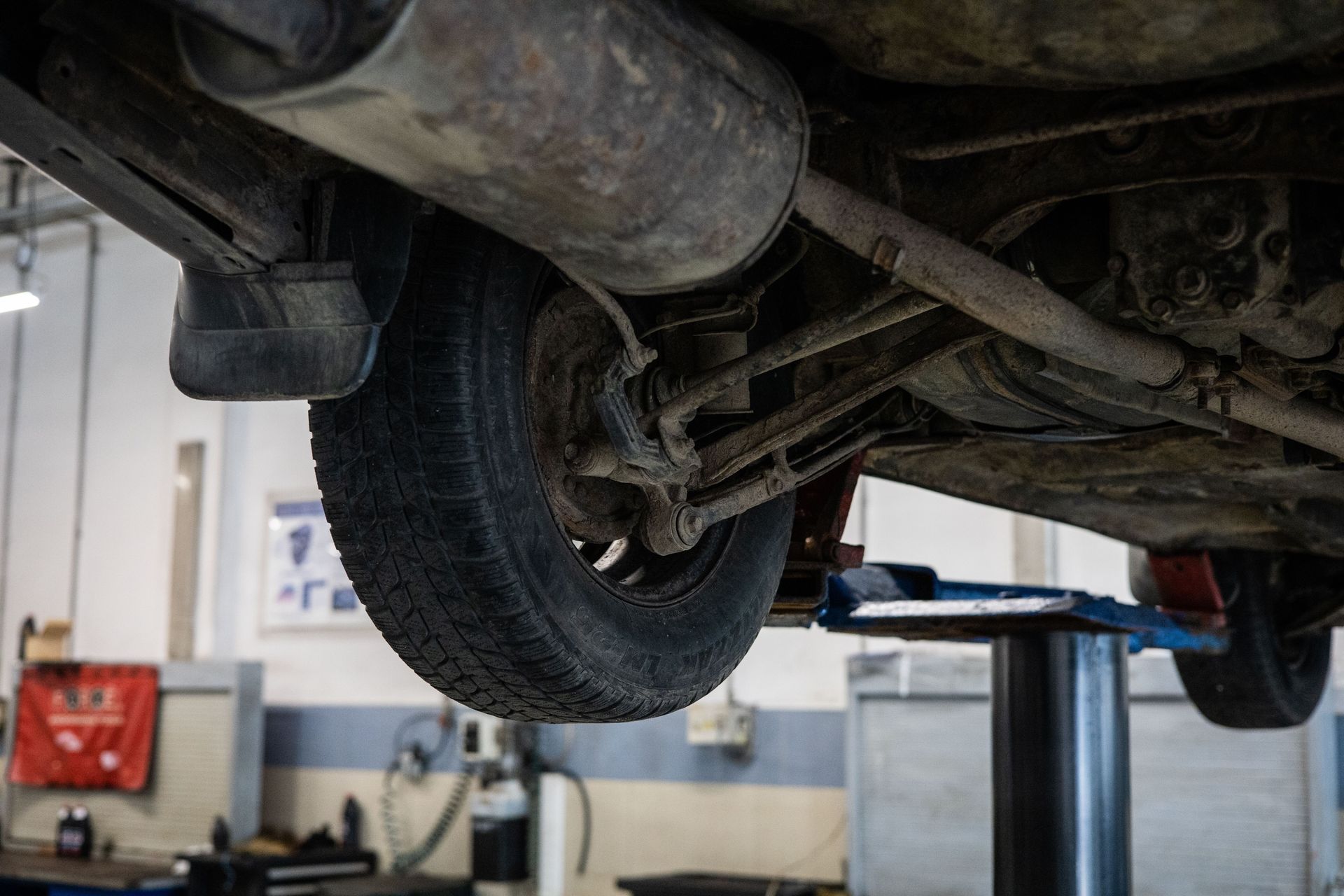
A wheel alignment can correct important steering and tire-angle settings, but the alignment itself depends on the suspension being in good mechanical condition. If ball joints, tie rods, control arm bushings, wheel bearings, or other components are worn, the wheels may not stay in the position the technician sets.  That is why some vehicles continue pulling , wearing tires unevenly, or developing an off-center steering wheel even after an alignment. In those cases, the problem may not be the alignment machine or the adjustment. It may be worn suspension or steering components underneath the vehicle.
August 28, 2026
When a tire repeatedly loses air but there is no obvious nail, screw, or visible puncture, the problem may be where the tire meets the wheel. This area is known as the tire bead, and a poor seal between the bead and the rim can allow air to escape gradually. Tire bead leaks are a common cause of slow pressure loss. Understanding why they happen can help drivers recognize when a tire needs professional inspection rather than repeatedly adding air. What Is the Tire Bead? The bead is the reinforced inner edge of the tire that sits tightly against the wheel rim. When a tire is properly mounted and inflated, air pressure helps hold the bead securely against the wheel, creating an airtight seal. If that sealing surface becomes damaged, dirty, corroded, or distorted, a small pathway can develop for air to escape.  Because these leaks may be very small, the tire can lose pressure over several days or weeks rather than going flat immediately.
August 23, 2026
A pothole impact can feel like a quick jolt, but the forces involved can affect several parts of the tire and wheel assembly. The faster the vehicle is moving, the less time the tire has to absorb the impact. In some cases, the damage is immediately obvious. In others, problems may not become noticeable until later. Raymond’s Tire Shop helps drivers inspect tires, wheels, balancing, and alignment after hard road impacts. Understanding what can happen during a pothole strike can make it easier to recognize when a tire needs professional attention. The Tire Is Compressed Extremely Quickly When a tire drops into a pothole and strikes the far edge, the sidewall and tread can be compressed between the road and the wheel. Tires are designed to flex, but a severe impact can exceed what the internal structure can safely absorb.  The risk can be greater when tire pressure is too low because there is less air cushioning between the road surface and the wheel. However, even a properly inflated tire can be damaged by a deep pothole at sufficient speed.
August 16, 2026
Tires are one of the most important safety components on any vehicle because they are the only parts that maintain direct contact with the road. As tires wear, their ability to grip pavement, channel water, and respond predictably can gradually decline. The challenge is that unsafe tire conditions are not always obvious until performance has already been affected.  Raymond’s Tire Shop helps drivers evaluate tread wear, tire damage, pressure issues, alignment problems, and other conditions that can affect tire safety. Knowing what to look for can help you recognize when a tire needs professional attention or replacement.