Cómo envejecen los neumáticos incluso cuando la banda de rodadura parece estar en buen estado

Los riesgos ocultos de los neumáticos viejos con buena banda de rodadura

Muchos conductores evalúan el estado de sus neumáticos observando la banda de rodadura, y es comprensible. La profundidad de la banda influye en la tracción, el frenado y la seguridad, y una banda desgastada es un claro indicador de que se necesita reemplazo. Sin embargo, la profundidad de la banda no cuenta toda la historia. Los neumáticos envejecen con el tiempo, y el caucho puede deteriorarse sin importar cuánta banda quede. Esto significa que un neumático que parece estar en buen estado a simple vista puede ya no ser seguro para la conducción diaria. En Raymond’s Tire Shop, ayudamos a los conductores a comprender cómo ocurre el envejecimiento de los neumáticos, por qué es importante y cómo identificar cuándo es necesario reemplazarlos, incluso si la banda todavía parece adecuada.


Por qué los neumáticos envejecen con el tiempo
Los neumáticos están hechos de compuestos de caucho que están expuestos a tensión todos los días. Incluso cuando el vehículo está estacionado, el caucho reacciona al oxígeno, a la luz solar, a los cambios de temperatura y a la humedad. Estos factores ambientales afectan lentamente la estructura del caucho. Con el tiempo, la
oxidación hace que el caucho se endurezca, lo que reduce su capacidad de adherirse al camino. Este proceso ocurre de manera natural y continúa sin importar la frecuencia con que el vehículo se conduzca.


Aunque los neumáticos modernos están diseñados para resistir el desgaste ambiental, ningún neumático puede evitar por completo la oxidación. El proceso de envejecimiento es gradual, y sus primeras etapas a menudo son invisibles para el conductor. Cuando aparecen grietas o rigidez, el neumático puede ya haber perdido parte de su rendimiento original.

Driver's perspective of a snowy road winding through a winter landscape, with mountains in the background.

Cómo la edad afecta la seguridad del neumático

El caucho envejecido se vuelve menos flexible. Los neumáticos dependen de esa flexibilidad para mantener la tracción, absorber los impactos del camino y responder a los movimientos de la dirección. Cuando la flexibilidad disminuye, el neumático puede no adaptarse tan bien a la superficie del camino, lo que afecta la comodidad y la adherencia. La reducción de tracción puede aumentar la distancia de frenado y disminuir el control en condiciones de humedad.


A medida que el caucho envejece, pueden aparecer grietas en el costado o en la banda de rodadura. Estas grietas debilitan la integridad estructural del neumático. Si las grietas se profundizan, pueden provocar pérdida de aire o una falla repentina. Este riesgo aumenta cuando los neumáticos se exponen a altas temperaturas, cargas pesadas o altas velocidades. Incluso si la banda parece casi nueva, el neumático puede ya no soportar de manera segura las condiciones de conducción diaria.


Por qué un bajo kilometraje no evita el envejecimiento
Algunos conductores asumen que un bajo kilometraje significa que los neumáticos todavía están en excelente estado. Sin embargo, el kilometraje es solo un factor. Un vehículo que se conduce con poca frecuencia puede experimentar un endurecimiento más rápido del caucho porque los neumáticos permanecen inmóviles durante largos periodos. Conducir regularmente flexiona el caucho y ayuda a distribuir los compuestos protectores por toda la banda. Sin ese movimiento, el envejecimiento puede acelerarse.


Además, los vehículos que permanecen al aire libre están expuestos constantemente al sol y al calor. Los rayos UV debilitan los compuestos de caucho con el tiempo. Incluso en áreas sombreadas o cubiertas, las variaciones de temperatura contribuyen al envejecimiento.

Silver sedan car speeding on a highway with motion blur.

Señales de que un neumático puede estar envejeciendo

Aunque el envejecimiento temprano no siempre es visible, existen varias señales que indican que un neumático está perdiendo su integridad:

  • Pequeñas grietas en el costado o entre los bloques de la banda
    Sensación rígida o quebradiza al presionar el caucho
  • Vibración al conducir que no proviene de problemas de balanceo
  • Pérdida de tracción a pesar de una banda adecuada
  • Una fecha de fabricación superior a seis años


La fecha de fabricación es un indicador importante. Está ubicada en el costado del neumático como parte del código DOT. La mayoría de los fabricantes recomienda que los neumáticos de más de seis a diez años se inspeccionen cuidadosamente o se reemplacen, sin importar su apariencia.

Dark car driving fast on a road at night, city lights blurred in the background.

El valor de una inspección profesional de neumáticos
La inspección profesional es esencial porque los técnicos capacitados pueden identificar señales de envejecimiento que pueden no ser obvias. En Raymond’s Tire Shop, evaluamos la edad, el estado y la seguridad estructural de cada neumático. Buscamos grietas en el costado, rigidez del caucho, separación interna y daños por calor. Esta evaluación ayuda a los conductores a tomar decisiones informadas sobre el reemplazo.


Reemplazar un neumático envejecido antes de que falle es siempre más seguro y más rentable que esperar a que ocurra un problema. Los neumáticos nuevos restauran la tracción, mejoran el manejo y aumentan la confianza durante la conducción en todas las estaciones.


Promoviendo una conducción segura y confiable
La banda de rodadura es importante, pero la edad del neumático desempeña un papel igualmente significativo en la seguridad. Un neumático puede parecer aceptable por fuera mientras su estructura interna ya no es capaz de funcionar como debería. Al comprender cómo envejecen los neumáticos y al buscar inspecciones regulares, los conductores pueden prevenir fallas inesperadas y mantener un rendimiento confiable en la carretera. En Raymond’s Tire Shop, estamos comprometidos a ayudar a cada cliente a mantenerse seguro con neumáticos que satisfacen las exigencias de la conducción diaria.
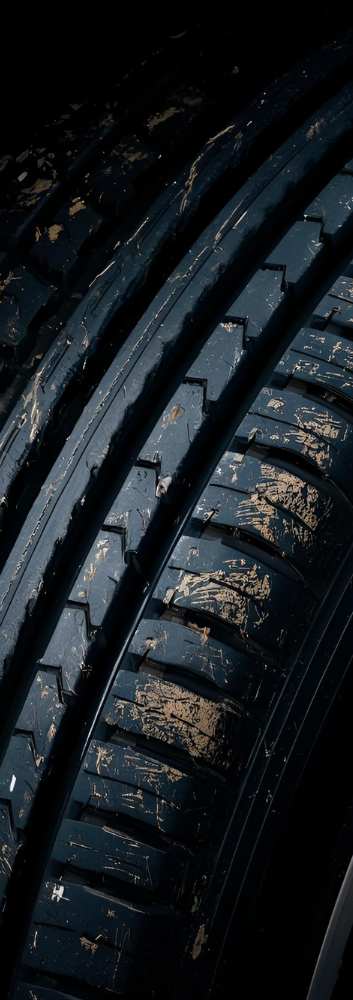

Close-up of a black tire with worn tread, covered in dirt.
Curving road through autumn forest, guardrail in foreground, sun dappling the asphalt.
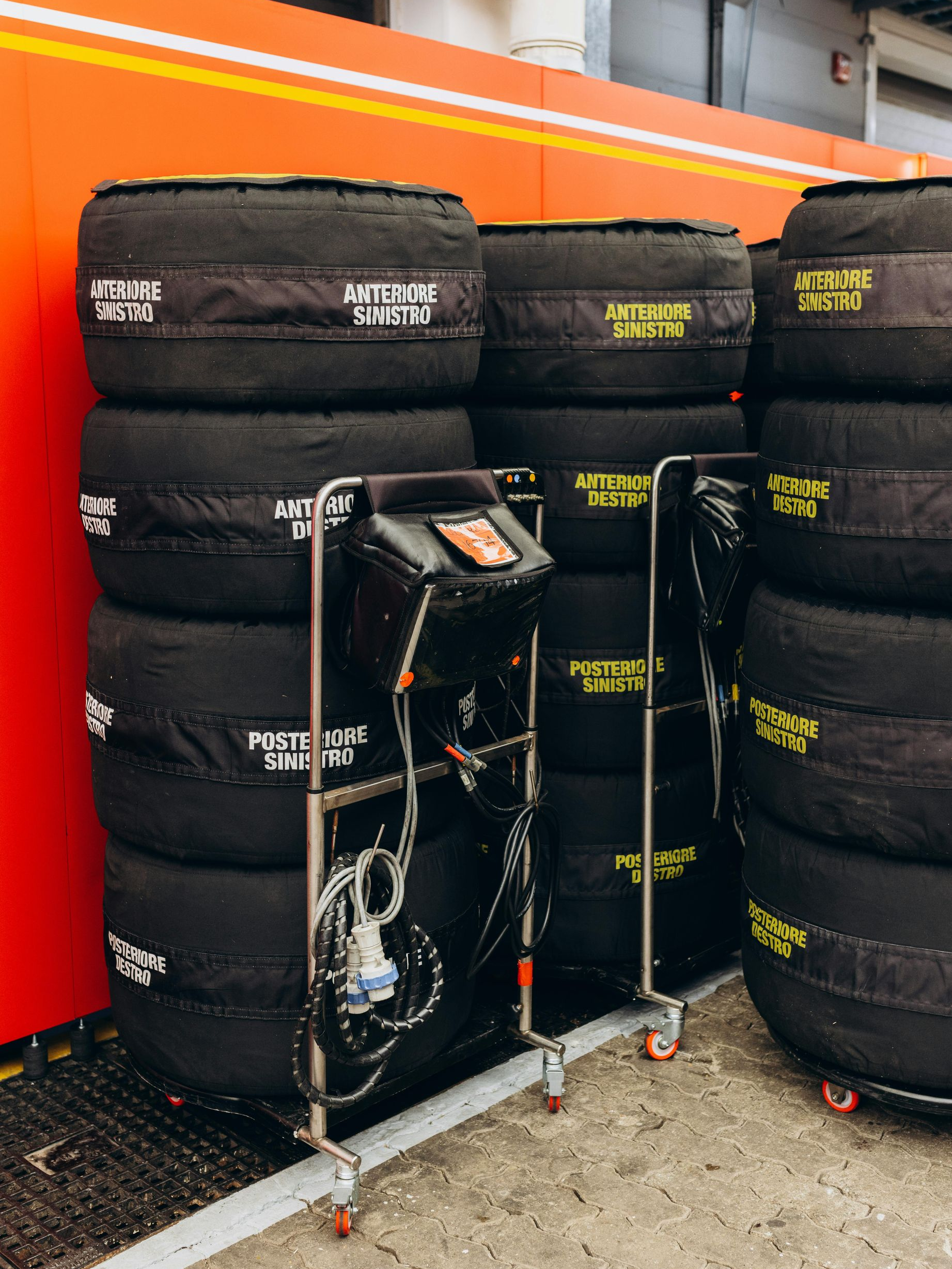
Tires with covers stacked near a cart with monitoring equipment inside a garage, possibly a race setting.
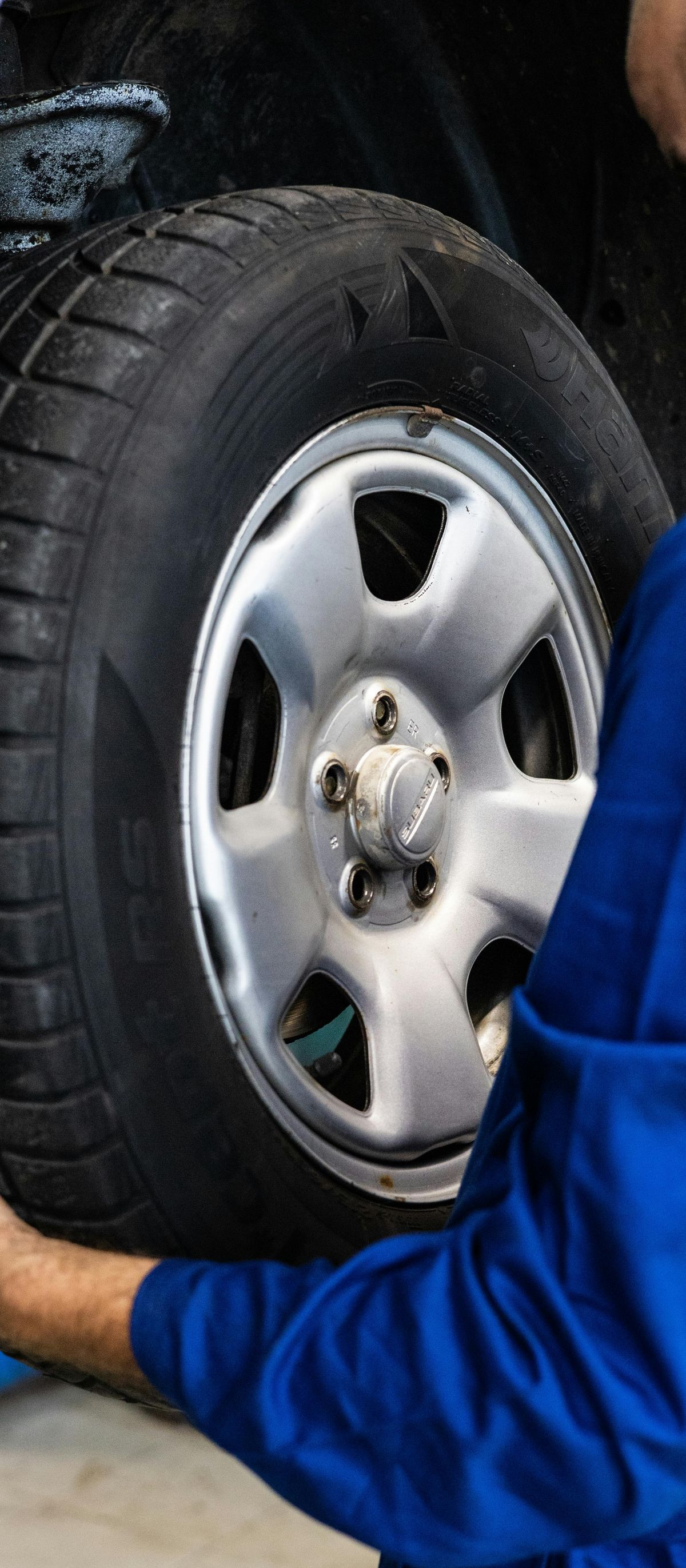
A person in blue holding a car tire. The tire is black and the rim is silver.
September 11, 2026
A flat tire does not always mean the tire has to be replaced. In many cases, a small puncture can be repaired safely and returned to service. The key is where the puncture occurred, how large it is, and whether the tire suffered additional damage while losing air. That is why a professional inspection matters. Two punctures that lo ok similar from the outside may require completely different solutions once the tire is removed and examined internally. Location Matters Most One of the first things a technician looks at is where the puncture is located. Damage in the central tread area is often the best candidate for repair. This part of the tire is designed to handle contact with the road and can sometimes be repaired when the puncture is small and otherwise straightforward. Punctures near the shoulder or sidewall are much more concerning.  These areas flex significantly while the tire is moving and cannot usually be repaired safely using standard puncture-repair methods. If a nail, screw, or other object damages the sidewall or outer shoulder, replacement is often the safer option.
September 6, 2026
A wheel alignment can correct important steering and tire-angle settings, but the alignment itself depends on the suspension being in good mechanical condition. If ball joints, tie rods, control arm bushings, wheel bearings, or other components are worn, the wheels may not stay in the position the technician sets.  That is why some vehicles continue pulling , wearing tires unevenly, or developing an off-center steering wheel even after an alignment. In those cases, the problem may not be the alignment machine or the adjustment. It may be worn suspension or steering components underneath the vehicle.
August 28, 2026
When a tire repeatedly loses air but there is no obvious nail, screw, or visible puncture, the problem may be where the tire meets the wheel. This area is known as the tire bead, and a poor seal between the bead and the rim can allow air to escape gradually. Tire bead leaks are a common cause of slow pressure loss. Understanding why they happen can help drivers recognize when a tire needs professional inspection rather than repeatedly adding air. What Is the Tire Bead? The bead is the reinforced inner edge of the tire that sits tightly against the wheel rim. When a tire is properly mounted and inflated, air pressure helps hold the bead securely against the wheel, creating an airtight seal. If that sealing surface becomes damaged, dirty, corroded, or distorted, a small pathway can develop for air to escape.  Because these leaks may be very small, the tire can lose pressure over several days or weeks rather than going flat immediately.
August 23, 2026
A pothole impact can feel like a quick jolt, but the forces involved can affect several parts of the tire and wheel assembly. The faster the vehicle is moving, the less time the tire has to absorb the impact. In some cases, the damage is immediately obvious. In others, problems may not become noticeable until later. Raymond’s Tire Shop helps drivers inspect tires, wheels, balancing, and alignment after hard road impacts. Understanding what can happen during a pothole strike can make it easier to recognize when a tire needs professional attention. The Tire Is Compressed Extremely Quickly When a tire drops into a pothole and strikes the far edge, the sidewall and tread can be compressed between the road and the wheel. Tires are designed to flex, but a severe impact can exceed what the internal structure can safely absorb.  The risk can be greater when tire pressure is too low because there is less air cushioning between the road surface and the wheel. However, even a properly inflated tire can be damaged by a deep pothole at sufficient speed.
August 16, 2026
Tires are one of the most important safety components on any vehicle because they are the only parts that maintain direct contact with the road. As tires wear, their ability to grip pavement, channel water, and respond predictably can gradually decline. The challenge is that unsafe tire conditions are not always obvious until performance has already been affected.  Raymond’s Tire Shop helps drivers evaluate tread wear, tire damage, pressure issues, alignment problems, and other conditions that can affect tire safety. Knowing what to look for can help you recognize when a tire needs professional attention or replacement.
August 7, 2026
Most drivers think of tires simply as the round rubber components that allow a vehicle to roll down the road. In reality, tires are sophisticated pieces of engineering that perform several essential functions every time a vehicle is in motion. They support the weight of the vehicle, transmit steering and braking forces, absorb road irregularities, and maintain traction in changing driving conditions. Every acceleration, turn, and stop depends on these four small contact patches where the tires meet the road.  Understanding the primary functions of a tire helps drivers appreciate why routine maintenance and timely replacement are so important. Raymond’s Tire Shop helps customers choose quality tires and maintain them properly so their vehicles continue to perform safely and efficiently throughout the life of the tire.