Cómo la alineación de los neumáticos afecta la eficiencia del combustible y la seguridad

El factor pasado por alto en el cuidado de los neumáticos

Muchos conductores se enfocan en la profundidad de la banda de rodadura o en la presión de los neumáticos al pensar en el mantenimiento, pero la alineación es igual de importante. La alineación de neumáticos, también conocida como alineación de ruedas, se refiere al ajuste de la suspensión del vehículo para que los neumáticos tengan un contacto adecuado con la carretera. Cuando se descuida, puede provocar una menor eficiencia del combustible, desgaste irregular y serios problemas de seguridad. En Raymond’s Tire Shop, enfatizamos la importancia de revisar la alineación como parte del cuidado rutinario de los neumáticos.


¿Qué es la alineación de neumáticos?
La alineación no consiste en ajustar los neumáticos en sí, sino en asegurarse de que el sistema de suspensión esté calibrado correctamente. La alineación implica tres factores clave:

  • Caída (Camber): La inclinación hacia dentro o hacia fuera del neumático vista de frente.
  • Convergencia/Divergencia (Toe): El ángulo hacia el que apuntan los neumáticos al mirarlos desde arriba.
  • Ángulo de avance (Caster): El ángulo del eje de dirección, que afecta la estabilidad y la maniobrabilidad.


Cuando estos ángulos están correctamente ajustados, los neumáticos mantienen el máximo contacto con la carretera, lo que favorece un desgaste uniforme y una conducción suave.
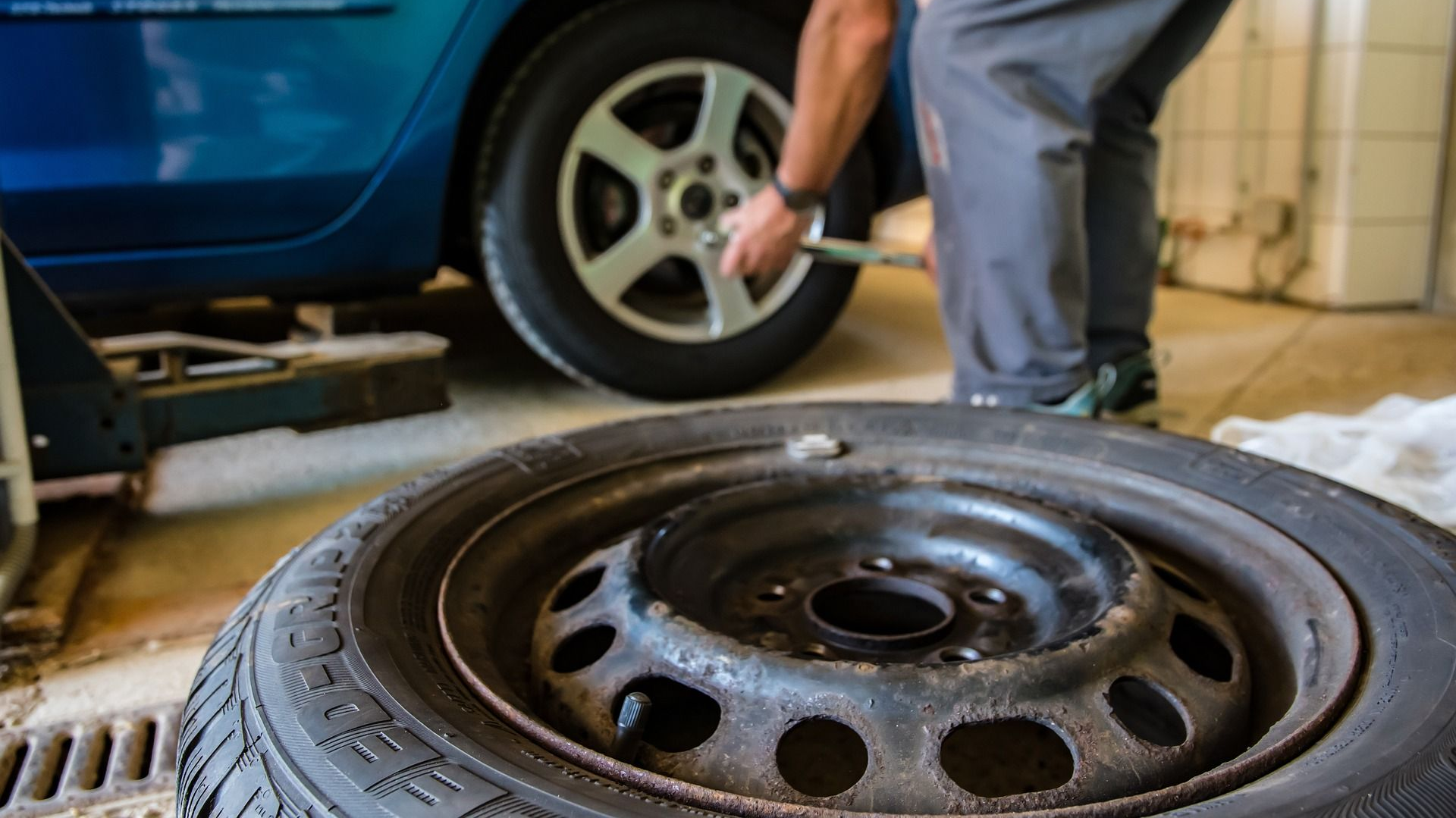
Mechanic changing a car tire in a garage. A blue car is raised, with a spare tire in the foreground.

Eficiencia del combustible y alineación
Un mal alineamiento hace que los neumáticos se arrastren o rueden de manera desigual, aumentando la resistencia y obligando al motor a trabajar más. Esto reduce la eficiencia del combustible, lo que significa que los conductores pagan más en la gasolinera.
Según el Departamento de Energía de EE. UU., una alineación adecuada puede mejorar el rendimiento del combustible hasta en un 10%. Con el tiempo, esto representa un ahorro significativo, especialmente para quienes viajan largas distancias o conducen con frecuencia.


Implicaciones de seguridad por un mal alineamiento
Si bien el costo del combustible es una consideración importante, la
seguridad es aún más relevante. Los neumáticos desalineados reducen la tracción y el control, particularmente en condiciones climáticas adversas como lluvia o nieve. El vehículo puede desviarse hacia un lado, aumentando el riesgo de salirse de carril o de la carretera. Las distancias de frenado también pueden aumentar, ya que el contacto desigual de los neumáticos disminuye la eficacia del frenado. En casos graves, el mal alineamiento puede contribuir a reventones cuando los neumáticos se desgastan demasiado rápido de un lado.
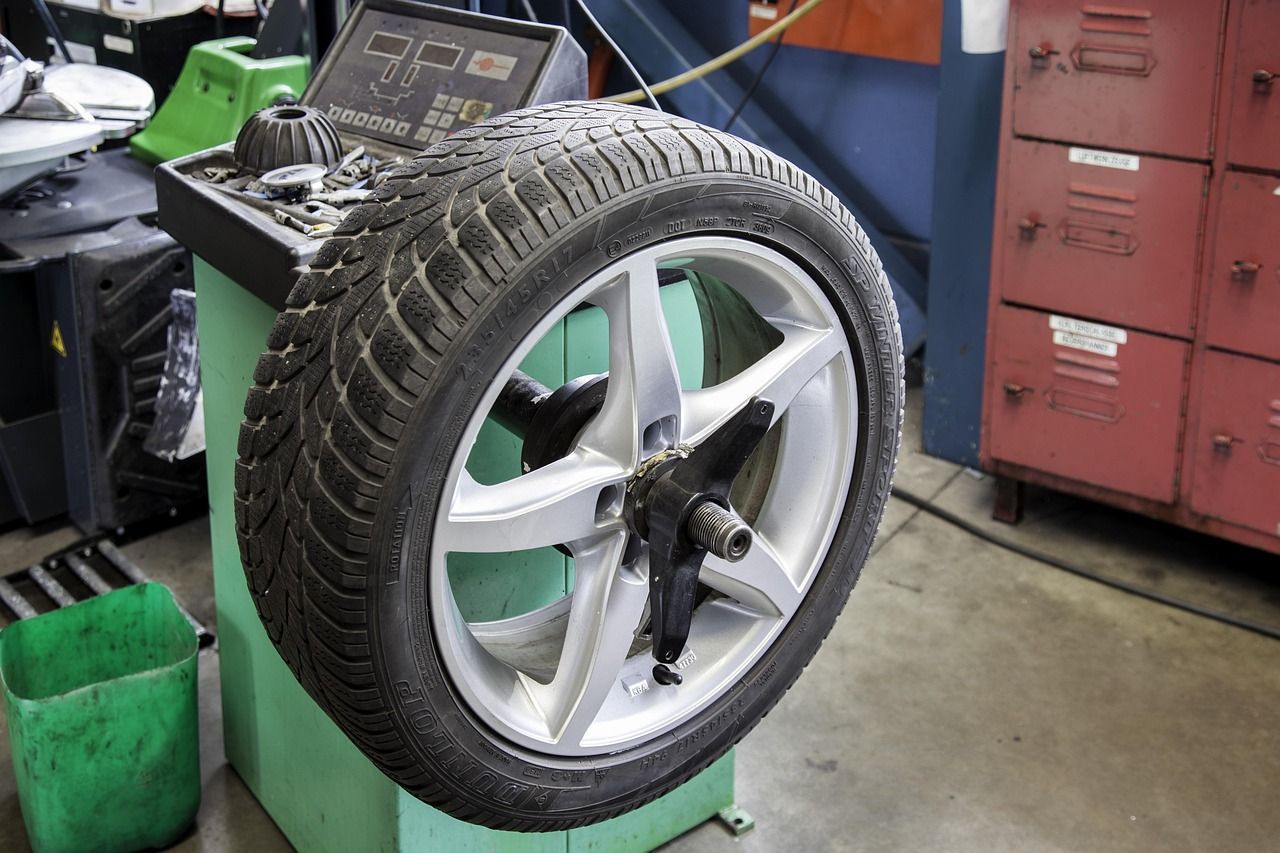
A car tire mounted on a balancing machine, indoors, a mechanic's shop setting.

Señales de un mal alineamiento
Los conductores deben estar atentos a señales que indiquen problemas de alineación. Los síntomas más comunes incluyen:

  • Desgaste irregular o rápido de los neumáticos
  • Volante tirando hacia un lado
  • Vibración en el volante
  • Volante torcido al conducir en línea recta


Estos problemas van más allá de simples inconvenientes. Indican que el vehículo no está funcionando de manera óptima y pueden representar riesgos tanto para la seguridad como para la eficiencia.
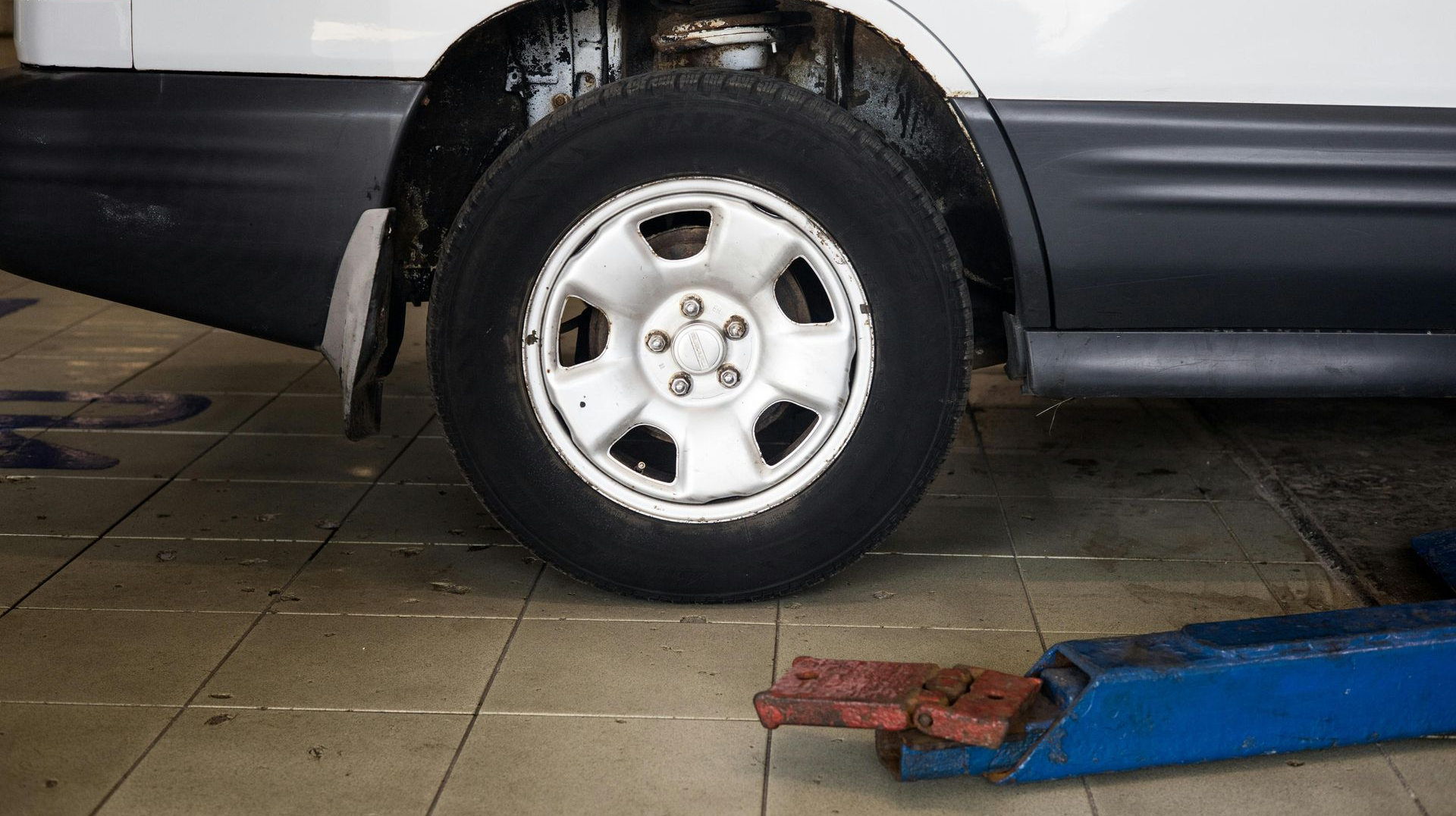
White car tire on a light gray rim in a repair shop, next to a blue lift.

Prolongando la vida útil de los neumáticos
Un alineamiento correcto no solo protege la economía de combustible y la seguridad, sino que también prolonga la vida útil de los neumáticos. Las ruedas desalineadas se desgastan de forma desigual, lo que significa que los conductores a menudo deben reemplazar los neumáticos antes de lo esperado. Por ejemplo, un neumático que debería durar 80.000 km puede necesitar ser reemplazado a los 50.000 km si se ignora el alineamiento. Mantener los neumáticos alineados protege la inversión del propietario y evita gastos innecesarios.


Servicios profesionales de alineación
Aunque algunos conductores intentan ajustar por sí mismos, los servicios profesionales de alineación ofrecen resultados precisos. En Raymond’s Tire Shop, utilizamos equipos avanzados para medir los ángulos de la suspensión y realizar correcciones según las especificaciones del fabricante. Las revisiones regulares de alineación, especialmente después de golpear baches o bordillos, aseguran que los vehículos permanezcan seguros y eficientes. Para la mayoría de los conductores, recomendamos inspecciones de alineación al menos una vez al año o cada vez que se instalen neumáticos nuevos.
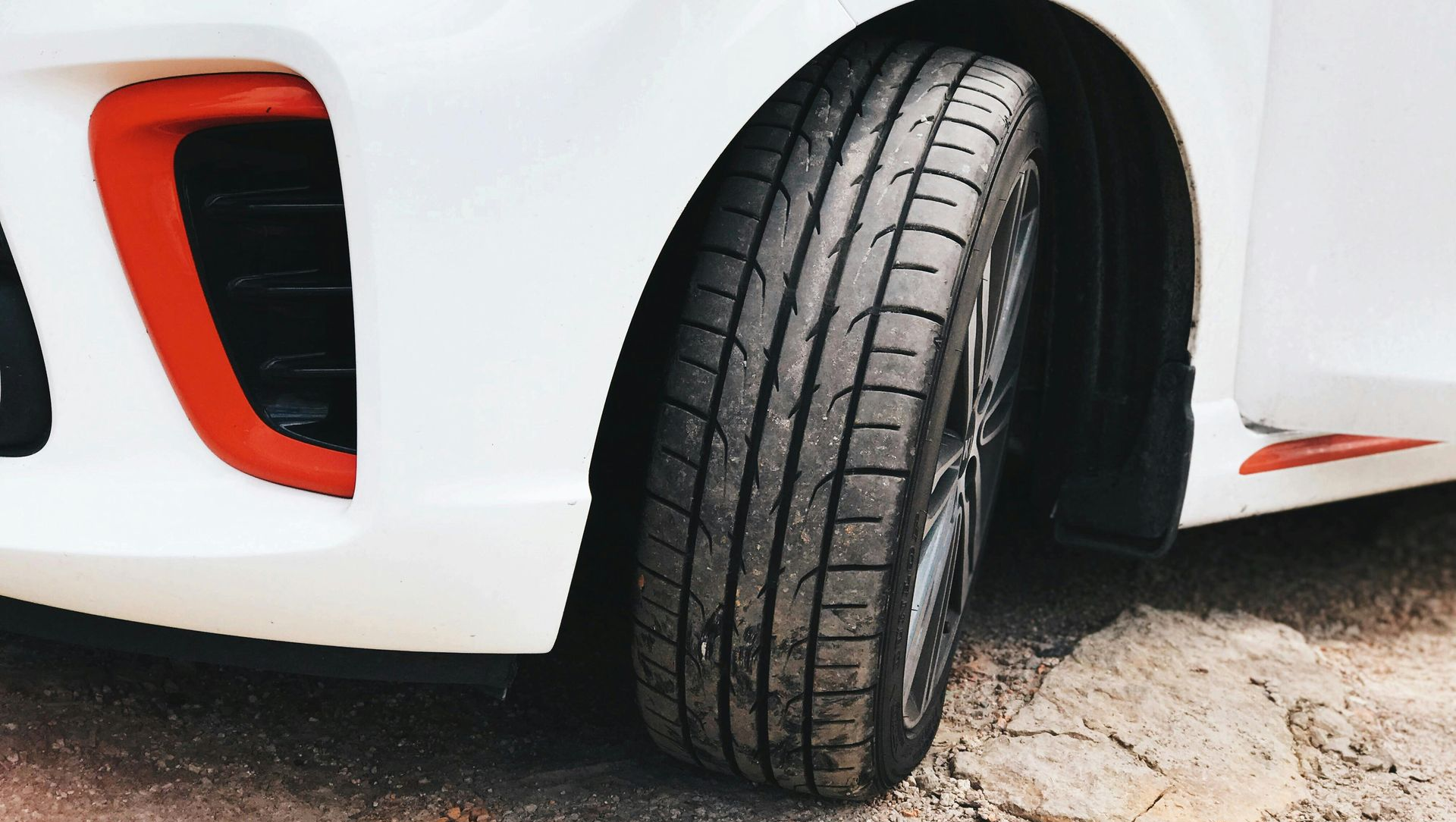
White car tire on dirt, with red trim.

Conclusión
La alineación de los neumáticos es una parte vital del mantenimiento del vehículo que afecta directamente la eficiencia del combustible, la seguridad y la durabilidad de los neumáticos. Descuidarla no solo aumenta los costos, sino que también compromete la seguridad del conductor y los pasajeros. Mantener las ruedas alineadas proporciona viajes más suaves, mejor consumo de combustible y mayor confianza al conducir.


En Raymond’s Tire Shop, nos comprometemos a ayudar a nuestros clientes a mantenerse seguros mientras ahorran dinero. Nuestros servicios de alineación garantizan que los vehículos funcionen de la mejor manera, manteniendo los neumáticos en óptimas condiciones y protegiendo contra riesgos innecesarios.
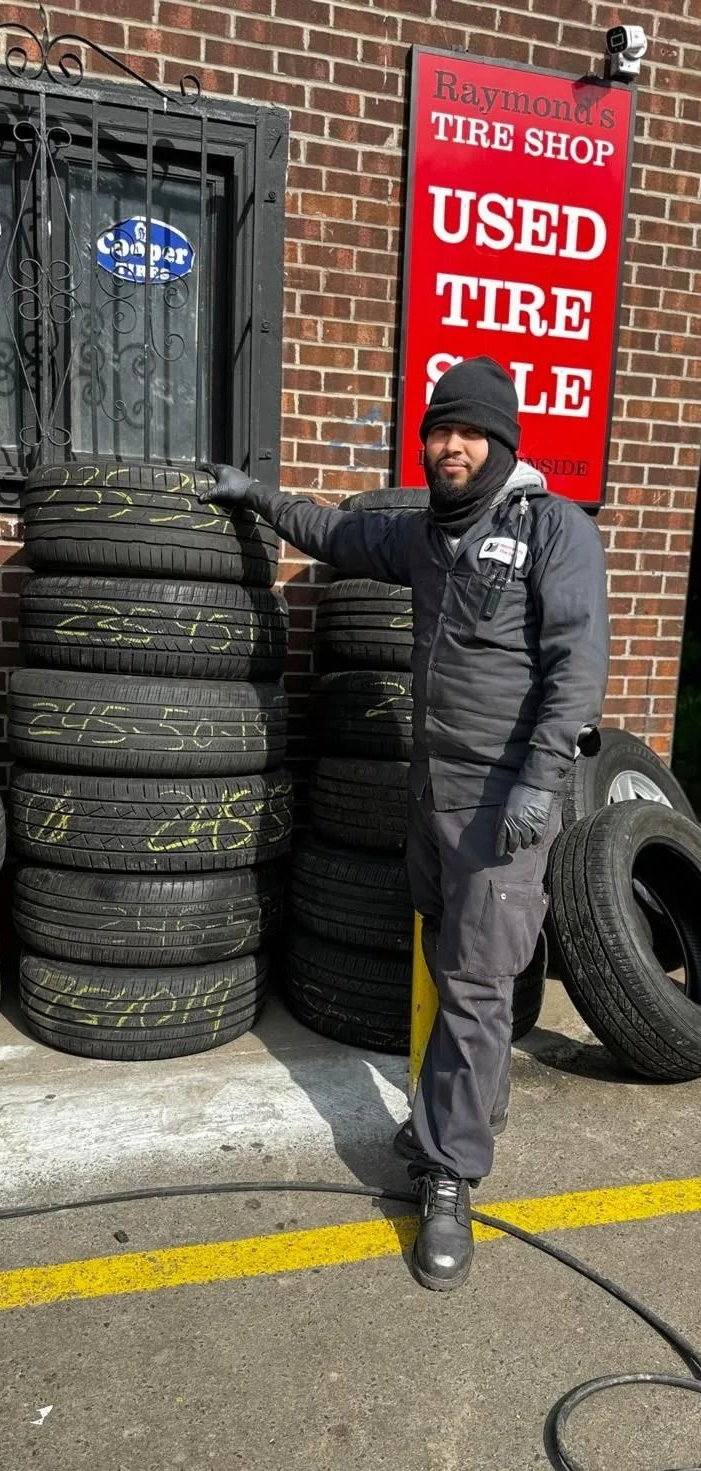
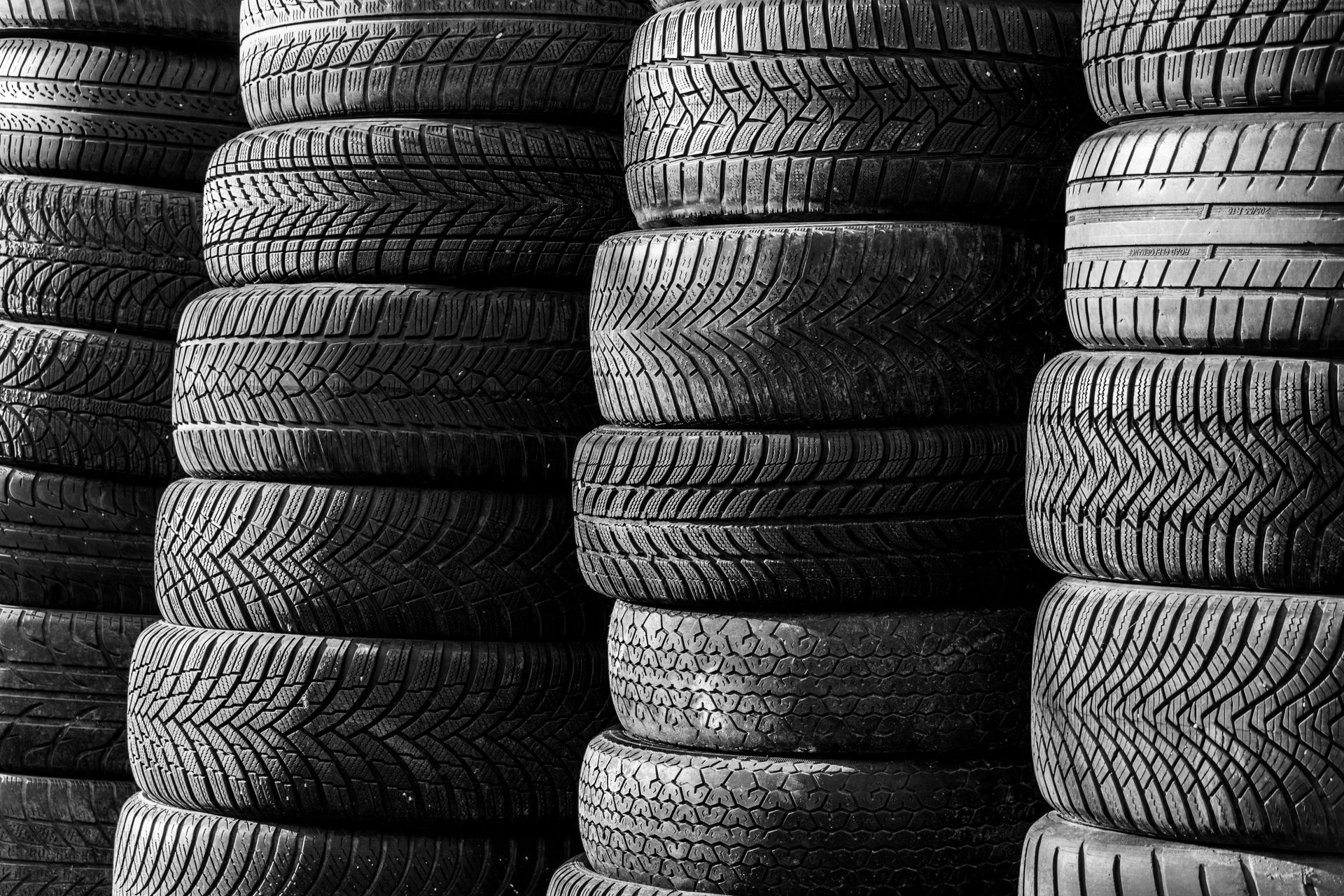
Man stands by tires stacked outside a used tire shop. Shop has a red sign, brick building.
Red car tire with snow chains on a snowy road.
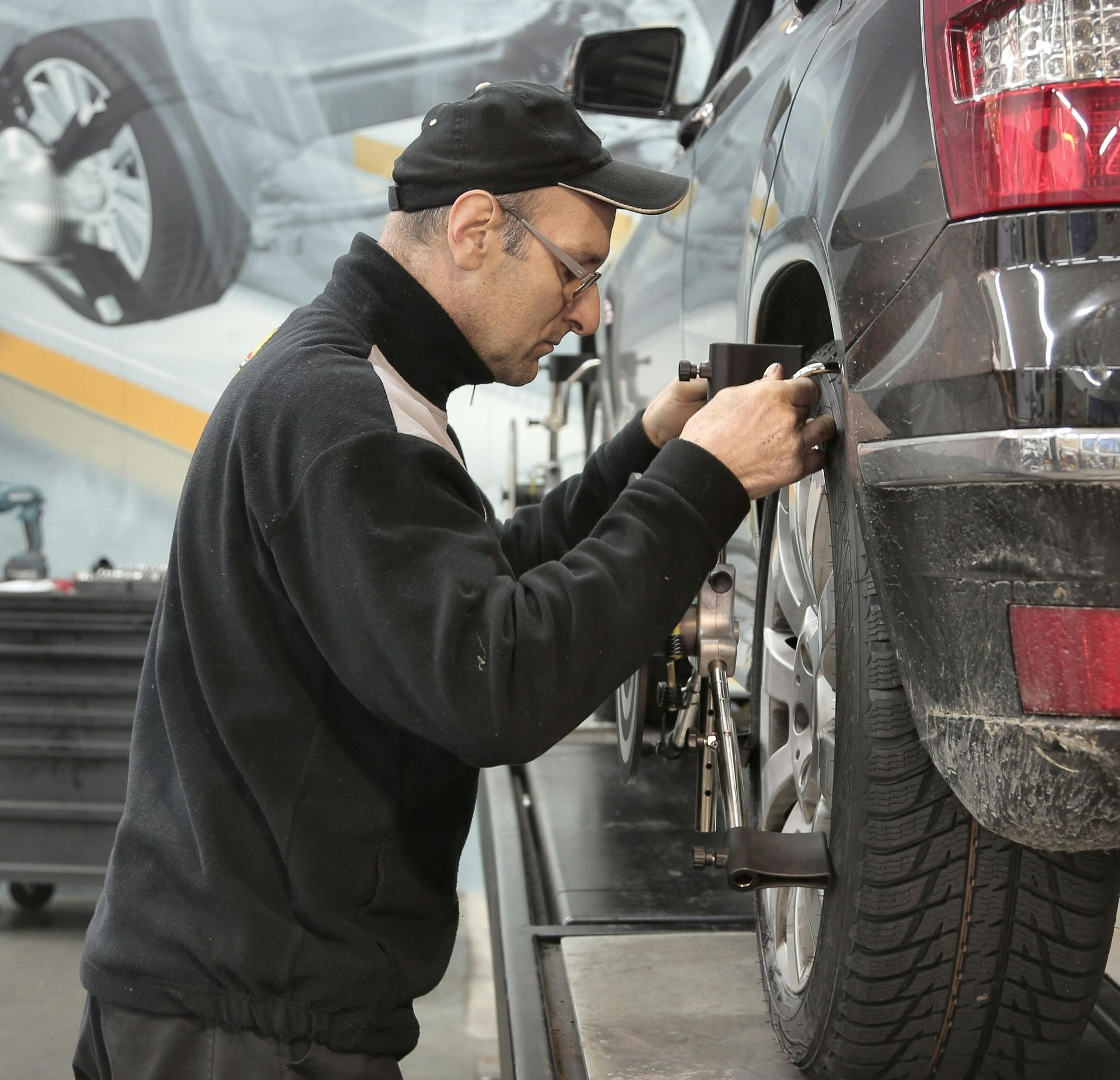
Mechanic aligning car's rear tire on a lift in a shop, using tools.
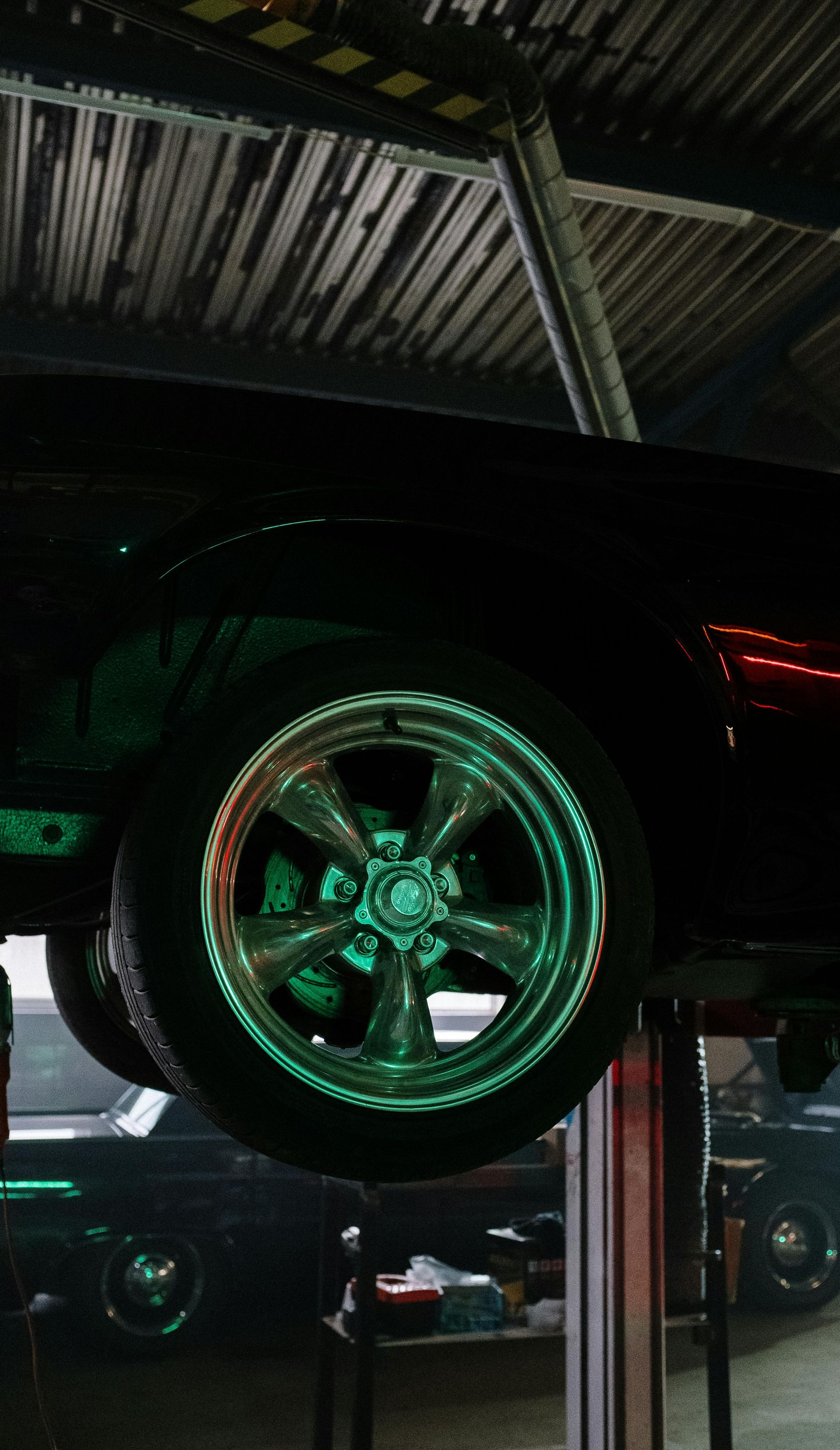
Black classic car raised on a lift in a garage, rims highlighted by green light.
Black Jeep Wrangler, wet from rain, parked on asphalt.
August 23, 2026
A pothole impact can feel like a quick jolt, but the forces involved can affect several parts of the tire and wheel assembly. The faster the vehicle is moving, the less time the tire has to absorb the impact. In some cases, the damage is immediately obvious. In others, problems may not become noticeable until later. Raymond’s Tire Shop helps drivers inspect tires, wheels, balancing, and alignment after hard road impacts. Understanding what can happen during a pothole strike can make it easier to recognize when a tire needs professional attention. The Tire Is Compressed Extremely Quickly When a tire drops into a pothole and strikes the far edge, the sidewall and tread can be compressed between the road and the wheel. Tires are designed to flex, but a severe impact can exceed what the internal structure can safely absorb.  The risk can be greater when tire pressure is too low because there is less air cushioning between the road surface and the wheel. However, even a properly inflated tire can be damaged by a deep pothole at sufficient speed.
August 16, 2026
Tires are one of the most important safety components on any vehicle because they are the only parts that maintain direct contact with the road. As tires wear, their ability to grip pavement, channel water, and respond predictably can gradually decline. The challenge is that unsafe tire conditions are not always obvious until performance has already been affected.  Raymond’s Tire Shop helps drivers evaluate tread wear, tire damage, pressure issues, alignment problems, and other conditions that can affect tire safety. Knowing what to look for can help you recognize when a tire needs professional attention or replacement.
August 7, 2026
Most drivers think of tires simply as the round rubber components that allow a vehicle to roll down the road. In reality, tires are sophisticated pieces of engineering that perform several essential functions every time a vehicle is in motion. They support the weight of the vehicle, transmit steering and braking forces, absorb road irregularities, and maintain traction in changing driving conditions. Every acceleration, turn, and stop depends on these four small contact patches where the tires meet the road.  Understanding the primary functions of a tire helps drivers appreciate why routine maintenance and timely replacement are so important. Raymond’s Tire Shop helps customers choose quality tires and maintain them properly so their vehicles continue to perform safely and efficiently throughout the life of the tire.
July 31, 2026
Understanding how your tires interact with wet pavement is one of the most important parts of safe driving. While most drivers know that rain can make roads slippery, fewer understand how hydroplaning occurs or why it can cause a vehicle to suddenly lose traction. Knowing what causes hydroplaning—and how proper tire maintenance can reduce the risk—can help you stay safer during wet weather.  At Raymond’s Tire Shop, we believe that informed drivers make safer decisions. Keeping your tires in excellent condition is one of the best ways to improve vehicle performance when road conditions are less than ideal.
July 23, 2026
Your tires are one of the hardest-working components of your vehicle. They provide traction, support your vehicle’s weight, absorb impacts from the road, and help you maintain control in a wide range of driving conditions. Because they experience constant wear, replacing tires is an expected part of vehicle ownership. However, proper maintenance can help maximize their lifespan, improve performance, and save you money over time. Many of the factors that affect tire longevity are within a driver’s control. By following a few simple maintenance practices, you can help your tires wear more evenly and perform as intended throughout their service life.
July 17, 2026
Your tires are the only part of your vehicle that remains in constant contact with the road, making them one of the most important components for safety, performance, and fuel efficiency. While many drivers remember to check their oil or schedule routine maintenance, tire pressure is often overlooked until a problem develops.  Maintaining proper tire inflation is one of the simplest and most effective ways to extend the life of your tires. It takes only a few minutes to check your tire pressure, yet this small maintenance task can help improve vehicle performance and protect your investment over the long term.