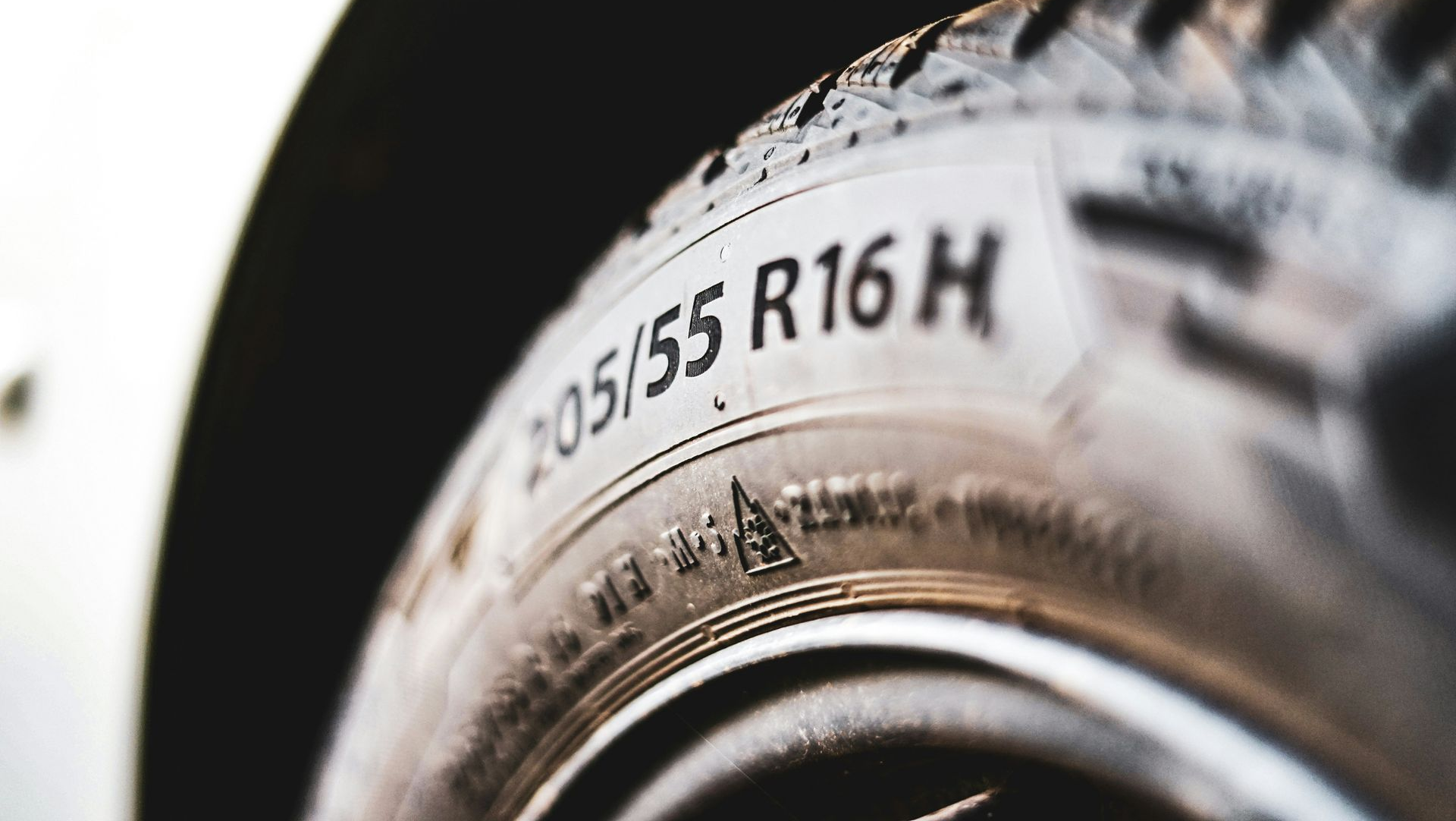
How to Tell If a Wheel Is Bent After Hitting a Pothole

A hard pothole impact can do more than damage a tire.


The force can also bend a wheel, especially if the pothole is deep, the vehicle is moving quickly, or the tire has a lower-profile sidewall with less cushioning between the road and rim.


Sometimes the damage is obvious. In other cases, the wheel may look normal but cause vibration, air loss, or handling problems.


Knowing what to watch for after a pothole strike can help drivers catch wheel damage before it creates additional tire or suspension problems.
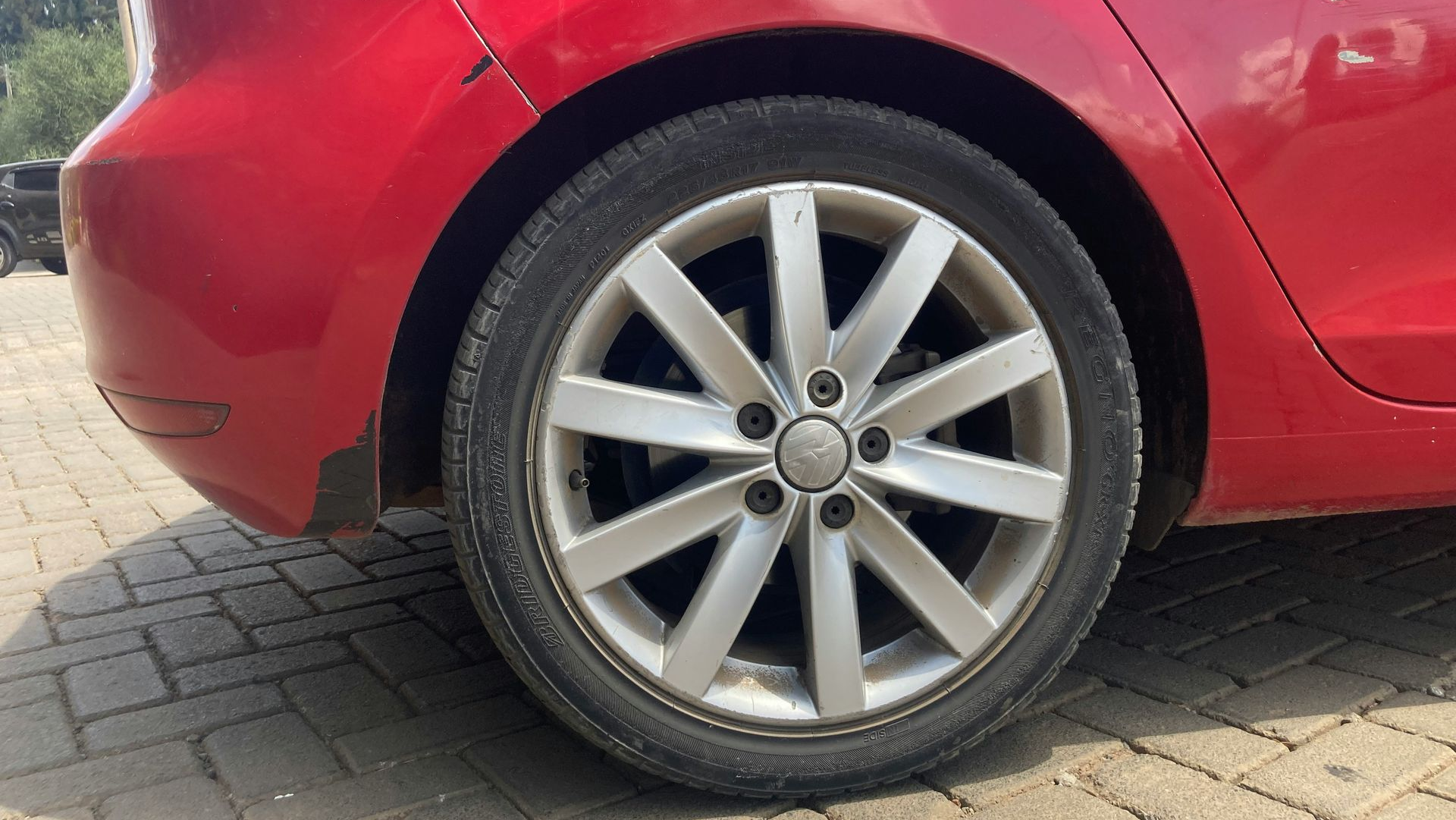
Rear side of a red car, showing the wheel and tire parked on a paved surface

Vibration Is One of the Most Common Signs

A bent wheel can create vibration because it no longer rotates perfectly evenly.


Drivers may feel the shaking through the steering wheel, seat, or floor.


The vibration may become more noticeable at certain speeds, especially on the highway.


This symptom can resemble a tire balance problem, which is why inspection matters.


Rebalancing a wheel will not correct a physical bend in the rim.

Car wheel with silver rim mounted on a balancing machine in a workshop, with a green bin and red tool chest nearby

The Tire May Start Losing Air

A bent wheel can also interfere with the seal between the tire bead and the rim.


If the wheel is distorted enough, air may escape slowly from the affected area.


Drivers may find themselves adding air repeatedly even though there is no visible nail or screw in the tire.


This is one reason recurring pressure loss should not automatically be blamed on a puncture.


The wheel, valve stem, bead area, and tire itself should all be checked.

Close-up of a dark alloy car wheel rim with five spokes and lug nuts in low light

Look for Visible Deformation

Some bent wheels can be spotted with a visual inspection.


Look along the inner and outer edges of the rim for areas that appear flattened, pushed inward, or uneven.


The inner lip is especially important because damage there can be harder to see while the wheel is still installed on the vehicle.


Even a relatively small bend can affect how the wheel rotates.


A shop can inspect the wheel more thoroughly once it is removed.

Close-up of a car tire on a road at sunset, with trees and grass in the background

New Tire Wear Can Be a Clue

Wheel damage can sometimes contribute to irregular tire wear.


If the wheel is no longer rotating correctly, the tire may not contact the road as evenly as intended.


However, uneven tire wear can also be caused by alignment or suspension problems.


A pothole strike can potentially affect several components at once, so looking at the whole wheel and suspension system is often more useful than focusing on one symptom.

Close-up of a car tire with low tread, resting on rough pavement.

Steering May Feel Different

A severe impact can leave the vehicle feeling less stable.


Drivers may notice a pull, unusual steering response, or a sensation that the vehicle does not track as smoothly as it did before.


A bent wheel may be part of the problem, but potholes can also affect alignment, tires, tie rods, control arms, or other suspension components.


If the steering behavior changes immediately after an impact, the vehicle should be inspected.


Tire Damage Can Happen at the Same Time

A wheel can bend without the tire going flat immediately.


The tire may still have internal damage, a sidewall bulge, or weakened cords from the impact.


That means an inspection should include both the rim and tire.


Continuing to drive on a damaged tire or wheel can increase the risk of further failure and may make the original problem more expensive.
Stacks of black car tires in a warehouse, with one treaded tire centered in front.

Do Not Ignore a New Vibration

If a vehicle begins vibrating right after hitting a pothole, that timing matters.


Drivers sometimes assume the problem will disappear on its own, but a persistent vibration usually deserves attention.


A technician can check wheel balance, wheel runout, tire condition, and alignment to determine what changed.


Catching the issue early may help prevent unnecessary tire wear.


Have the Wheel Checked After a Hard Impact

A pothole strike does not always cause damage, but new vibration, slow air loss, steering changes, visible rim deformation, or unusual tire wear are all reasons to have the wheel inspected.


Raymond’s Tire Shop provides tire service, balancing, alignments, wheel service, and flat repair to help drivers identify problems after road impacts.


If you hit a pothole and the vehicle no longer feels the same, contact Raymond’s Tire Shop. A professional inspection can help determine whether the wheel is bent, the tire is damaged, or another part of the suspension or alignment system needs attention.

Close-up of a car’s black alloy wheel and tire on wet pavement, with gray body panel above
Person mounting a black tire on a vehicle wheel in a dusty outdoor setting
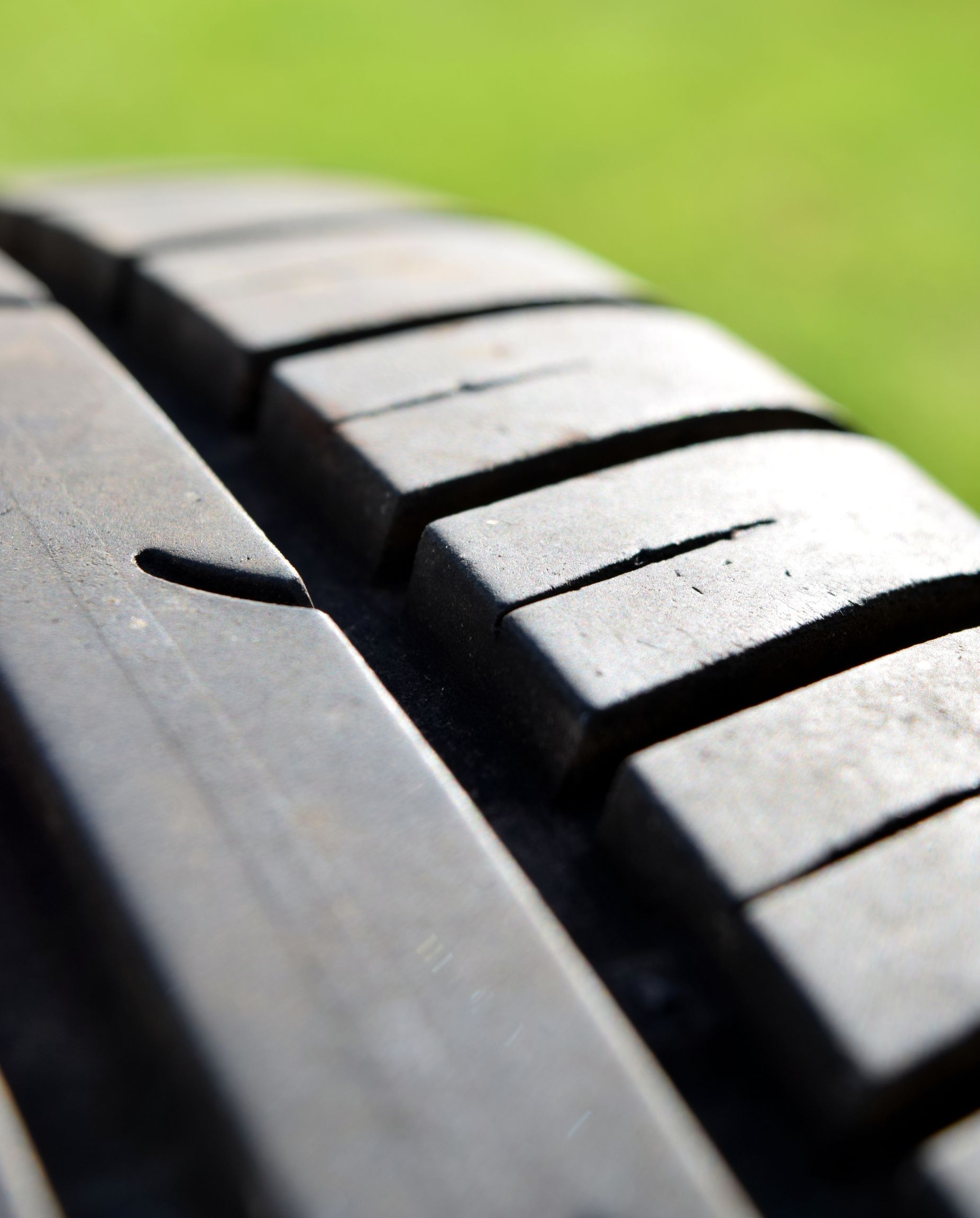
Close-up of a black tire tread with grooves, against a blurred green background
Close-up of a car’s black alloy wheel and tire on a dark vehicle.
Cracked pavement with a puddle reflecting an orange building and a storm drain grate nearby
Stack of worn black tires on dirt ground
Close-up of a black car tire and silver alloy wheel rim
September 23, 2026
Most drivers are familiar with the tire pressure monitoring system , or TPMS, warning light. When it stays on steadily, it usually means one or more tires may be underinflated. A flashing TPMS light often means something different. Instead of simply warning about low tire pressure, a flashing light can indicate a problem with the monitoring system itself. That could involve a sensor, sensor battery, communication issue, or another TPMS-related fault.  Knowing the difference can help drivers avoid assuming that adding air will automatically solve the problem.
September 22, 2026
Tread depth is one of the first things drivers look at when deciding whether a tire still has life left. Deep grooves can make a tire appear healthy, especially if the vehicle is not driven very often. But tread is only part of the picture. Tires age even when they are not being used heavily. Over time, rubber compounds can harden, dry out, and become less flexible. That means an older tire may still have plenty of tread while no longer performing the way it did when it was newer. Rubber Changes With Age Tires are constantly exposed to oxygen, heat, sunlight, moisture, and changing temperatures. Those conditions gradually affect the rubber. As a tire ages, the material can lose some of its elasticity. That may reduce its ability to flex properly as it rolls and responds to the road. A tire that looks acceptable at a quick glance may therefore be significantly older than its appearance suggests. This is especially important for vehicles that accumulate very few miles each year.
September 11, 2026
A flat tire does not always mean the tire has to be replaced. In many cases, a small puncture can be repaired safely and returned to service. The key is where the puncture occurred, how large it is, and whether the tire suffered additional damage while losing air. That is why a professional inspection matters. Two punctures that lo ok similar from the outside may require completely different solutions once the tire is removed and examined internally. Location Matters Most One of the first things a technician looks at is where the puncture is located. Damage in the central tread area is often the best candidate for repair. This part of the tire is designed to handle contact with the road and can sometimes be repaired when the puncture is small and otherwise straightforward. Punctures near the shoulder or sidewall are much more concerning.  These areas flex significantly while the tire is moving and cannot usually be repaired safely using standard puncture-repair methods. If a nail, screw, or other object damages the sidewall or outer shoulder, replacement is often the safer option.
September 6, 2026
A wheel alignment can correct important steering and tire-angle settings, but the alignment itself depends on the suspension being in good mechanical condition. If ball joints, tie rods, control arm bushings, wheel bearings, or other components are worn, the wheels may not stay in the position the technician sets.  That is why some vehicles continue pulling , wearing tires unevenly, or developing an off-center steering wheel even after an alignment. In those cases, the problem may not be the alignment machine or the adjustment. It may be worn suspension or steering components underneath the vehicle.
August 28, 2026
When a tire repeatedly loses air but there is no obvious nail, screw, or visible puncture, the problem may be where the tire meets the wheel. This area is known as the tire bead, and a poor seal between the bead and the rim can allow air to escape gradually. Tire bead leaks are a common cause of slow pressure loss. Understanding why they happen can help drivers recognize when a tire needs professional inspection rather than repeatedly adding air. What Is the Tire Bead? The bead is the reinforced inner edge of the tire that sits tightly against the wheel rim. When a tire is properly mounted and inflated, air pressure helps hold the bead securely against the wheel, creating an airtight seal. If that sealing surface becomes damaged, dirty, corroded, or distorted, a small pathway can develop for air to escape.  Because these leaks may be very small, the tire can lose pressure over several days or weeks rather than going flat immediately.
August 23, 2026
A pothole impact can feel like a quick jolt, but the forces involved can affect several parts of the tire and wheel assembly. The faster the vehicle is moving, the less time the tire has to absorb the impact. In some cases, the damage is immediately obvious. In others, problems may not become noticeable until later. Raymond’s Tire Shop helps drivers inspect tires, wheels, balancing, and alignment after hard road impacts. Understanding what can happen during a pothole strike can make it easier to recognize when a tire needs professional attention. The Tire Is Compressed Extremely Quickly When a tire drops into a pothole and strikes the far edge, the sidewall and tread can be compressed between the road and the wheel. Tires are designed to flex, but a severe impact can exceed what the internal structure can safely absorb.  The risk can be greater when tire pressure is too low because there is less air cushioning between the road surface and the wheel. However, even a properly inflated tire can be damaged by a deep pothole at sufficient speed.