Why Older Tires May Need Replacement Even With Good Tread

Tread depth is one of the first things drivers look at when deciding whether a tire still has life left. Deep grooves can make a tire appear healthy, especially if the vehicle is not driven very often.


But tread is only part of the picture.


Tires age even when they are not being used heavily. Over time, rubber compounds can harden, dry out, and become less flexible. That means an older tire may still have plenty of tread while no longer performing the way it did when it was newer.


Rubber Changes With Age

Tires are constantly exposed to oxygen, heat, sunlight, moisture, and changing temperatures.


Those conditions gradually affect the rubber.


As a tire ages, the material can lose some of its elasticity. That may reduce its ability to flex properly as it rolls and responds to the road.


A tire that looks acceptable at a quick glance may therefore be significantly older than its appearance suggests.


This is especially important for vehicles that accumulate very few miles each year.

Modern car interior with steering wheel, dashboard display, and center console in black and red accents

Low Mileage Does Not Stop Tire Aging

Some drivers assume tires last indefinitely if they are barely used.

That is not the case.


A vehicle that spends most of its time parked can still develop age-related tire problems. In fact, infrequent use can sometimes make deterioration harder to notice because the tread is not wearing down at the same rate.


Weekend vehicles, collector cars, trailers, second vehicles, and cars driven only short distances can all end up with tires that look nearly new but are many years old.


Cracking Can Be an Important Warning Sign

One visible sign of aging is cracking.


Small cracks may appear along the sidewall or between the tread blocks. This is sometimes described as weather checking or dry rot.


Not every surface crack means a tire is immediately unsafe, but widespread or deep cracking deserves professional attention.


Sidewalls are especially important because they flex constantly while the vehicle is moving.


Any noticeable deterioration in this area should be taken seriously.
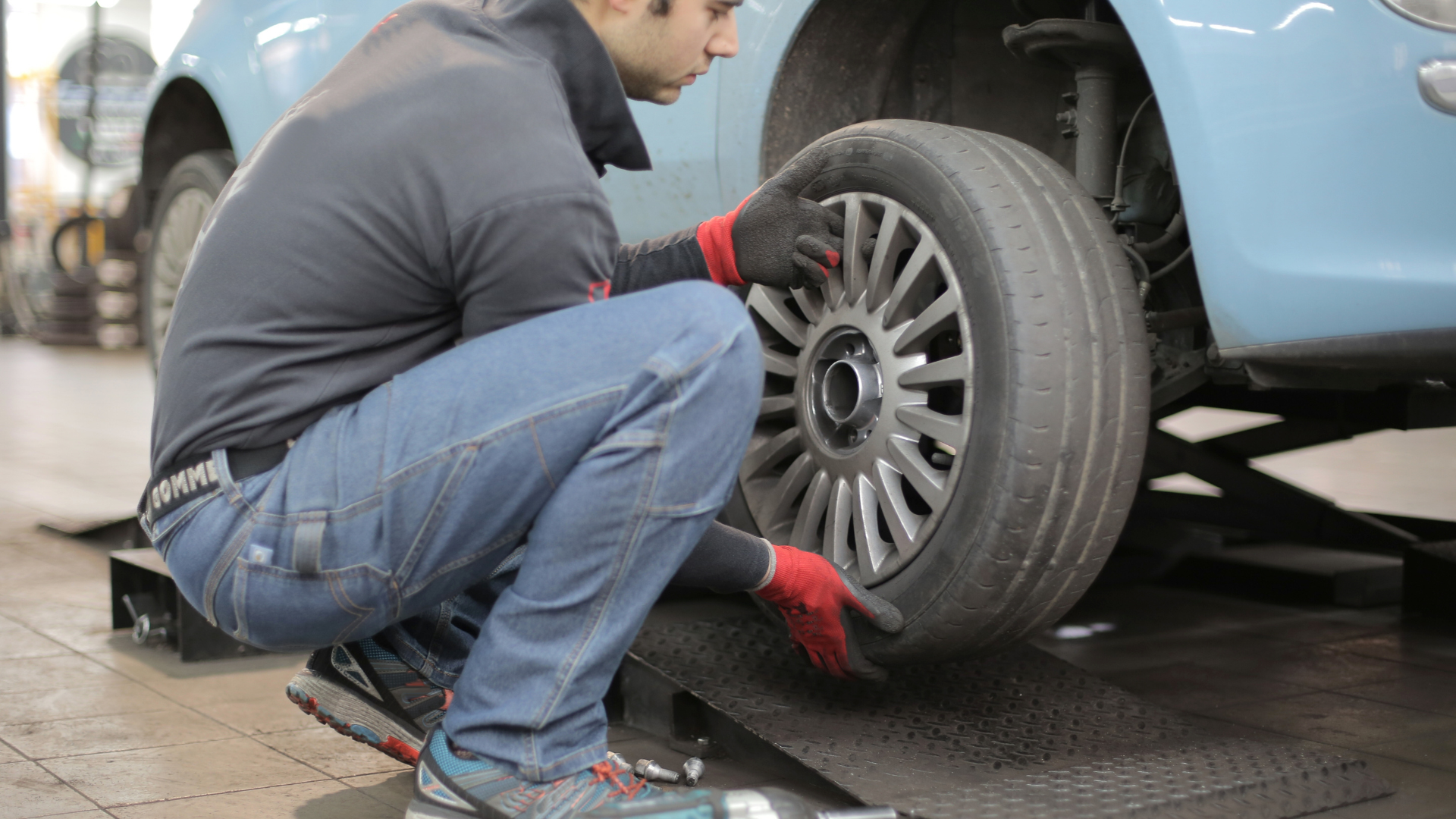
Mechanic kneeling beside a light blue car, checking or replacing a front wheel in a garage.

Older Tires Can Become Harder

As rubber ages, it can become less pliable.


That matters because tire grip depends partly on the rubber's ability to interact with the pavement.


A hardened tire may not respond as well in wet conditions, during emergency braking, or when cornering.


That can be difficult to detect during normal everyday driving.


The tire may feel fine until extra traction is suddenly needed.


Storage Conditions Matter

Tire aging is influenced by where and how a vehicle is stored.


Long-term exposure to direct sunlight, high heat, or weather can accelerate deterioration.


Garaged vehicles may have better protection, but storage alone does not stop aging entirely.


Tires still need to be evaluated based on age, condition, visible damage, and manufacturer guidance.


This is why the date code on the tire matters.
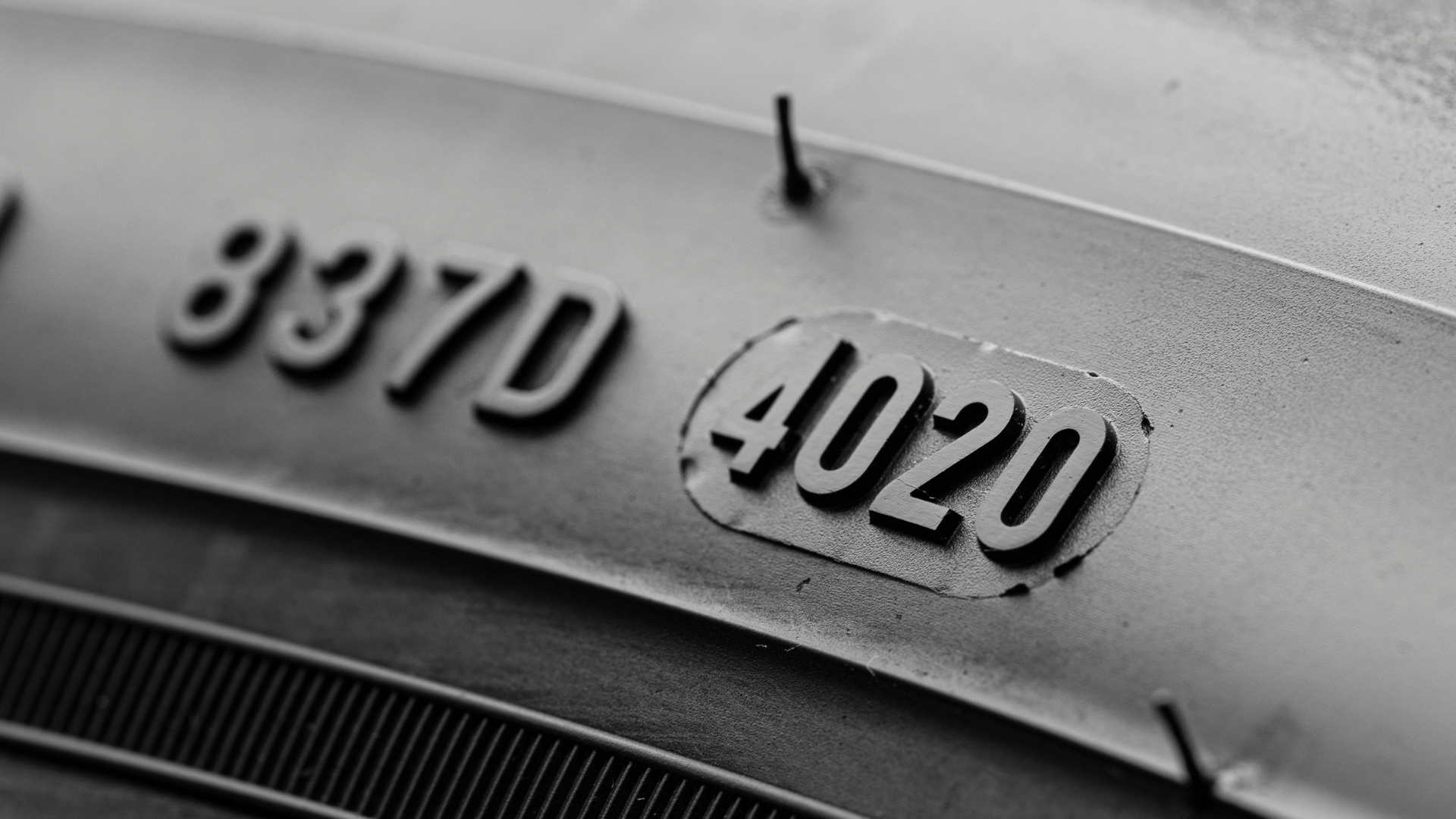
Close-up of a black metal surface stamped with raised numbers “8370” and “402U”

Check the Tire Date Code

Every tire has a Department of Transportation code stamped on the sidewall.

The final four digits identify when the tire was manufactured.


For example, a code ending in 2322 means the tire was made during the 23rd week of 2022.


This can be useful when buying a used vehicle, inspecting a spare tire, or trying to determine how old an existing set really is.


Drivers are sometimes surprised to learn that tires on a low-mileage vehicle are much older than expected.


Spare Tires Age Too

Spare tires are easy to forget because they may never touch the road.

But they still age.


A spare that has been sitting in a trunk or under a vehicle for many years should not automatically be assumed to be ready for service.


Its pressure, age, sidewall condition, and overall integrity should be checked periodically.


Finding out that an old spare is no longer dependable during a roadside emergency is not ideal.
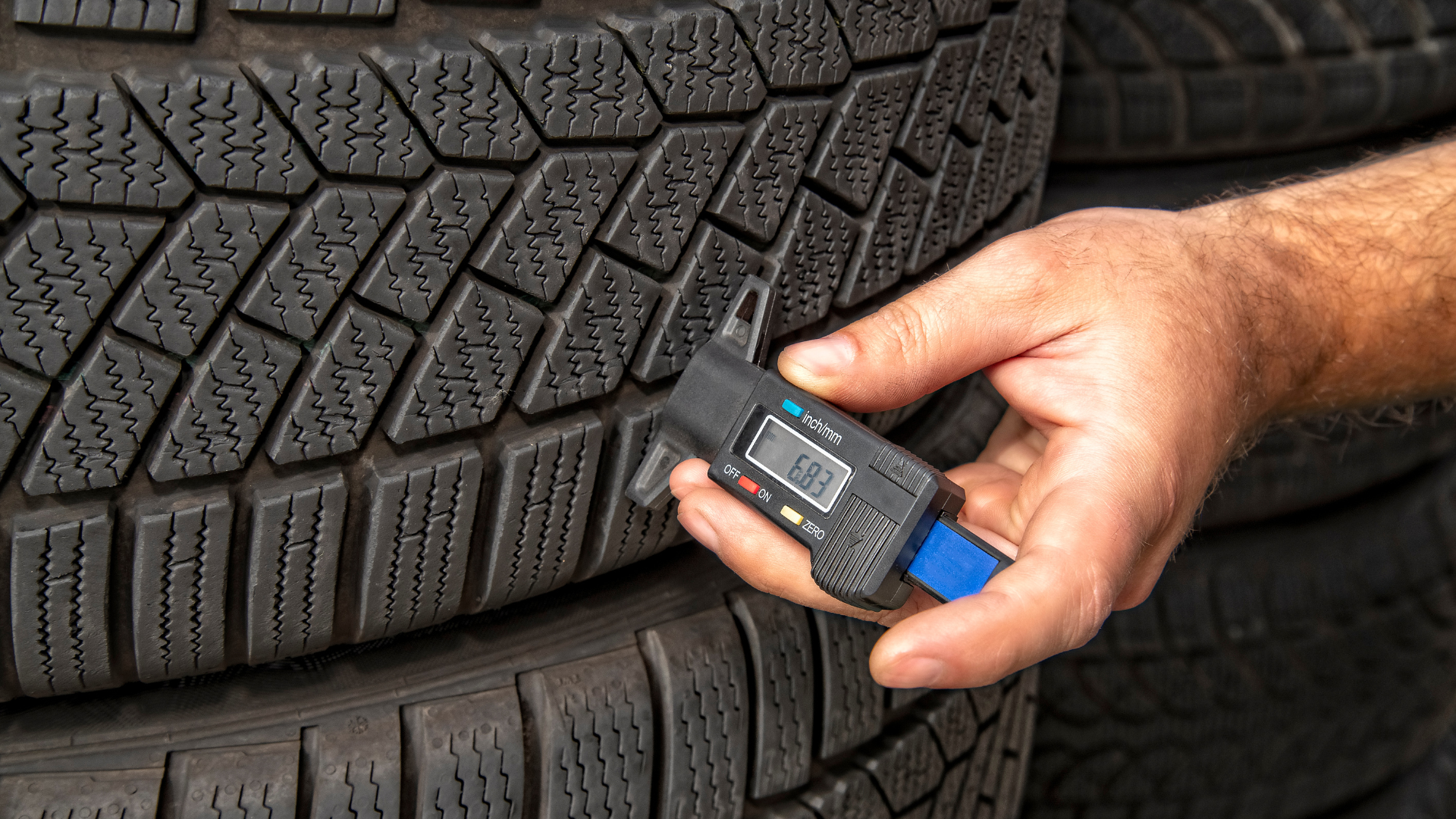
Hand checking tire tread depth with a gauge on a car tire.

Tread Depth Is Still Important

Age does not replace normal tread inspection.


Both matter.


A tire may need replacement because the tread is worn, because the rubber has aged, because the sidewall is damaged, or because of a combination of these issues.


The safest decision comes from looking at the entire tire rather than relying on one measurement.


Have Older Tires Evaluated

If your tires still have good tread but have been on the vehicle for many years, it may be time for a closer inspection.


Raymond’s Tire Shop can evaluate tire age, tread condition, sidewalls, pressure, wear patterns, and other factors that affect tire performance.


If you are unsure how old your tires are or whether they are still suitable for regular driving, contact Raymond’s Tire Shop for an inspection. Replacing an aging tire before visible wear becomes severe can help reduce the chance of discovering a problem when you need the tire most.

September 11, 2026
A flat tire does not always mean the tire has to be replaced. In many cases, a small puncture can be repaired safely and returned to service. The key is where the puncture occurred, how large it is, and whether the tire suffered additional damage while losing air. That is why a professional inspection matters. Two punctures that lo ok similar from the outside may require completely different solutions once the tire is removed and examined internally. Location Matters Most One of the first things a technician looks at is where the puncture is located. Damage in the central tread area is often the best candidate for repair. This part of the tire is designed to handle contact with the road and can sometimes be repaired when the puncture is small and otherwise straightforward. Punctures near the shoulder or sidewall are much more concerning.  These areas flex significantly while the tire is moving and cannot usually be repaired safely using standard puncture-repair methods. If a nail, screw, or other object damages the sidewall or outer shoulder, replacement is often the safer option.
September 6, 2026
A wheel alignment can correct important steering and tire-angle settings, but the alignment itself depends on the suspension being in good mechanical condition. If ball joints, tie rods, control arm bushings, wheel bearings, or other components are worn, the wheels may not stay in the position the technician sets.  That is why some vehicles continue pulling , wearing tires unevenly, or developing an off-center steering wheel even after an alignment. In those cases, the problem may not be the alignment machine or the adjustment. It may be worn suspension or steering components underneath the vehicle.
August 28, 2026
When a tire repeatedly loses air but there is no obvious nail, screw, or visible puncture, the problem may be where the tire meets the wheel. This area is known as the tire bead, and a poor seal between the bead and the rim can allow air to escape gradually. Tire bead leaks are a common cause of slow pressure loss. Understanding why they happen can help drivers recognize when a tire needs professional inspection rather than repeatedly adding air. What Is the Tire Bead? The bead is the reinforced inner edge of the tire that sits tightly against the wheel rim. When a tire is properly mounted and inflated, air pressure helps hold the bead securely against the wheel, creating an airtight seal. If that sealing surface becomes damaged, dirty, corroded, or distorted, a small pathway can develop for air to escape.  Because these leaks may be very small, the tire can lose pressure over several days or weeks rather than going flat immediately.
August 23, 2026
A pothole impact can feel like a quick jolt, but the forces involved can affect several parts of the tire and wheel assembly. The faster the vehicle is moving, the less time the tire has to absorb the impact. In some cases, the damage is immediately obvious. In others, problems may not become noticeable until later. Raymond’s Tire Shop helps drivers inspect tires, wheels, balancing, and alignment after hard road impacts. Understanding what can happen during a pothole strike can make it easier to recognize when a tire needs professional attention. The Tire Is Compressed Extremely Quickly When a tire drops into a pothole and strikes the far edge, the sidewall and tread can be compressed between the road and the wheel. Tires are designed to flex, but a severe impact can exceed what the internal structure can safely absorb.  The risk can be greater when tire pressure is too low because there is less air cushioning between the road surface and the wheel. However, even a properly inflated tire can be damaged by a deep pothole at sufficient speed.
August 16, 2026
Tires are one of the most important safety components on any vehicle because they are the only parts that maintain direct contact with the road. As tires wear, their ability to grip pavement, channel water, and respond predictably can gradually decline. The challenge is that unsafe tire conditions are not always obvious until performance has already been affected.  Raymond’s Tire Shop helps drivers evaluate tread wear, tire damage, pressure issues, alignment problems, and other conditions that can affect tire safety. Knowing what to look for can help you recognize when a tire needs professional attention or replacement.
August 7, 2026
Most drivers think of tires simply as the round rubber components that allow a vehicle to roll down the road. In reality, tires are sophisticated pieces of engineering that perform several essential functions every time a vehicle is in motion. They support the weight of the vehicle, transmit steering and braking forces, absorb road irregularities, and maintain traction in changing driving conditions. Every acceleration, turn, and stop depends on these four small contact patches where the tires meet the road.  Understanding the primary functions of a tire helps drivers appreciate why routine maintenance and timely replacement are so important. Raymond’s Tire Shop helps customers choose quality tires and maintain them properly so their vehicles continue to perform safely and efficiently throughout the life of the tire.