How Pothole Season Can Affect Tires, Wheels, and Alignment

Potholes can do more than create an uncomfortable jolt.


A hard impact can affect the tire, wheel, alignment, or suspension, sometimes without causing an immediately obvious problem.


That is why drivers should pay attention to how the vehicle feels after hitting a deep pothole, especially if the impact was strong enough to make the steering wheel shake or the vehicle pull suddenly.


Small changes can be early signs of damage.

Person looking into a cracked asphalt puddle reflecting the sky and nearby buildings, with shoes at the edge

Tires Can Take the First Hit

The tire is often the first part of the vehicle to absorb the impact.


A severe pothole can pinch the tire between the road and the wheel, which may damage the sidewall or internal structure.


Sometimes the damage is visible.


You may notice a bulge, cut, or loss of pressure.


In other cases, the tire may look normal at first but begin losing air later.


A slow leak after a pothole impact should not be ignored.


Raymond’s Tire Shop can inspect the tire to determine whether the damage may be repairable or whether replacement is the safer option.

Sunlit empty road stretching into a hazy forested horizon

Wheels Can Bend Without Looking Dramatic

Wheels can also be damaged by a hard impact.


A bent wheel may not look obviously broken, especially if the deformation is on the inner edge.


Still, even a small bend can affect how the tire seals against the wheel or how smoothly the wheel rotates.


Drivers may notice vibration at certain speeds, a recurring air leak, or a change in ride quality.


In more serious cases, a wheel may crack.


Any visible crack or persistent loss of pressure deserves prompt attention.

Melting snow on dark asphalt with a twig and green grass blades visible

Alignment Can Shift After a Hard Impact

A strong pothole strike can also affect alignment.


The vehicle may begin pulling to one side.


The steering wheel may no longer sit straight when the vehicle is traveling straight ahead.


Tire wear may become uneven.


The vehicle may even continue to feel mostly normal while the alignment is slightly out of specification.


That matters because poor alignment can shorten tire life over time.


A post-pothole alignment check can help catch problems before they create more wear across the tread.

Close-up of a car tire on a road at sunset, with trees and grass in the background

Suspension Problems Can Mimic Tire Issues

Not every symptom after a pothole impact comes from the tire or wheel.


Suspension components can also be affected.


Bent or worn components may change wheel position, create noise, or contribute to uneven tire wear.


If the vehicle develops clunking, pulling, unusual steering feel, or repeated alignment problems after a major impact, the issue may extend beyond the tire itself.


That is why a complete evaluation can be more useful than simply replacing the most visibly damaged part.
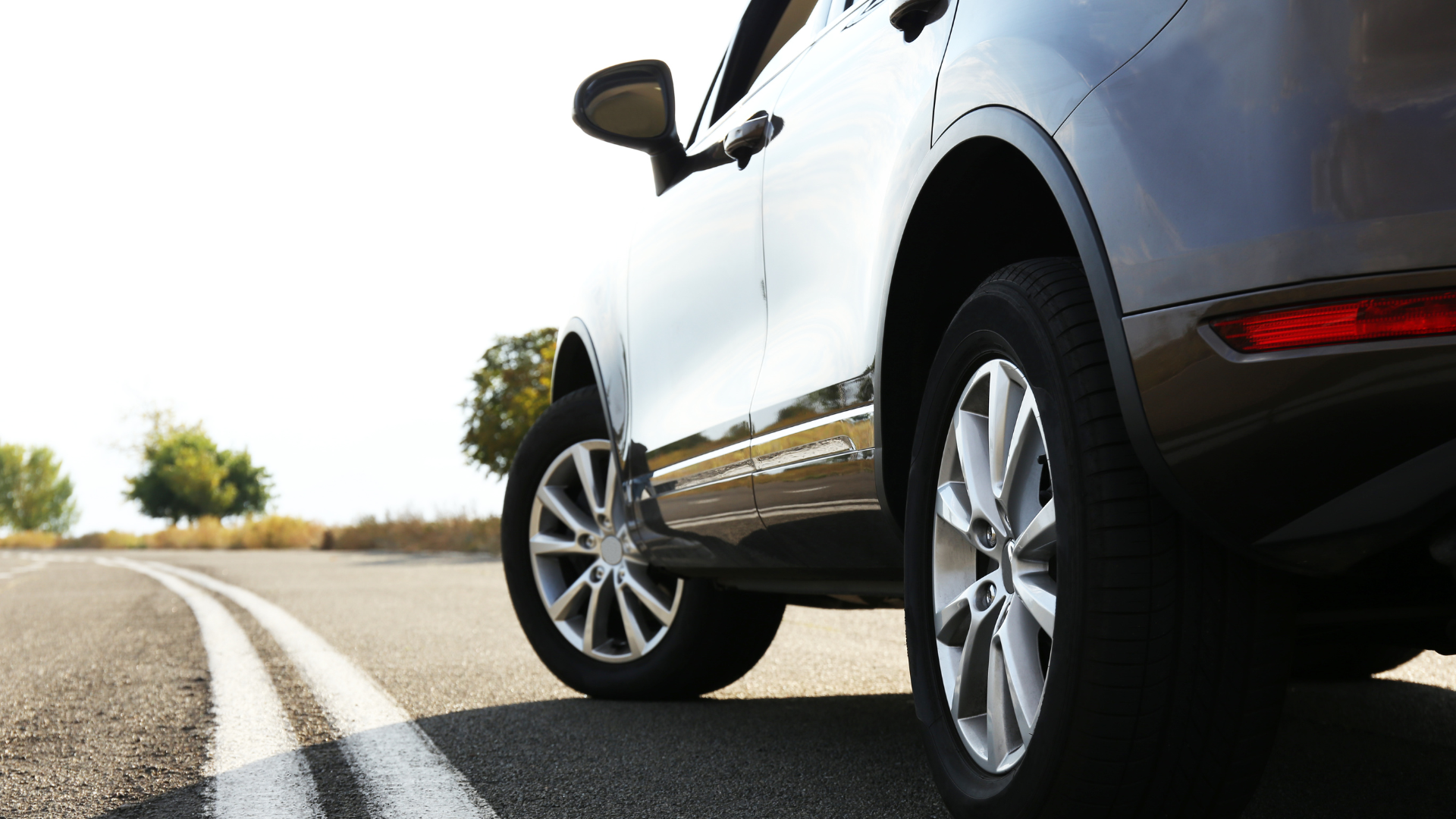
Black SUV on a rural road, viewed from the rear wheel near the shoulder in daylight

Vibration Should Not Be Written Off

A new vibration after hitting a pothole deserves attention.


If the steering wheel begins shaking at highway speeds, the wheel may be bent or the tire may have developed an issue.


A balance problem can also become noticeable after an impact.


The exact cause depends on the vehicle and the damage, but a new vibration is a good reason to have the tires and wheels checked.


Ignoring it can make driving less comfortable and may allow uneven wear to continue.

Close-up of a fresh asphalt patch on a gravel road, with a booted worker standing nearby

Check Tire Pressure After a Major Impact

A pothole can sometimes disturb the tire bead, damage the valve area, or create a puncture that leaks slowly.


Even if the tire does not go flat immediately, the pressure may begin dropping over the next few hours or days.


Checking pressure after a hard pothole hit can help catch that problem early.


If one tire keeps losing air, it should be inspected rather than repeatedly refilled.


Watch for Problems in the Days That Follow

Not every pothole-related problem appears instantly.


Over the next several days, pay attention to steering, vibration, tire pressure, unusual noises, and changes in tread wear.


A vehicle that suddenly handles differently is giving you useful information.

Small white puddle on dark asphalt road surface

Do Not Let One Pothole Shorten the Life of Your Tires

Potholes can affect multiple parts of the wheel-and-tire system at once.


The tire may be damaged, the wheel may bend, alignment may shift, and suspension components may be stressed by the same impact.


Raymond’s Tire Shop can inspect tires, wheels, alignment, and related issues after a pothole strike.


If your vehicle starts pulling, vibrating, losing tire pressure, or wearing tread unevenly after a hard impact, having it checked early can help prevent a small problem from becoming a much more expensive one.

Cracked pavement with a large puddle reflecting an orange building and cloudy sky
White SUV driving on a snowy road with tire tracks, winter trees and a dark car in the background
Puddle in cracked pavement reflecting bare tree branches, in black and white.
View from a car driving on a snowy highway, with blurred trees and guardrails passing by
Puddle on rough gray pavement reflecting tree branches overhead
A puddle reflects a lamppost on wet pavement.
Close-up of stacked black tires, one showing the Bridgestone logo.
Cracked rural road with a large pothole in the foreground
November 6, 2026
It is common for the tires on the front of a vehicle to wear differently from the tires on the rear. That does not automatically mean something is wrong. Front and rear tires often have different jobs , and those differences affect how quickly the tread wears and where the wear appears. Understanding those patterns can help drivers catch maintenance issues earlier and get more life from a set of tires. Front Tires Handle More Steering Work The front tires are responsible for changing the vehicle’s direction. Every turn puts additional stress on the tread, especially along the shoulders of the tires. Parking maneuvers, tight turns, city driving, and repeated steering input can all increase front-tire wear. On many vehicles, the front tires also carry more of the vehicle’s weight because the engine and other major components are located toward the front. That combination of steering and weight can cause the front pair to wear faster.
October 30, 2026
A colder morning can make a perfectly normal tire suddenly look underinflated . That surprises a lot of drivers. The reason is simple: the air inside a tire contracts as temperatures fall. When that happens, tire pressure drops too. The tire may not have a leak at all. But lower pressure still matters because it can affect handling, tread wear, fuel efficiency, and the amount of heat the tire generates while driving. That is why temperature changes are a good reminder to check tire pressure instead of relying only on appearance.
October 23, 2026
Tires do not wear out based on mileage alone. How a vehicle is driven can have a major effect on how quickly the tread disappears, how evenly the tires wear, and how often problems develop. Two drivers can use the same type of tire on similar vehicles and get very different service life simply because their driving habits are different. That is why tire care is not only about checking air pressure and scheduling rotations.  It is also about how the vehicle is handled every day.
October 19, 2026
It can be frustrating to inspect your tires and discover that one is wearing much faster than the others. At first glance, it may seem like a problem with that tire alone . In reality, uneven wear often points to something happening elsewhere in the vehicle. Alignment, suspension condition, tire pressure , wheel damage, and even driving patterns can all cause one tire to lose tread faster than the other three. Understanding the reason matters because replacing the worn tire without correcting the cause may lead to the same problem happening again. Alignment Can Concentrate Wear on One Tire Wheel alignment is one of the most common reasons for uneven tire wear. If one wheel has too much positive or negative camber, or if the toe is out of specification, that tire may scrub against the road differently than the others. The result can be accelerated wear along the inner or outer edge. The vehicle may still seem to drive normally, especially if the misalignment is minor. That is why visual tire inspection can sometimes reveal an alignment problem before the driver notices pulling or steering changes.
October 7, 2026
Tire tread gets a lot of attention, but tread depth is not the only factor that matters. Tires also age . Even when a tire still has visible tread, the rubber compounds can gradually change over time because of heat, sunlight, weather exposure, and normal use. That is why knowing how to read the DOT date code can help drivers understand how old a tire really is.  The date code does not tell you everything about tire condition, but it provides an important piece of the overall picture.
October 1, 2026
A hard pothole impact can do more than damage a tire. The force can also bend a wheel, especially if the pothole is deep, the vehicle is moving quickly, or the tire has a lower-profile sidewall with less cushioning between the road and rim. Sometimes the damage is obvious. In other cases, the wheel may look normal but cause vibration, air loss, or handling problems.  Knowing what to watch for after a pothole strike can help drivers catch wheel damage before it creates additional tire or suspension problems.