Why Front and Rear Tires Often Wear Differently
It is common for the tires on the front of a vehicle to wear differently from the tires on the rear.
That does not automatically mean something is wrong.
Front and rear tires often have different jobs, and those differences affect how quickly the tread wears and where the wear appears.
Understanding those patterns can help drivers catch maintenance issues earlier and get more life from a set of tires.
Front Tires Handle More Steering Work
The front tires are responsible for changing the vehicle’s direction. Every turn puts additional stress on the tread, especially along the shoulders of the tires.
Parking maneuvers, tight turns, city driving, and repeated steering input can all increase front-tire wear.
On many vehicles, the front tires also carry more of the vehicle’s weight because the engine and other major components are located toward the front. That combination of steering and weight can cause the front pair to wear faster.
Braking Adds More Stress to the Front
During braking, weight shifts forward.
That means the front tires often handle a larger share of the stopping force.
Frequent stop-and-go driving can therefore contribute to additional front-tire wear.
This is especially noticeable for drivers who spend a lot of time in city traffic.
Hard braking can increase that effect even more.
The result is that two tires from the same set may have noticeably less tread simply because they spent more time on the front axle.
Drive Type Also Matters
The way a vehicle sends power to the wheels can affect wear patterns.
On a front-wheel-drive vehicle, the front tires handle steering, much of the braking load, and engine power.
That can make them wear considerably faster than the rear tires.
Rear-wheel-drive vehicles distribute some of that work differently because the rear tires provide propulsion.
All-wheel-drive vehicles can spread driving force across all four tires, but even then, the tires may not wear at exactly the same rate.
The vehicle design, weight distribution, alignment, suspension condition, and driving habits all play a role.
Rotation Helps Even Out the Work
Regular tire rotation changes which position each tire occupies. That helps spread the workload more evenly.
A tire that has spent thousands of miles handling front-end steering and braking can be moved to a less demanding position, depending on the vehicle and tire design.
Over time, this can help the full set wear more evenly.
Rotation intervals can vary, so the vehicle manufacturer’s recommendations are a useful starting point.
Some tire designs and vehicle configurations may require specific rotation patterns. Raymond’s Tire Shop can help determine what is appropriate for the vehicle.
Uneven Wear Can Still Signal a Problem
Not all differences between front and rear tires are normal.
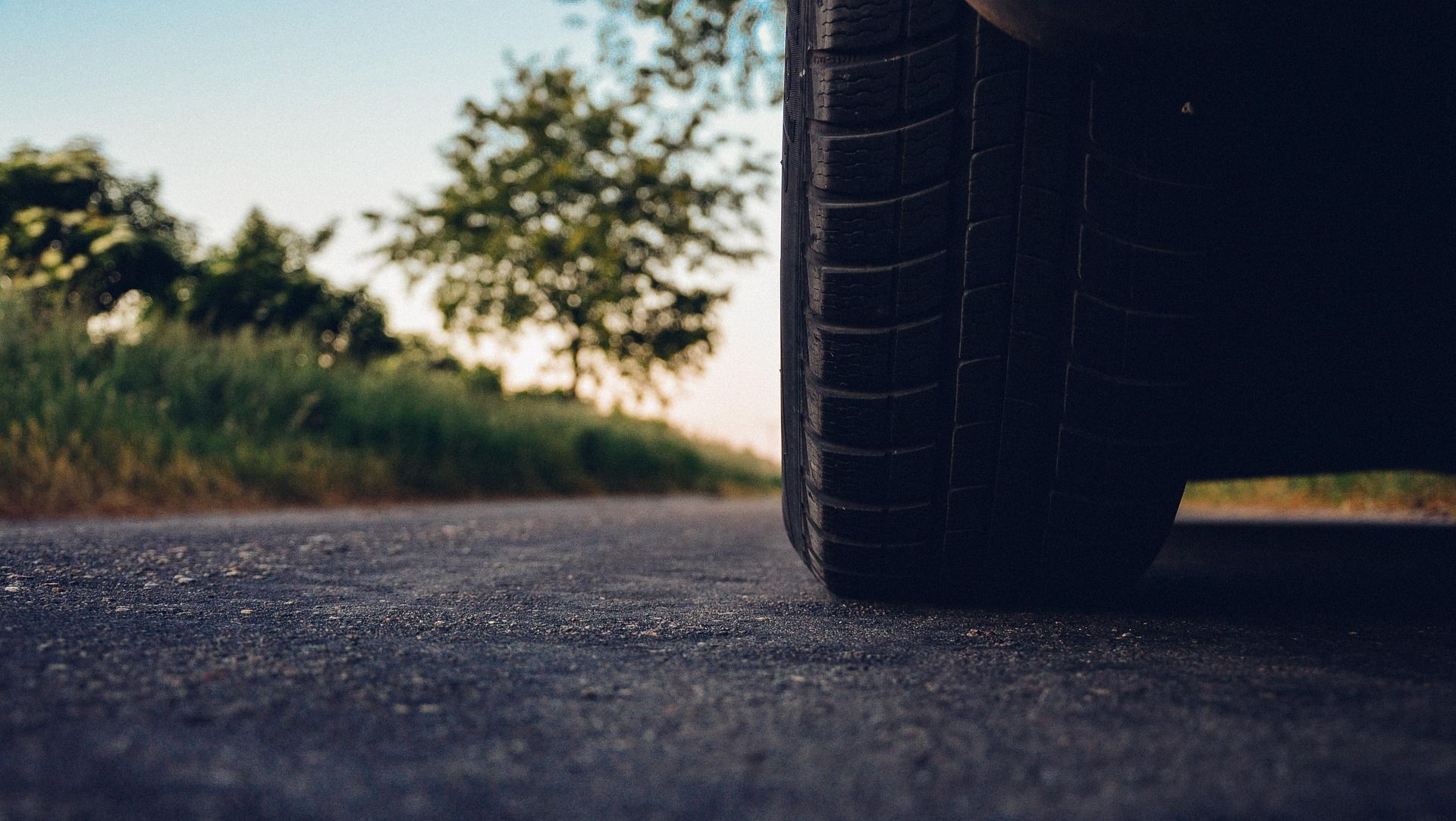
If one front tire is wearing much faster than the other, there may be an alignment or suspension issue.
Feathering, cupping, excessive shoulder wear, or unusual tread patterns can also suggest that something needs attention.
A vehicle may even drive straight while the alignment is slightly out of specification.
That is why tire wear itself can be an important clue.
The tread often shows a problem before the driver notices a major change in handling.
Tire Pressure Can Change the Pattern
Pressure matters too.
An underinflated tire may wear more heavily along the outer edges.
An overinflated tire may wear more toward the center.
If one axle regularly carries heavier loads, pressure differences can make front-to-rear wear even more noticeable.
Checking tire pressure manually on a regular basis can help reduce unnecessary wear and improve consistency across the set.
Inspect All Four Tires, Not Just the Worst One
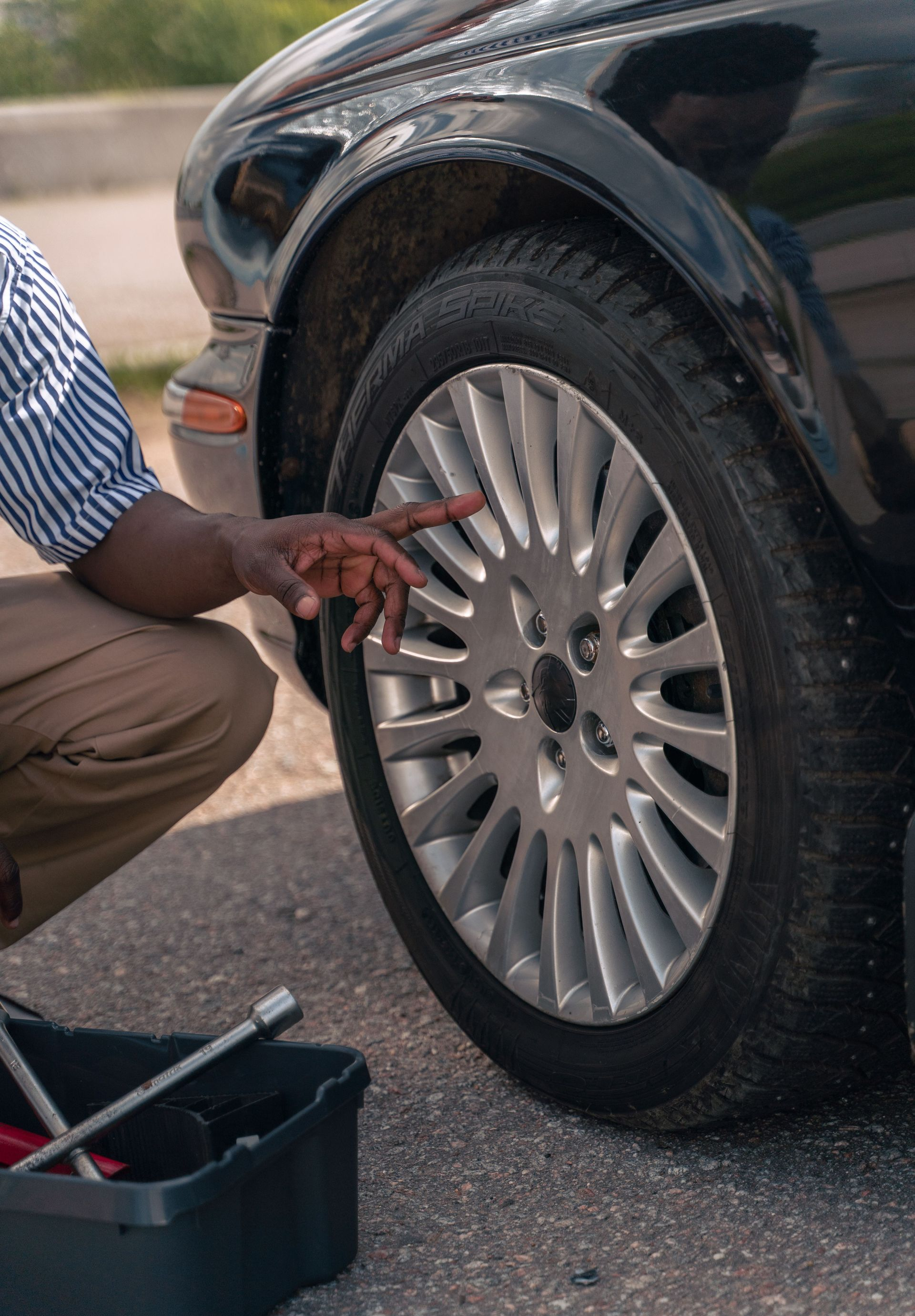
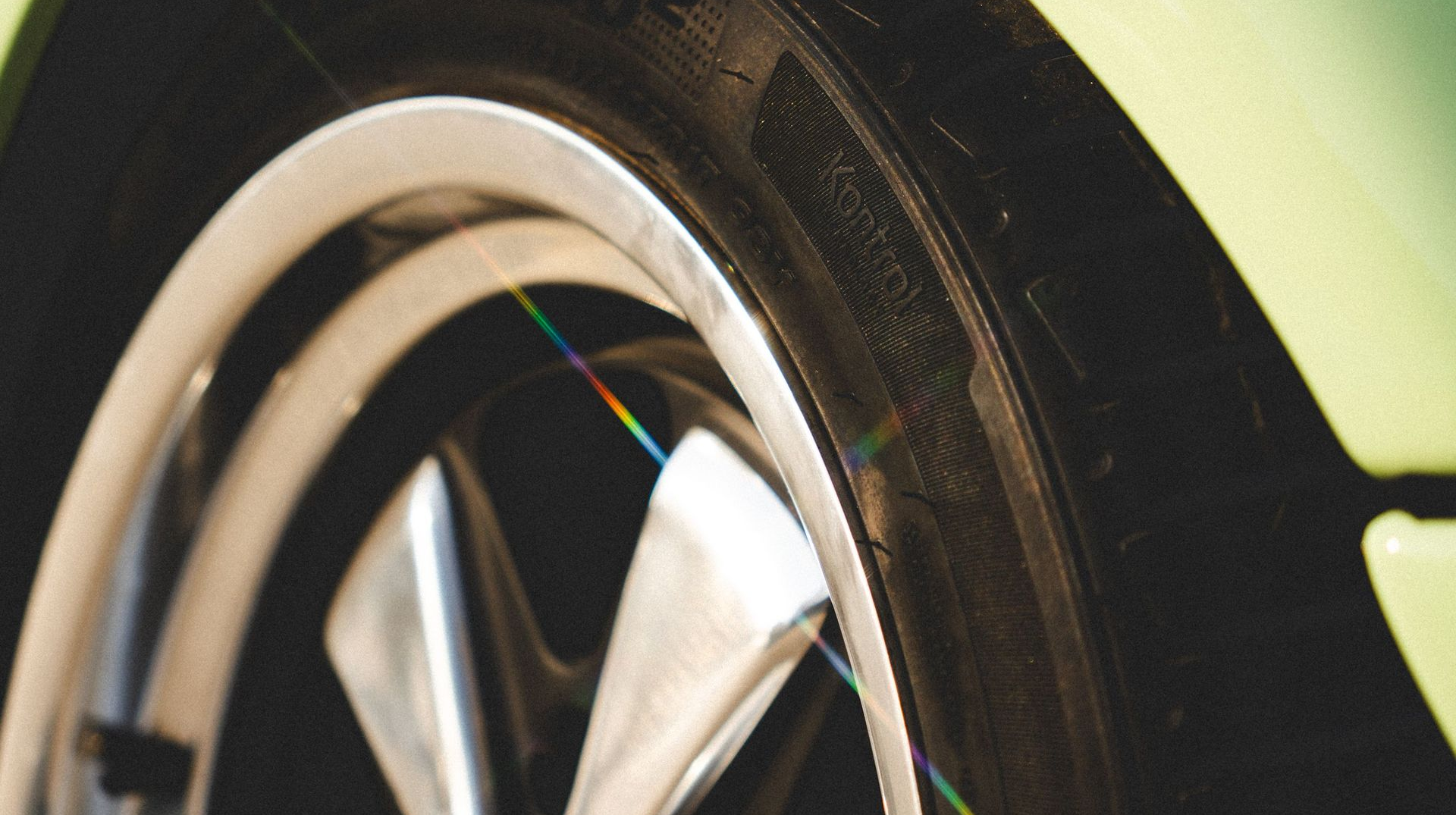
Drivers sometimes focus on the single tire that looks most worn. It is better to compare all four.
Look at tread depth, wear pattern, visible damage, and pressure.
Comparing the tires side by side can help reveal whether the wear is simply related to position or whether a mechanical problem may be developing.
Keep the Set Working Together
Front and rear tires often wear differently because they do different jobs. Steering, braking, power delivery, vehicle weight, alignment, and driving habits all influence how quickly each tire wears.
Raymond’s Tire Shop can help drivers with tire inspections, rotations, balancing, alignments, flat repairs, wheels, and replacement tires.
If the front pair is wearing faster than the rear, the answer may be normal vehicle dynamics. But if the difference is extreme or the tread pattern looks unusual, it is worth having the tires and alignment checked before the problem gets worse.