How Proper Tire Maintenance Improves Road Trip Safety

Summer is one of the busiest travel seasons of the year. Families head out on vacations, students return home from school, and drivers spend more time on the road enjoying warm weather activities. Before setting off on a long trip, most people focus on planning routes, booking accommodations, and packing their vehicles. However, one of the most important parts of road trip preparation is often overlooked: tire maintenance.


Your tires are the only part of your vehicle that makes direct contact with the road. Their condition affects handling, braking, ride quality, and overall safety. Taking time to inspect and maintain your tires before a road trip can help reduce the likelihood of unexpected problems and improve your confidence behind the wheel.

Three people sit in a red van, one driving, with sunlight streaming through the windows.

Long Drives Create Additional Tire Stress

Every mile driven generates heat and friction. During a road trip, tires remain under continuous stress for extended periods, especially when vehicles are carrying passengers, luggage, and other cargo.


Summer travel can create additional challenges because hot pavement and high outdoor temperatures increase tire operating temperatures. Tires that are already worn, underinflated, or damaged may be more vulnerable to problems during extended highway driving.


A thorough tire inspection before departure can help identify potential concerns before they affect your trip.
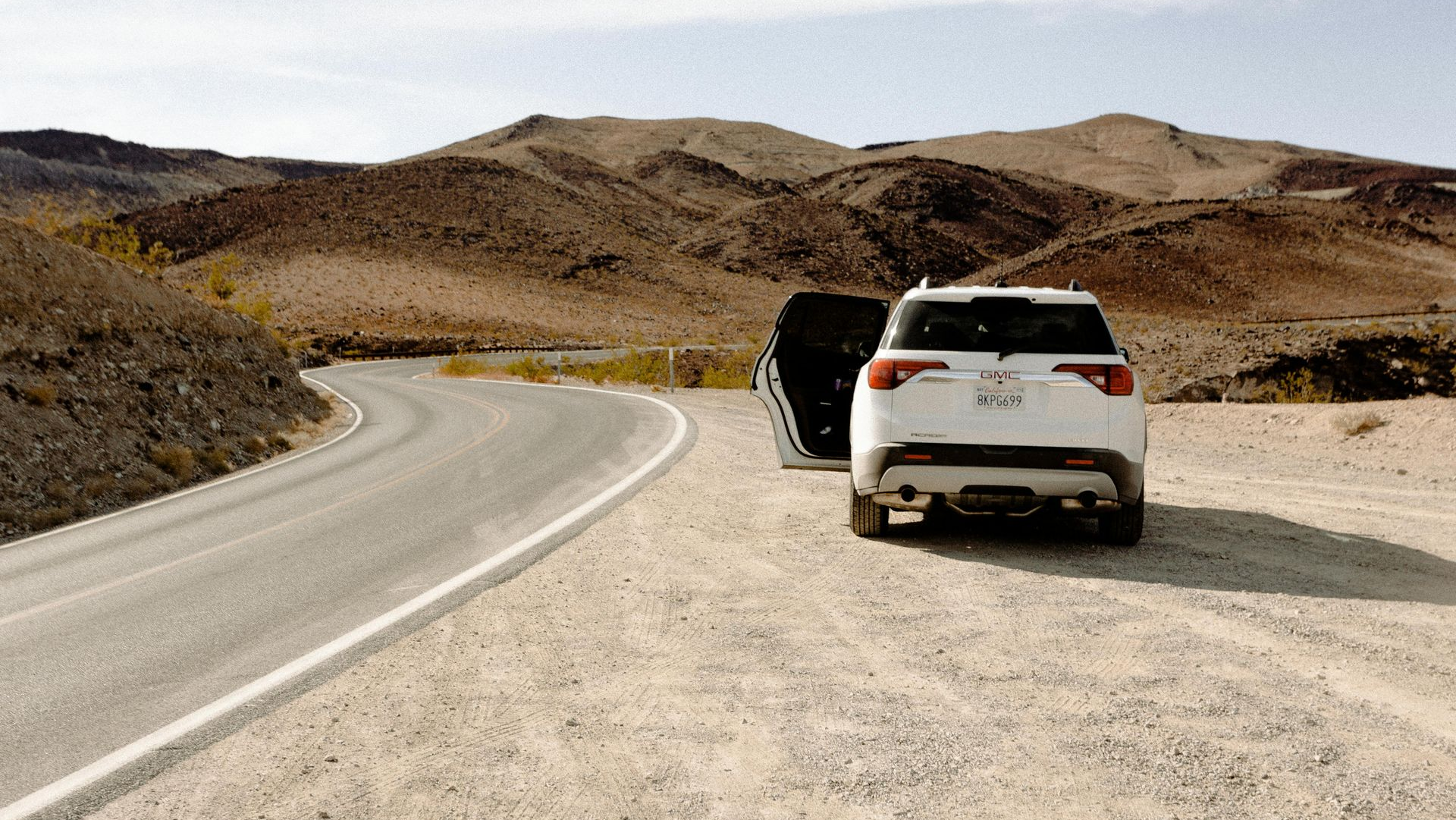
Two SUVs parked on a winding desert road beside rocky hills under a clear sky

Proper Tire Inflation Matters

One of the simplest and most important maintenance tasks is checking tire pressure. Both underinflated and overinflated tires can affect vehicle performance.


Underinflated tires may:

  • Generate excess heat
  • Wear more quickly
  • Reduce fuel efficiency
  • Affect handling


Overinflated tires can create uneven wear patterns and reduce the amount of tire contacting the road surface.


Because tire pressure naturally changes over time, checking inflation before a road trip is a smart precaution that takes only a few minutes.

Two people sitting on the back of an SUV on a forest road, with one person smiling.

Tread Depth Supports Traction

Tread is responsible for helping tires maintain traction in a variety of driving conditions. Adequate tread depth is particularly important when encountering rain, standing water, or sudden weather changes during a trip.


As tires wear down, their ability to channel water away from the contact surface decreases. This can reduce traction and increase the risk of hydroplaning.


A professional tire inspection can help determine whether your tires have sufficient tread for safe travel.


Tire Rotations Promote Even Wear

Many drivers are surprised to learn that tires do not wear at the same rate. Depending on the vehicle, certain tires may experience greater stress than others.


Routine tire rotations help distribute wear more evenly across all four tires. This often contributes to longer tire life and more consistent performance.


If it has been a while since your last rotation, scheduling this service before a long road trip may help ensure your tires are wearing as intended.

White car and cyclists on a coastal road at sunset, with calm water and hills in the background

Balancing Helps Improve Ride Quality

Wheel balancing is another maintenance item that can influence comfort and performance during highway driving.


Unbalanced tires may contribute to:

  • Steering wheel vibrations
  • Uneven tire wear
  • Reduced ride comfort


These issues can become more noticeable during extended periods of highway travel.


A properly balanced tire and wheel assembly helps provide a smoother driving experience and can contribute to more even tire wear over time.

People inside a car driving at sunset, viewed from the back seat.

Don’t Ignore Visible Damage

Before any road trip, it is important to visually inspect your tires for signs of damage.


Potential warning signs include:

  • Cracks in the sidewall
  • Bulges or bubbles
  • Embedded objects
  • Uneven wear patterns
  • Frequent air loss


Even minor issues can become more significant when tires are subjected to long hours of highway driving.


Professional evaluation can help determine whether a repair or replacement is necessary before travel begins.

People boarding a white van at sunset, with one person carrying a number 99 jersey

A Little Preparation Goes a Long Way

Road trips should be about making memories, not dealing with avoidable vehicle problems. While no maintenance plan can eliminate every possible issue, proper tire care can significantly improve safety and reliability during summer travel.


At Raymond’s Tire Shop, we have helped drivers stay safely on the road for more than 40 years. Whether you need new tires, quality used tires, tire rotations, balancing, flat repairs, or a professional tire inspection, our team is here to help.


Before your next road trip, make sure your tires are ready for the journey. A little preparation today can help provide greater peace of mind for every mile ahead.


Person inside a car looking at a map while another person points to a location.
Silhouetted couple on a Jeep at sunset, under glowing orange clouds and framed by trees
Two people smiling in a red open-top vehicle on a sunny road, with another passenger in the foreground
Road view with cars driving toward a hazy mountain under bright sky.
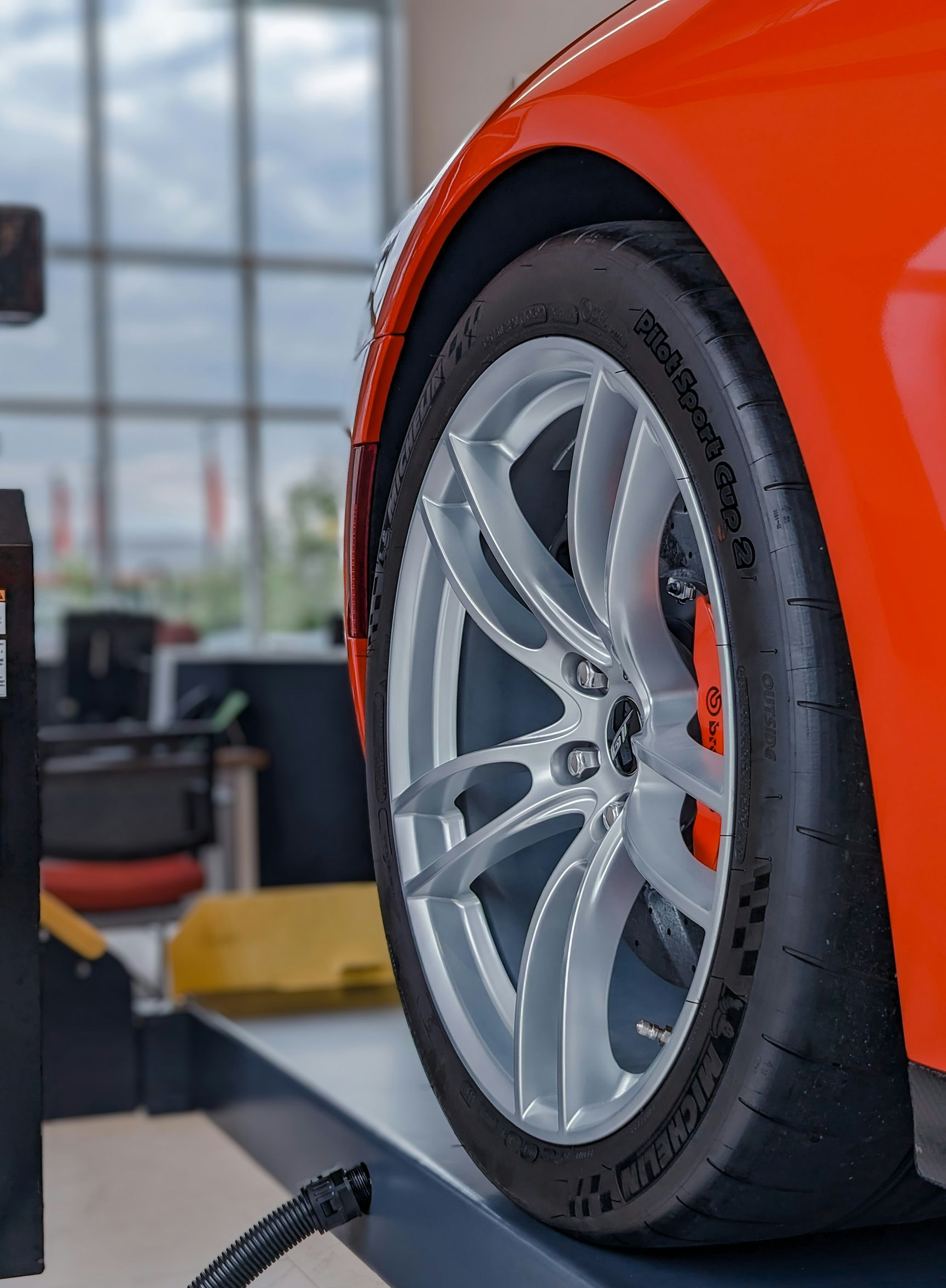
A bright orange car on a mechanic’s lift, showcasing a silver alloy wheel and high-performance tire in a shop.
Mud-covered silver SUV parked on a dirt road with trees in the background
Black car driving on a foggy, wet road beside dense green trees
August 28, 2026
When a tire repeatedly loses air but there is no obvious nail, screw, or visible puncture, the problem may be where the tire meets the wheel. This area is known as the tire bead, and a poor seal between the bead and the rim can allow air to escape gradually. Tire bead leaks are a common cause of slow pressure loss. Understanding why they happen can help drivers recognize when a tire needs professional inspection rather than repeatedly adding air. What Is the Tire Bead? The bead is the reinforced inner edge of the tire that sits tightly against the wheel rim. When a tire is properly mounted and inflated, air pressure helps hold the bead securely against the wheel, creating an airtight seal. If that sealing surface becomes damaged, dirty, corroded, or distorted, a small pathway can develop for air to escape.  Because these leaks may be very small, the tire can lose pressure over several days or weeks rather than going flat immediately.
August 23, 2026
A pothole impact can feel like a quick jolt, but the forces involved can affect several parts of the tire and wheel assembly. The faster the vehicle is moving, the less time the tire has to absorb the impact. In some cases, the damage is immediately obvious. In others, problems may not become noticeable until later. Raymond’s Tire Shop helps drivers inspect tires, wheels, balancing, and alignment after hard road impacts. Understanding what can happen during a pothole strike can make it easier to recognize when a tire needs professional attention. The Tire Is Compressed Extremely Quickly When a tire drops into a pothole and strikes the far edge, the sidewall and tread can be compressed between the road and the wheel. Tires are designed to flex, but a severe impact can exceed what the internal structure can safely absorb.  The risk can be greater when tire pressure is too low because there is less air cushioning between the road surface and the wheel. However, even a properly inflated tire can be damaged by a deep pothole at sufficient speed.
August 16, 2026
Tires are one of the most important safety components on any vehicle because they are the only parts that maintain direct contact with the road. As tires wear, their ability to grip pavement, channel water, and respond predictably can gradually decline. The challenge is that unsafe tire conditions are not always obvious until performance has already been affected.  Raymond’s Tire Shop helps drivers evaluate tread wear, tire damage, pressure issues, alignment problems, and other conditions that can affect tire safety. Knowing what to look for can help you recognize when a tire needs professional attention or replacement.
August 7, 2026
Most drivers think of tires simply as the round rubber components that allow a vehicle to roll down the road. In reality, tires are sophisticated pieces of engineering that perform several essential functions every time a vehicle is in motion. They support the weight of the vehicle, transmit steering and braking forces, absorb road irregularities, and maintain traction in changing driving conditions. Every acceleration, turn, and stop depends on these four small contact patches where the tires meet the road.  Understanding the primary functions of a tire helps drivers appreciate why routine maintenance and timely replacement are so important. Raymond’s Tire Shop helps customers choose quality tires and maintain them properly so their vehicles continue to perform safely and efficiently throughout the life of the tire.
July 31, 2026
Understanding how your tires interact with wet pavement is one of the most important parts of safe driving. While most drivers know that rain can make roads slippery, fewer understand how hydroplaning occurs or why it can cause a vehicle to suddenly lose traction. Knowing what causes hydroplaning—and how proper tire maintenance can reduce the risk—can help you stay safer during wet weather.  At Raymond’s Tire Shop, we believe that informed drivers make safer decisions. Keeping your tires in excellent condition is one of the best ways to improve vehicle performance when road conditions are less than ideal.
July 23, 2026
Your tires are one of the hardest-working components of your vehicle. They provide traction, support your vehicle’s weight, absorb impacts from the road, and help you maintain control in a wide range of driving conditions. Because they experience constant wear, replacing tires is an expected part of vehicle ownership. However, proper maintenance can help maximize their lifespan, improve performance, and save you money over time. Many of the factors that affect tire longevity are within a driver’s control. By following a few simple maintenance practices, you can help your tires wear more evenly and perform as intended throughout their service life.