La Importancia de la rotación regular de neumáticos

En Raymond’s Tire Shop, creemos que mantener su vehículo en óptimas condiciones comienza desde abajo, literalmente. Uno de los aspectos más importantes pero a menudo ignorados del mantenimiento vehicular es la rotación regular de los neumáticos. Este procedimiento simple puede extender significativamente la vida útil de sus neumáticos, mejorar el rendimiento de su vehículo y aumentar su seguridad en la carretera. En este artículo, hablaremos sobre qué es la rotación de neumáticos, con qué frecuencia debe realizarse y por qué es tan crucial.


¿Qué es la rotación de neumáticos?
Definición y proceso

La rotación de neumáticos es el proceso de cambiar los neumáticos de posición en el vehículo. Esto puede implicar cambiar los neumáticos delanteros por los traseros o moverlos de un lado al otro. El propósito de la rotación es asegurar un desgaste uniforme en los cuatro neumáticos. Los patrones de rotación recomendados pueden variar dependiendo del sistema de tracción del vehículo (delantera, trasera o total) y el tipo de neumático.
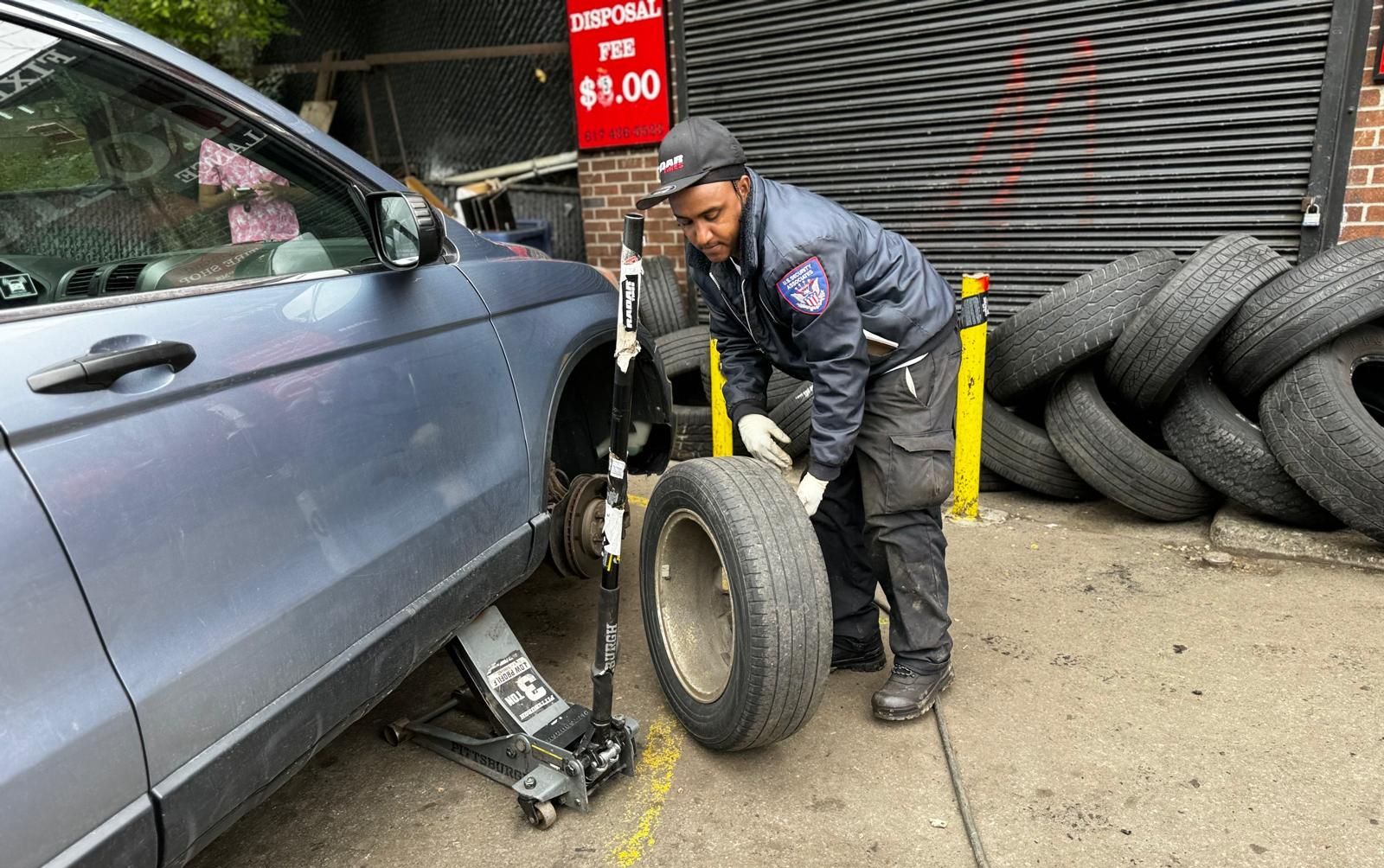
A man is changing a tire on a car in front of a pile of tires.

Patrones comunes de rotación:
- Cruzada hacia adelante (Forward Cross): Los neumáticos delanteros se mueven hacia atrás y los traseros se cruzan hacia los lados frontales opuestos.
- Cruzada hacia atrás (Rearward Cross): Los neumáticos traseros se mueven hacia adelante y los delanteros se cruzan hacia los lados traseros opuestos.
- Patrón en X: Todos los neumáticos se cambian en diagonal, de modo que cada uno se mueve a la esquina opuesta.
- De Lado a lado: Se intercambian los neumáticos del lado izquierdo con los del derecho, generalmente en vehículos con neumáticos direccionales.


¿Con Qué Frecuencia Deben Rotarse los Neumáticos?
Recomendaciones del Fabricante

La frecuencia puede variar según el vehículo y los hábitos de conducción. Sin embargo, como regla general, se recomienda rotar los neumáticos cada 5,000 a 7,500 millas (8,000 a 12,000 kilómetros). Este intervalo suele coincidir con los cambios de aceite, lo que facilita recordarlo. Siempre consulte el manual del propietario para obtener recomendaciones específicas.
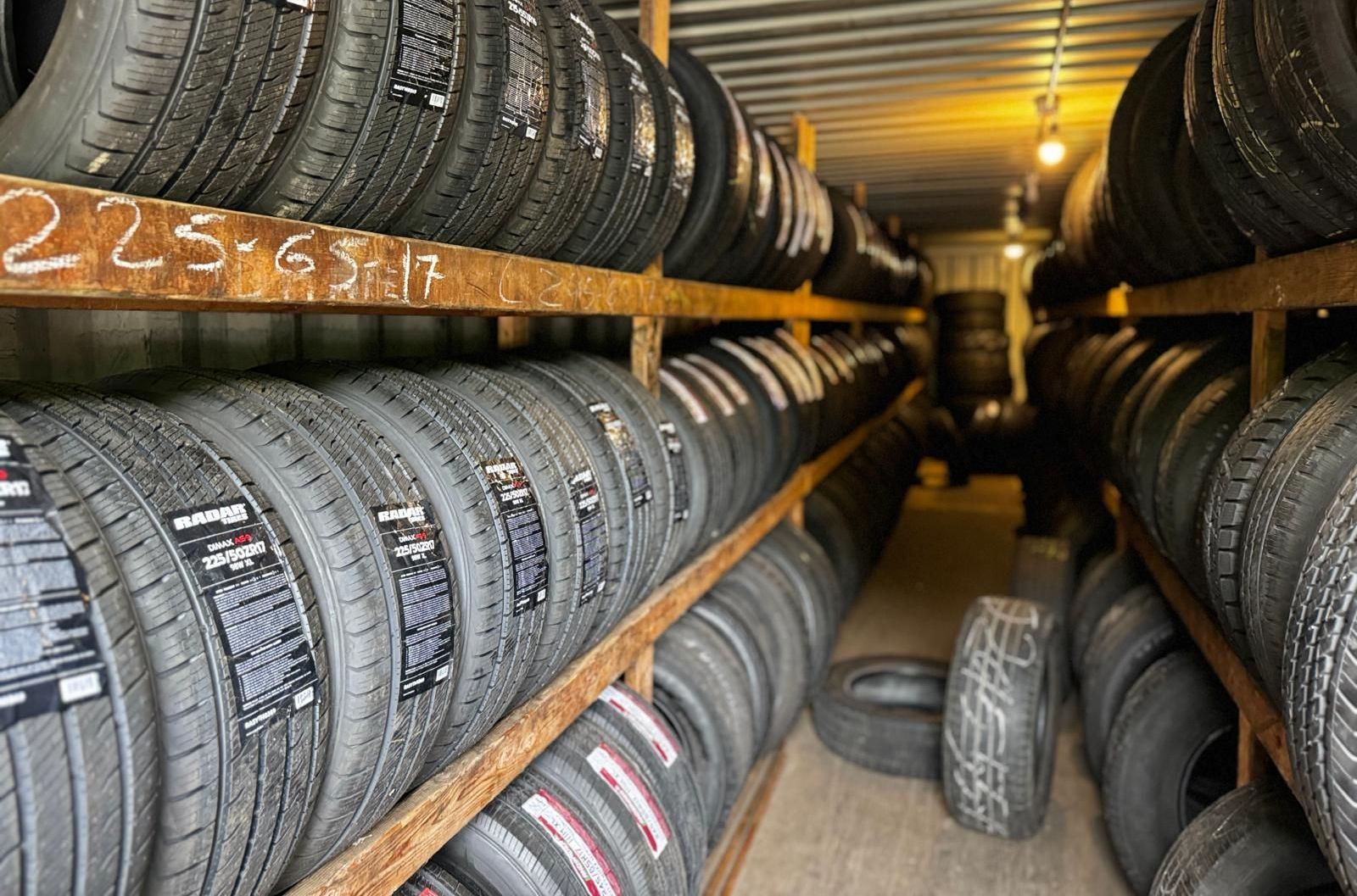
A bunch of tires are stacked on shelves in a garage

Indicadores de que se requieren rotación:
- Desgaste desigual:
Si nota que algunos neumáticos se desgastan más rápido que otros, es momento de rotarlos.
- Vibraciones: Sentir vibraciones en el volante puede ser señal de desgaste desigual.
- Mantenimiento programado: Incorpore la rotación en su rutina regular de mantenimiento para asegurar un desgaste uniforme.


¿Por qué es importante la rotación de neumáticos?
Prolonga la Vida Útil de los Neumáticos
Los neumáticos se desgastan de manera diferente dependiendo de su posición. Por ejemplo, los delanteros en vehículos con tracción delantera se desgastan más rápido. La rotación regular asegura un desgaste equilibrado, prolongando la vida útil y retrasando la necesidad de reemplazo.
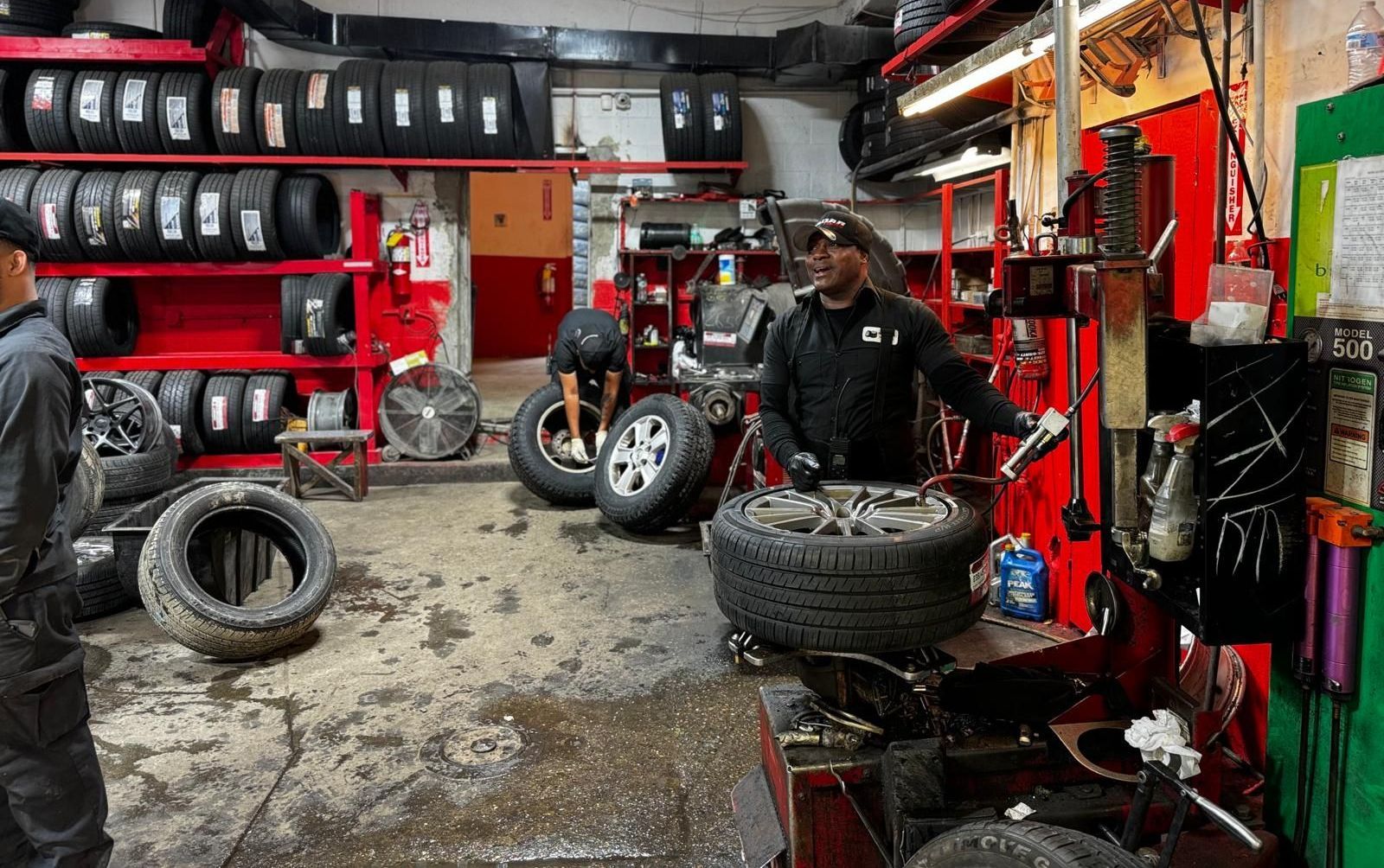
A man is working on a tire in a tire shop.

Mejora el rendimiento del vehículo
Un desgaste uniforme mejora el manejo y el equilibrio del vehículo. Los neumáticos desgastados de forma desigual pueden afectar la tracción y la estabilidad. Rotar los neumáticos mantiene el rendimiento óptimo y una conducción más suave y segura.


Aumenta la seguridad
El desgaste desigual reduce la tracción, especialmente en condiciones climáticas adversas como lluvia o nieve. La rotación regular ayuda a mantener una profundidad de banda uniforme, crucial para el agarre y la frenada. Esto reduce significativamente el riesgo de accidentes.


Cumplimiento de garantía
Muchos fabricantes exigen la rotación regular para mantener la validez de la garantía. No hacerlo puede invalidarla. Seguir las recomendaciones protege su inversión.
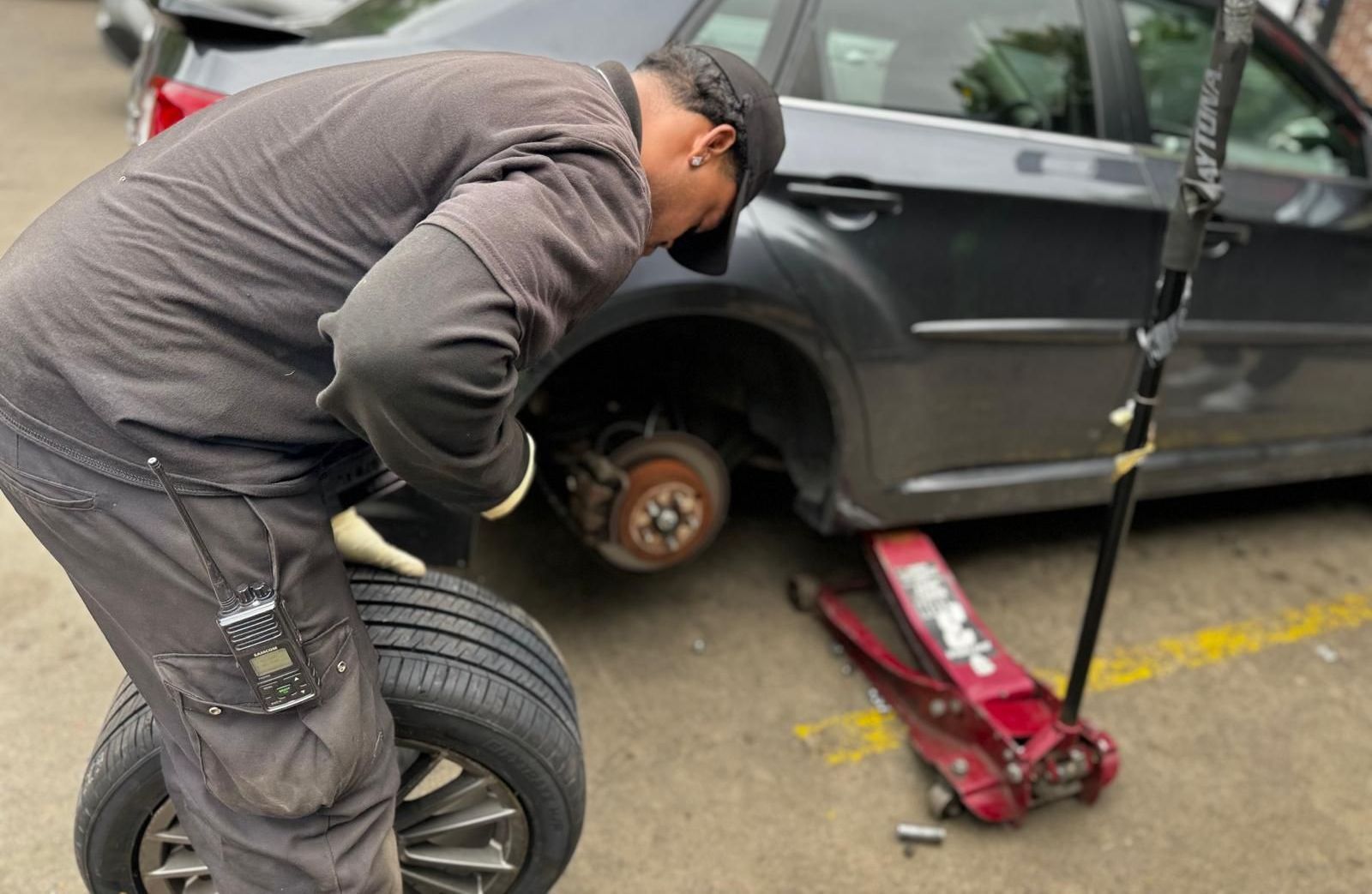
A man is changing a tire on a car in a parking lot

Visite Raymond’s Tire Shop para su próxima rotación
En Raymond’s Tire Shop, estamos comprometidos a ayudarle a sacar el máximo provecho de sus neumáticos. Nuestros técnicos experimentados ofrecen un servicio profesional, asegurando un desgaste uniforme y el mejor rendimiento de su vehículo. Utilizamos equipos modernos y seguimos patrones de rotación adaptados a su vehículo.


¿Por Qué Elegirnos?
- Técnicos con experiencia: Con años de conocimientos en mantenimiento de neumáticos.
- Servicio de calidad: Priorizamos la excelencia y la satisfacción del cliente.
- Citas convenientes: Horarios flexibles para adaptarse a su agenda.


No espere a que el desgaste afecte su seguridad. Visítenos para su próxima rotación de neumáticos y note la diferencia. Sus neumáticos se lo agradecerán, y su bolsillo también. ¡Contáctenos hoy para agendar su cita!
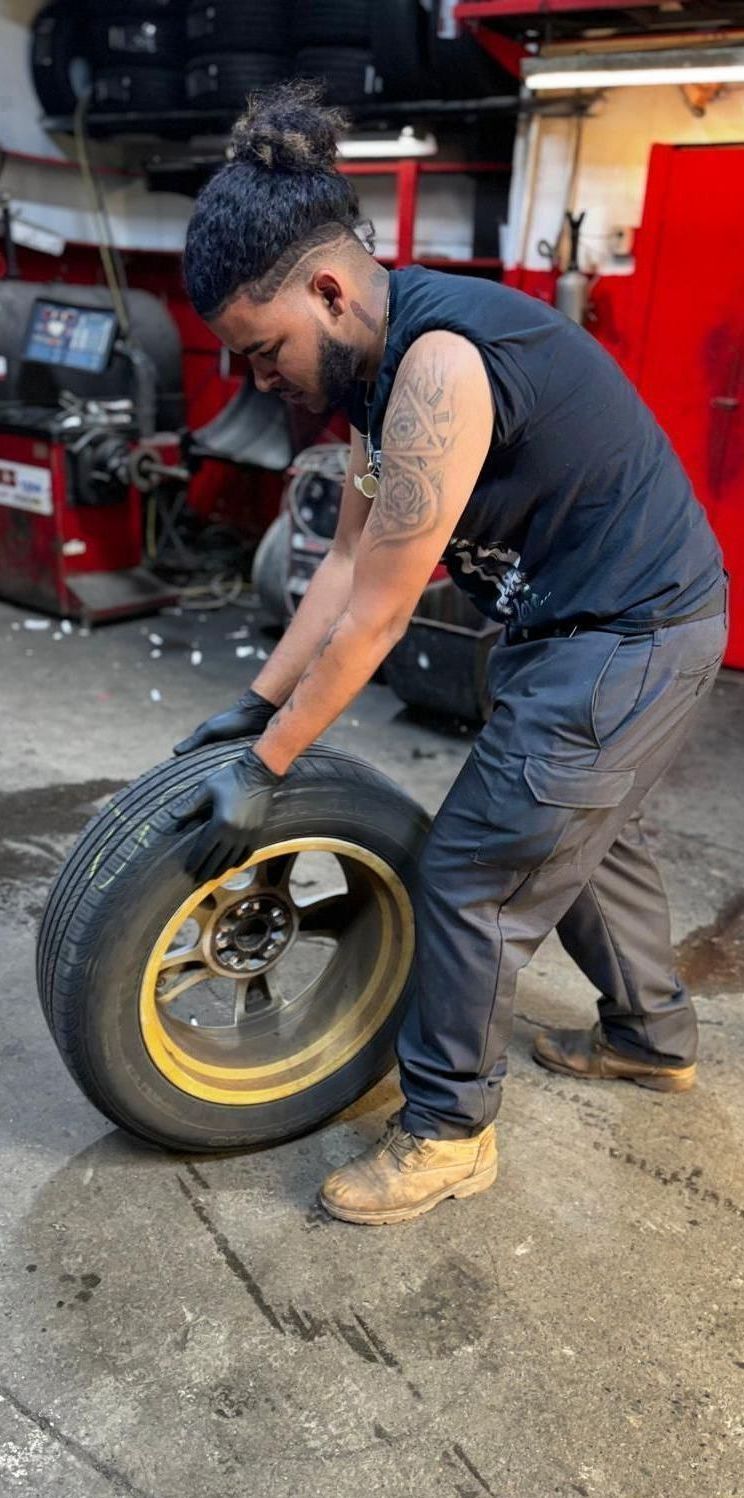
A man is standing next to a pile of tires in a tire store.
A man is changing a tire in a garage.
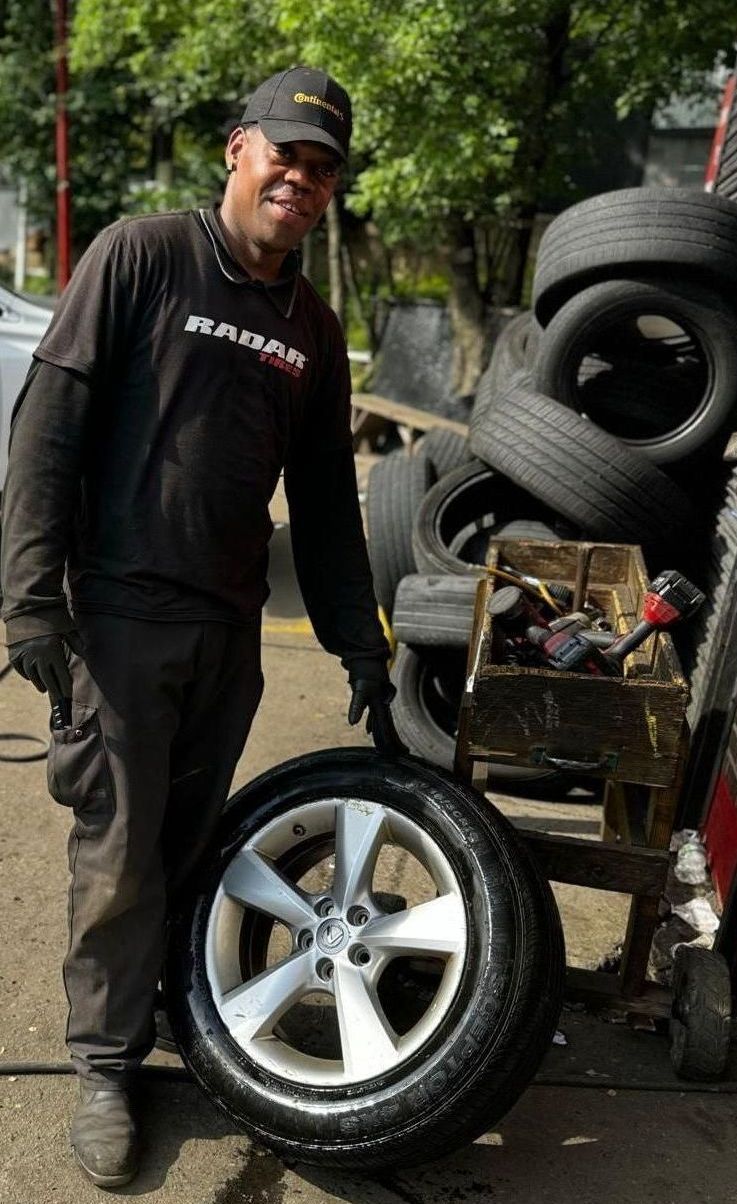
A man is standing next to a tire in front of a pile of tires.
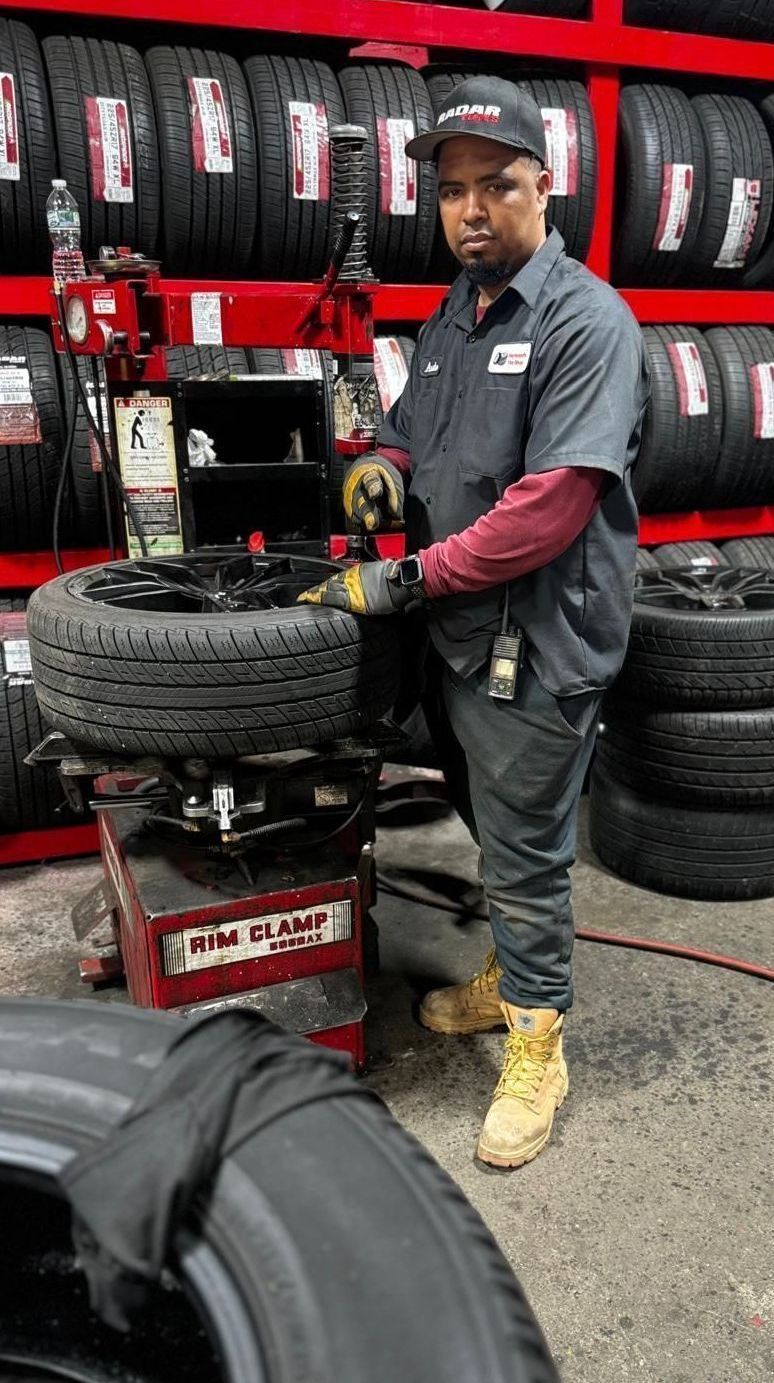
A man is working on a tire in a tire shop.
A man is standing in front of a pile of tires.
August 23, 2026
A pothole impact can feel like a quick jolt, but the forces involved can affect several parts of the tire and wheel assembly. The faster the vehicle is moving, the less time the tire has to absorb the impact. In some cases, the damage is immediately obvious. In others, problems may not become noticeable until later. Raymond’s Tire Shop helps drivers inspect tires, wheels, balancing, and alignment after hard road impacts. Understanding what can happen during a pothole strike can make it easier to recognize when a tire needs professional attention. The Tire Is Compressed Extremely Quickly When a tire drops into a pothole and strikes the far edge, the sidewall and tread can be compressed between the road and the wheel. Tires are designed to flex, but a severe impact can exceed what the internal structure can safely absorb.  The risk can be greater when tire pressure is too low because there is less air cushioning between the road surface and the wheel. However, even a properly inflated tire can be damaged by a deep pothole at sufficient speed.
August 16, 2026
Tires are one of the most important safety components on any vehicle because they are the only parts that maintain direct contact with the road. As tires wear, their ability to grip pavement, channel water, and respond predictably can gradually decline. The challenge is that unsafe tire conditions are not always obvious until performance has already been affected.  Raymond’s Tire Shop helps drivers evaluate tread wear, tire damage, pressure issues, alignment problems, and other conditions that can affect tire safety. Knowing what to look for can help you recognize when a tire needs professional attention or replacement.
August 7, 2026
Most drivers think of tires simply as the round rubber components that allow a vehicle to roll down the road. In reality, tires are sophisticated pieces of engineering that perform several essential functions every time a vehicle is in motion. They support the weight of the vehicle, transmit steering and braking forces, absorb road irregularities, and maintain traction in changing driving conditions. Every acceleration, turn, and stop depends on these four small contact patches where the tires meet the road.  Understanding the primary functions of a tire helps drivers appreciate why routine maintenance and timely replacement are so important. Raymond’s Tire Shop helps customers choose quality tires and maintain them properly so their vehicles continue to perform safely and efficiently throughout the life of the tire.
July 31, 2026
Understanding how your tires interact with wet pavement is one of the most important parts of safe driving. While most drivers know that rain can make roads slippery, fewer understand how hydroplaning occurs or why it can cause a vehicle to suddenly lose traction. Knowing what causes hydroplaning—and how proper tire maintenance can reduce the risk—can help you stay safer during wet weather.  At Raymond’s Tire Shop, we believe that informed drivers make safer decisions. Keeping your tires in excellent condition is one of the best ways to improve vehicle performance when road conditions are less than ideal.
July 23, 2026
Your tires are one of the hardest-working components of your vehicle. They provide traction, support your vehicle’s weight, absorb impacts from the road, and help you maintain control in a wide range of driving conditions. Because they experience constant wear, replacing tires is an expected part of vehicle ownership. However, proper maintenance can help maximize their lifespan, improve performance, and save you money over time. Many of the factors that affect tire longevity are within a driver’s control. By following a few simple maintenance practices, you can help your tires wear more evenly and perform as intended throughout their service life.
July 17, 2026
Your tires are the only part of your vehicle that remains in constant contact with the road, making them one of the most important components for safety, performance, and fuel efficiency. While many drivers remember to check their oil or schedule routine maintenance, tire pressure is often overlooked until a problem develops.  Maintaining proper tire inflation is one of the simplest and most effective ways to extend the life of your tires. It takes only a few minutes to check your tire pressure, yet this small maintenance task can help improve vehicle performance and protect your investment over the long term.