Por qué dos conductores pueden obtener diferentes duraciones de vida con los mismos neumáticos

Es común que dos vehículos con el mismo tipo de neumáticos experimenten duraciones de vida muy diferentes. Un conductor puede obtener años de rendimiento constante, mientras que otro puede necesitar reemplazarlos mucho antes. A primera vista, esto puede parecer inconsistente. Sin embargo, la vida útil de los neumáticos está influenciada por una serie de factores que van más allá del neumático en sí.


Comprender estos factores ayuda a explicar por qué el rendimiento de los neumáticos puede variar y qué pueden hacer los conductores para prolongar su vida útil.

Person with glasses sitting in a car, resting chin on hand and looking out the open window.

Los hábitos de conducción juegan un papel importante

Uno de los factores más significativos que afectan la vida útil de los neumáticos es cómo se conduce el vehículo. La aceleración, el frenado y los giros ejercen presión sobre los neumáticos.


Los hábitos de conducción que pueden acortar la vida útil de los neumáticos incluyen:

  • Frenadas bruscas frecuentes
  • Aceleraciones rápidas
  • Giros agresivos


Estas acciones aumentan la fricción y el calor, lo que contribuye a un desgaste más rápido. En contraste, una conducción más suave tiende a distribuir el desgaste de manera más uniforme y a extender la vida útil de los neumáticos.

Driver’s hand on steering wheel inside a Toyota car on a road, with another vehicle visible outside.

Las condiciones de la carretera influyen en el desgaste

Las superficies por las que circula un vehículo también tienen un impacto directo en el estado de los neumáticos. No todas las carreteras son iguales, y algunas generan más desgaste que otras.


Los factores incluyen:

  • Pavimento áspero o irregular
  • Baches e irregularidades en la superficie
  • Escombros o material suelto en la carretera


Los conductores que transitan con frecuencia por superficies más difíciles pueden notar un desgaste más rápido en comparación con aquellos que conducen principalmente por carreteras más suaves.
Close-up of a black watch bezel with engraved numbers and markings.

El mantenimiento de los neumáticos marca la diferencia

El mantenimiento regular es esencial para un rendimiento constante de los neumáticos. Incluso los neumáticos de alta calidad pueden desgastarse de manera irregular o prematura si no se mantienen correctamente.


Las prácticas clave de mantenimiento incluyen:

  • Mantener la presión de los neumáticos adecuada
  • Rotar los neumáticos en los intervalos recomendados
  • Supervisar la alineación y el balanceo


Cuando no se siguen estos pasos, ciertas áreas del neumático pueden desgastarse más rápido que otras, reduciendo su vida útil general.

Silver sedan driving on a curving road beside a wooded area

Características y configuración del vehículo

El diseño y la condición del propio vehículo también pueden influir en cómo se desgastan los neumáticos. La distribución del peso, los componentes de la suspensión y la alineación afectan la forma en que el neumático interactúa con la carretera.


Por ejemplo:

  • Una mala alineación puede causar un desgaste desigual en la banda de rodadura
  • Componentes de suspensión desgastados pueden reducir la estabilidad
  • Los vehículos más pesados pueden ejercer mayor presión sobre los neumáticos


Estos factores pueden variar de un vehículo a otro, incluso cuando se instalan los mismos neumáticos.

Car dashboard with a smartphone showing a navigation map mounted near the center console

Las condiciones ambientales importan

La temperatura y las condiciones climáticas también pueden influir en el desgaste de los neumáticos. Los neumáticos responden a los cambios de calor y humedad, lo que puede afectar su rendimiento con el tiempo.


Ejemplos incluyen:

  • Temperaturas más altas que aumentan la tasa de desgaste
  • Cambios de temperatura que afectan la presión de los neumáticos
  • Condiciones húmedas que alteran la tracción y el comportamiento de conducción


Los conductores en diferentes entornos pueden experimentar distintos niveles de desgaste según estas condiciones.
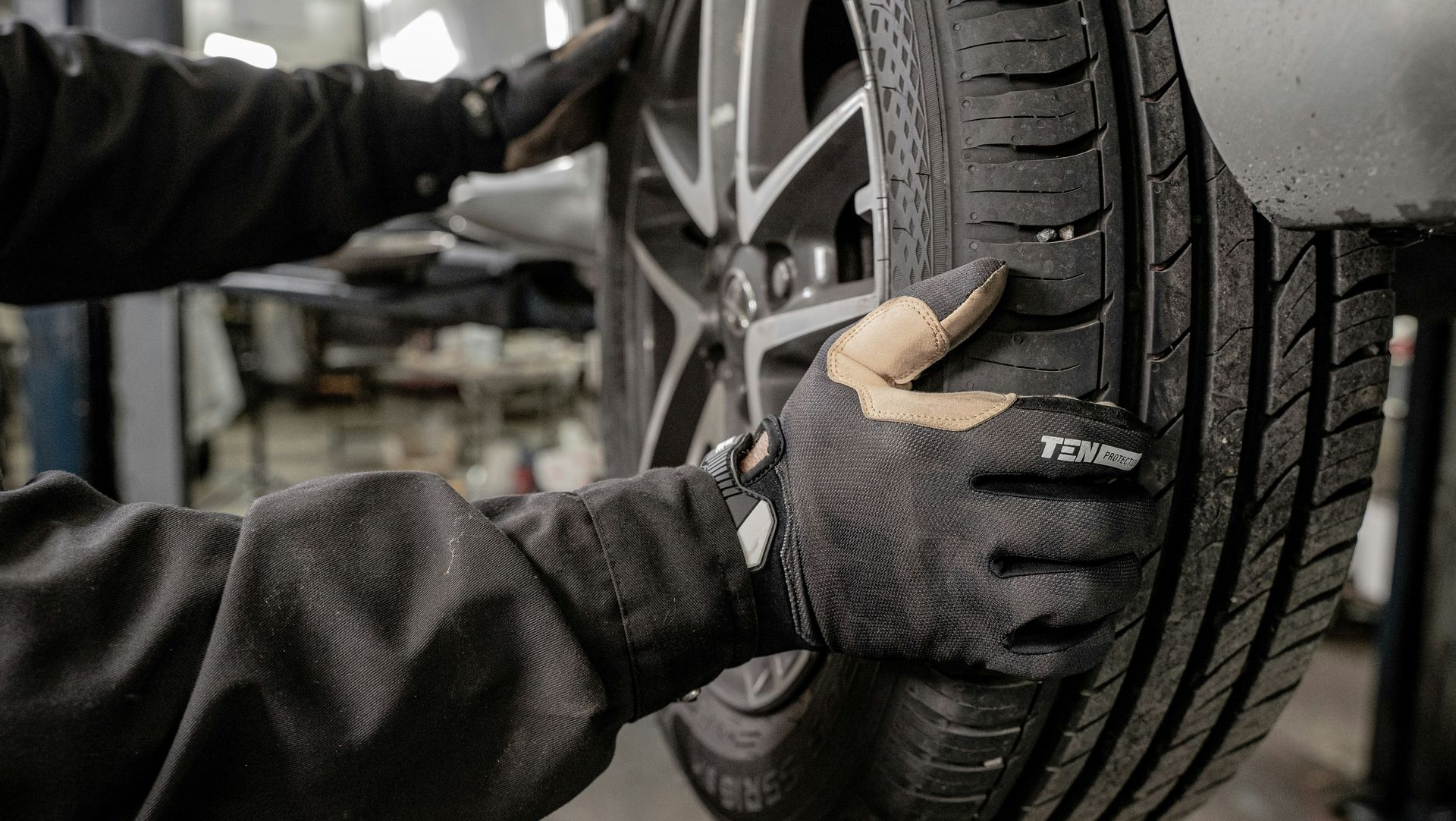
Mechanic wearing gloves checking a car tire tread with a gauge in a workshop

Carga y patrones de uso

La forma en que se utiliza un vehículo también puede afectar la vida útil de los neumáticos. Los vehículos que transportan cargas pesadas con frecuencia o que operan en condiciones exigentes pueden ejercer una tensión adicional sobre los neumáticos.


Los patrones de uso que pueden influir en el desgaste incluyen:

  • Transporte frecuente de carga o remolque
  • Períodos prolongados de conducción sin descanso
  • Condiciones de tráfico con paradas y arranques constantes


Estos factores contribuyen al estrés general que soportan los neumáticos durante su uso.


Por qué varía la vida útil de los neumáticos

Cuando se consideran todos estos elementos en conjunto, queda claro por qué la vida útil de los neumáticos no es uniforme. Incluso con neumáticos idénticos, las diferencias en el estilo de conducción, el mantenimiento y las condiciones pueden llevar a resultados distintos.


En lugar de centrarse únicamente en el neumático, es útil considerar el contexto más amplio en el que se utiliza.

Rainy street at night with wet pavement reflecting orange lights

Cómo extender el rendimiento de los neumáticos con el tiempo

Aunque algunos factores están fuera del control del conductor, muchos pueden gestionarse con atención constante. Pequeños ajustes en los hábitos de conducción y en las rutinas de mantenimiento pueden tener un impacto notable en la duración de los neumáticos.


Al enfocarse en:

  • Técnicas de conducción suaves
  • Mantenimiento regular
  • Atención a las condiciones de la carretera y del entorno


los conductores pueden mejorar tanto el rendimiento como la durabilidad.


Un enfoque práctico para el cuidado de los neumáticos

Los neumáticos son una parte fundamental de la seguridad y el rendimiento de un vehículo, pero su vida útil depende de mucho más que del producto en sí. Comprender cómo diferentes factores influyen en el desgaste permite a los conductores adoptar un enfoque más proactivo.


Raymond’s Tire Shop ofrece servicios profesionales de neumáticos para ayudar a los conductores a mantener un rendimiento constante y prolongar la vida útil de sus neumáticos. Si tiene preguntas sobre el desgaste de los neumáticos o desea asegurarse de que su vehículo esté correctamente mantenido, comuníquese hoy mismo con Raymond’s Tire Shop para recibir asesoramiento experto y un servicio confiable.


Car driving on a curving mountain road beside lush green trees and hills
Wet road winding through a misty green forest with mountains in the background
View from inside a car on a highway with multiple vehicles ahead and greenery along the road
Rainy street view through a wet window, with a beige wall, trees, and road markings visible.
Black car driving on a wet, foggy road beside dense green trees
Rain ripples on a wet street with yellow lane markings reflected in blue water.
Parked BMW cars lined up along a street, with a white and red car in the foreground.
Rainy city street with wet pavement, traffic lights, and storefronts reflecting orange lights.
September 6, 2026
A wheel alignment can correct important steering and tire-angle settings, but the alignment itself depends on the suspension being in good mechanical condition. If ball joints, tie rods, control arm bushings, wheel bearings, or other components are worn, the wheels may not stay in the position the technician sets.  That is why some vehicles continue pulling , wearing tires unevenly, or developing an off-center steering wheel even after an alignment. In those cases, the problem may not be the alignment machine or the adjustment. It may be worn suspension or steering components underneath the vehicle.
August 28, 2026
When a tire repeatedly loses air but there is no obvious nail, screw, or visible puncture, the problem may be where the tire meets the wheel. This area is known as the tire bead, and a poor seal between the bead and the rim can allow air to escape gradually. Tire bead leaks are a common cause of slow pressure loss. Understanding why they happen can help drivers recognize when a tire needs professional inspection rather than repeatedly adding air. What Is the Tire Bead? The bead is the reinforced inner edge of the tire that sits tightly against the wheel rim. When a tire is properly mounted and inflated, air pressure helps hold the bead securely against the wheel, creating an airtight seal. If that sealing surface becomes damaged, dirty, corroded, or distorted, a small pathway can develop for air to escape.  Because these leaks may be very small, the tire can lose pressure over several days or weeks rather than going flat immediately.
August 23, 2026
A pothole impact can feel like a quick jolt, but the forces involved can affect several parts of the tire and wheel assembly. The faster the vehicle is moving, the less time the tire has to absorb the impact. In some cases, the damage is immediately obvious. In others, problems may not become noticeable until later. Raymond’s Tire Shop helps drivers inspect tires, wheels, balancing, and alignment after hard road impacts. Understanding what can happen during a pothole strike can make it easier to recognize when a tire needs professional attention. The Tire Is Compressed Extremely Quickly When a tire drops into a pothole and strikes the far edge, the sidewall and tread can be compressed between the road and the wheel. Tires are designed to flex, but a severe impact can exceed what the internal structure can safely absorb.  The risk can be greater when tire pressure is too low because there is less air cushioning between the road surface and the wheel. However, even a properly inflated tire can be damaged by a deep pothole at sufficient speed.
August 16, 2026
Tires are one of the most important safety components on any vehicle because they are the only parts that maintain direct contact with the road. As tires wear, their ability to grip pavement, channel water, and respond predictably can gradually decline. The challenge is that unsafe tire conditions are not always obvious until performance has already been affected.  Raymond’s Tire Shop helps drivers evaluate tread wear, tire damage, pressure issues, alignment problems, and other conditions that can affect tire safety. Knowing what to look for can help you recognize when a tire needs professional attention or replacement.
August 7, 2026
Most drivers think of tires simply as the round rubber components that allow a vehicle to roll down the road. In reality, tires are sophisticated pieces of engineering that perform several essential functions every time a vehicle is in motion. They support the weight of the vehicle, transmit steering and braking forces, absorb road irregularities, and maintain traction in changing driving conditions. Every acceleration, turn, and stop depends on these four small contact patches where the tires meet the road.  Understanding the primary functions of a tire helps drivers appreciate why routine maintenance and timely replacement are so important. Raymond’s Tire Shop helps customers choose quality tires and maintain them properly so their vehicles continue to perform safely and efficiently throughout the life of the tire.
July 31, 2026
Understanding how your tires interact with wet pavement is one of the most important parts of safe driving. While most drivers know that rain can make roads slippery, fewer understand how hydroplaning occurs or why it can cause a vehicle to suddenly lose traction. Knowing what causes hydroplaning—and how proper tire maintenance can reduce the risk—can help you stay safer during wet weather.  At Raymond’s Tire Shop, we believe that informed drivers make safer decisions. Keeping your tires in excellent condition is one of the best ways to improve vehicle performance when road conditions are less than ideal.