What Careful Drivers Notice That Others Overlook

Most drivers rely on their vehicle to perform consistently day after day. When everything feels normal, it is easy to assume that all components are functioning as they should. However, experienced and attentive drivers often notice subtle changes that others miss. These early observations can make a meaningful difference in preventing larger issues, especially when it comes to tires.


Tires are one of the most critical components of a vehicle, yet they are also among the easiest to overlook until a problem becomes obvious.

Dark green car driving on a narrow road beside a dry open field under a clear sky

Subtle Changes in Handling

Careful drivers tend to notice when their vehicle does not respond the way it normally does. Even small differences in handling can indicate changes in tire condition.


These may include:

  • Slight delays in steering response
  • A feeling of reduced grip during turns
  • Minor instability at higher speeds


While these changes may not immediately affect drivability, they can signal early wear or uneven tire conditions.

Young man smiling while driving a car, wearing a backward cap and white T-shirt.

Gradual Shifts in Ride Comfort

Another detail that attentive drivers recognize is a change in ride quality. Tires play a direct role in how a vehicle absorbs road imperfections.


Early signs may include:

  • A slightly rougher ride on familiar roads
  • Increased sensitivity to bumps or uneven pavement
  • Subtle vibrations that were not previously present


Because these changes often develop gradually, they can go unnoticed by drivers who are not paying close attention.

Cars driving on a highway at sunset, with orange light on the horizon.

Early Warning Signs in Tire Wear

Careful drivers are more likely to observe tire wear patterns before they become severe. Uneven wear can develop slowly and may not be immediately visible without inspection.


Signs to watch for include:

  • Tread wearing more on one side than the other
  • Irregular patterns across the surface
  • Differences in wear between front and rear tires


Identifying these patterns early allows for adjustments that can extend the life of the tires.


Changes in Tire Pressure Behavior

Tire pressure does not remain constant. It can fluctuate due to temperature changes, driving conditions, and minor leaks.


Drivers who pay attention may notice:

  • More frequent need to adjust pressure
  • Slight differences in how the vehicle feels after inflation
  • Gradual loss of pressure over time


These observations can help identify issues before they lead to more serious problems.

Silver sedan driving on a curving road beside a wooded area

Sounds That Indicate a Change

Tires can produce different sounds depending on their condition. While road noise is normal, changes in that sound can indicate a developing issue.


Examples include:

  • A low hum that becomes more noticeable
  • Uneven noise that changes with speed
  • Sounds that were not present during normal driving


Careful drivers recognize these differences and take them as a signal to investigate further.

Hand on a steering wheel inside a car, driving in traffic

Alignment and Directional Drift

A vehicle that begins to drift slightly to one side is often showing early signs of alignment or tire-related issues. This change may be subtle at first and easy to ignore.


Attentive drivers may notice:

  • A need to correct steering more often
  • Slight pulling on straight roads
  • Changes in steering wheel position


Addressing these issues early can prevent uneven wear and improve overall performance.


The Value of Paying Attention

The difference between careful drivers and others is not necessarily technical knowledge. It is awareness. Paying attention to how a vehicle feels, sounds, and responds allows small issues to be identified before they become larger concerns.


This awareness helps:

  • Extend the life of tires
  • Improve safety on the road
  • Reduce the likelihood of unexpected problems

Driver’s view of a hand on the wheel on a wet road under cloudy skies

Turning Observation Into Action

Recognizing early signs is only part of the process. Taking action is what prevents those signs from developing into more serious issues.


Regular inspections, proper maintenance, and professional evaluation all contribute to maintaining tire performance over time.


Raymond’s Tire Shop provides expert tire services designed to identify and address issues before they escalate. If you have noticed subtle changes in how your vehicle drives, contact Raymond’s Tire Shop to ensure your tires remain safe, reliable, and ready for the road.


Car driving on a curving mountain road beside lush green trees and hills
Driver’s hand on steering wheel in a car, with a blurred sunset view ahead.
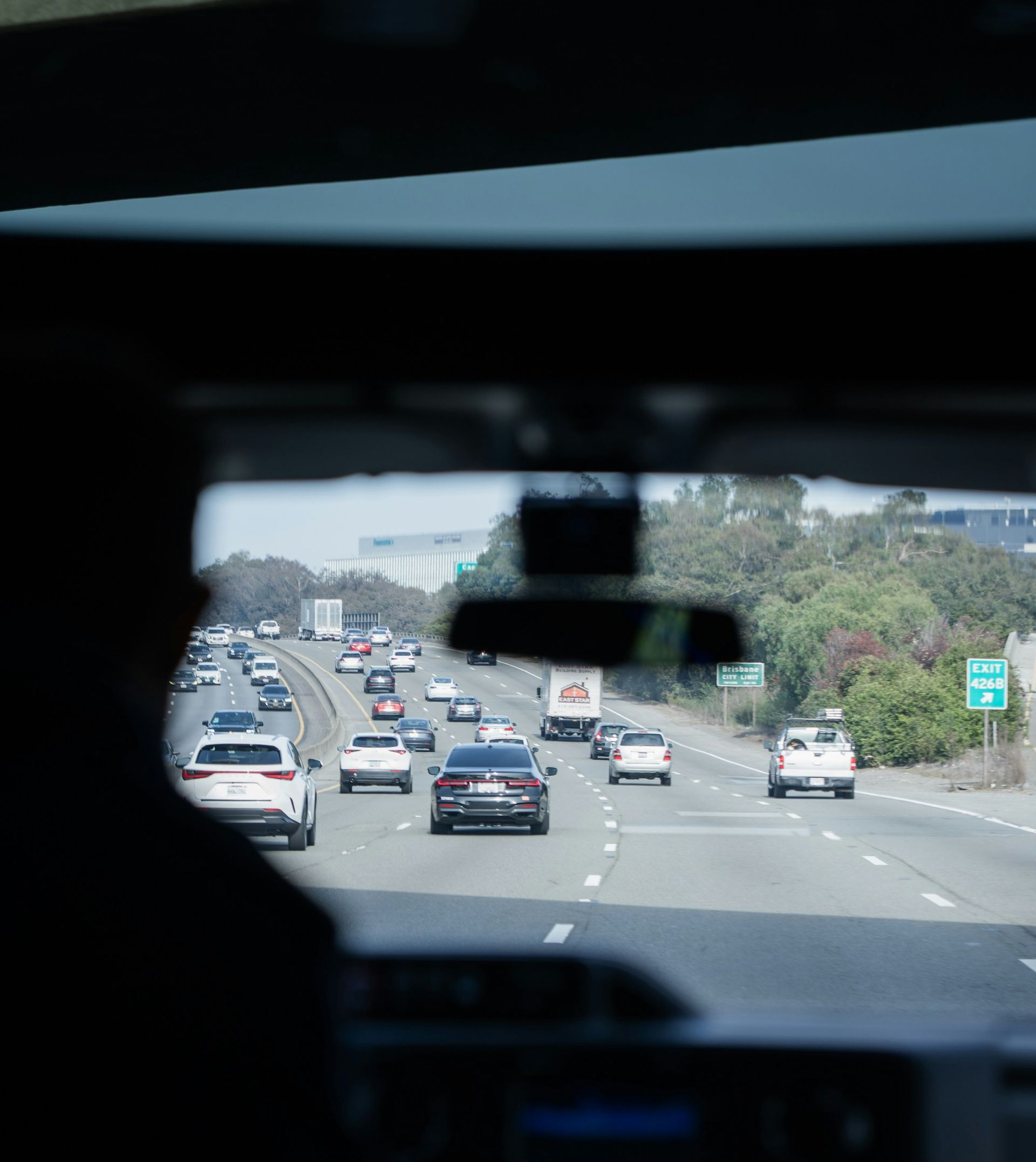
View from inside a car on a highway with multiple vehicles ahead and greenery along the road
Curving road through dark autumn trees at dusk, with double yellow lines and a car in the distance.
Black car driving on a wet, foggy road beside dense green trees
View from a moving car on a tree-lined road in autumn, with motion blur and orange leaves.
Woman driving a car, seen from the back seat, holding a phone near the steering wheel.
September 11, 2026
A flat tire does not always mean the tire has to be replaced. In many cases, a small puncture can be repaired safely and returned to service. The key is where the puncture occurred, how large it is, and whether the tire suffered additional damage while losing air. That is why a professional inspection matters. Two punctures that lo ok similar from the outside may require completely different solutions once the tire is removed and examined internally. Location Matters Most One of the first things a technician looks at is where the puncture is located. Damage in the central tread area is often the best candidate for repair. This part of the tire is designed to handle contact with the road and can sometimes be repaired when the puncture is small and otherwise straightforward. Punctures near the shoulder or sidewall are much more concerning.  These areas flex significantly while the tire is moving and cannot usually be repaired safely using standard puncture-repair methods. If a nail, screw, or other object damages the sidewall or outer shoulder, replacement is often the safer option.
September 6, 2026
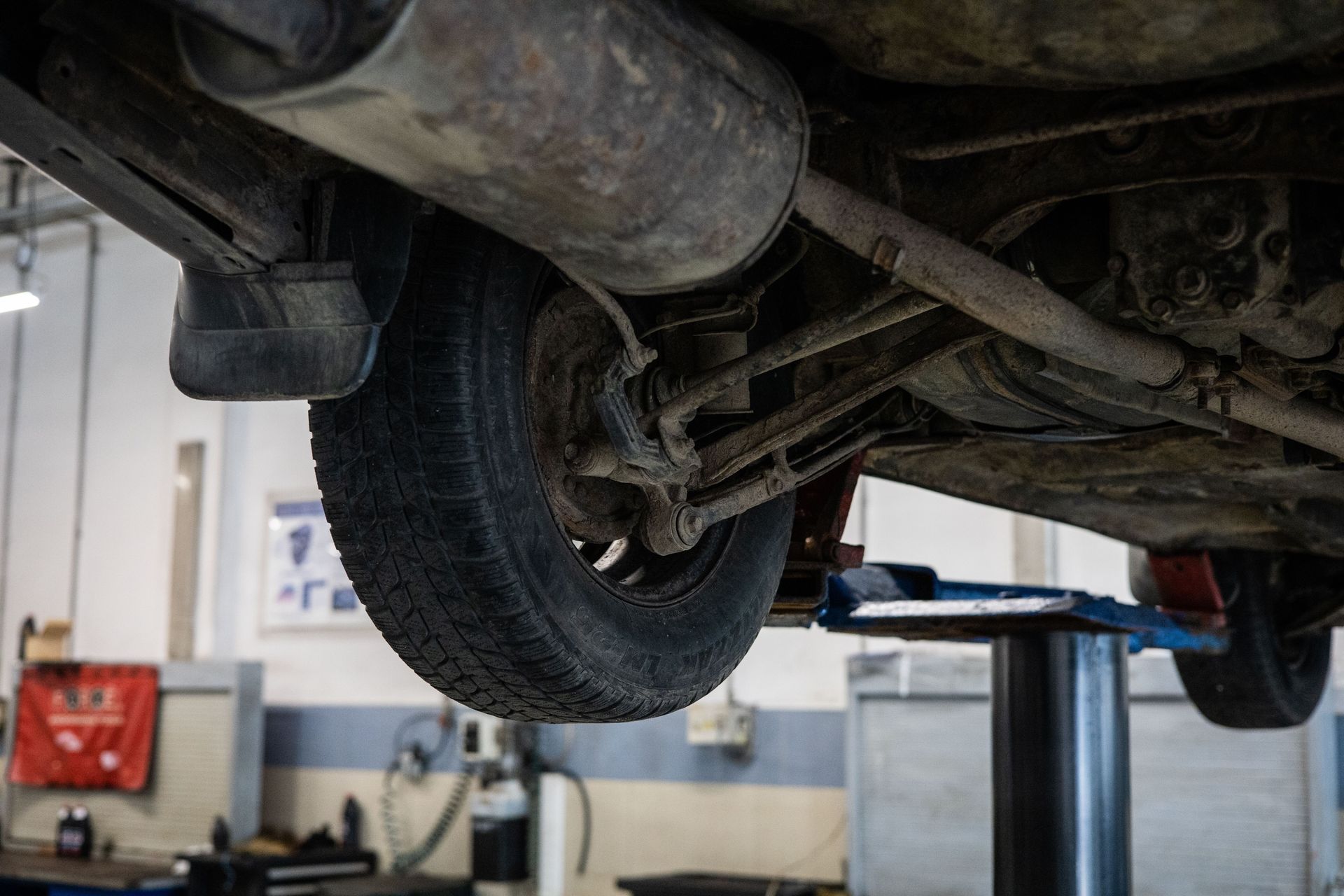
A wheel alignment can correct important steering and tire-angle settings, but the alignment itself depends on the suspension being in good mechanical condition. If ball joints, tie rods, control arm bushings, wheel bearings, or other components are worn, the wheels may not stay in the position the technician sets.  That is why some vehicles continue pulling , wearing tires unevenly, or developing an off-center steering wheel even after an alignment. In those cases, the problem may not be the alignment machine or the adjustment. It may be worn suspension or steering components underneath the vehicle.
August 28, 2026
When a tire repeatedly loses air but there is no obvious nail, screw, or visible puncture, the problem may be where the tire meets the wheel. This area is known as the tire bead, and a poor seal between the bead and the rim can allow air to escape gradually. Tire bead leaks are a common cause of slow pressure loss. Understanding why they happen can help drivers recognize when a tire needs professional inspection rather than repeatedly adding air. What Is the Tire Bead? The bead is the reinforced inner edge of the tire that sits tightly against the wheel rim. When a tire is properly mounted and inflated, air pressure helps hold the bead securely against the wheel, creating an airtight seal. If that sealing surface becomes damaged, dirty, corroded, or distorted, a small pathway can develop for air to escape.  Because these leaks may be very small, the tire can lose pressure over several days or weeks rather than going flat immediately.
August 23, 2026
A pothole impact can feel like a quick jolt, but the forces involved can affect several parts of the tire and wheel assembly. The faster the vehicle is moving, the less time the tire has to absorb the impact. In some cases, the damage is immediately obvious. In others, problems may not become noticeable until later. Raymond’s Tire Shop helps drivers inspect tires, wheels, balancing, and alignment after hard road impacts. Understanding what can happen during a pothole strike can make it easier to recognize when a tire needs professional attention. The Tire Is Compressed Extremely Quickly When a tire drops into a pothole and strikes the far edge, the sidewall and tread can be compressed between the road and the wheel. Tires are designed to flex, but a severe impact can exceed what the internal structure can safely absorb.  The risk can be greater when tire pressure is too low because there is less air cushioning between the road surface and the wheel. However, even a properly inflated tire can be damaged by a deep pothole at sufficient speed.
August 16, 2026
Tires are one of the most important safety components on any vehicle because they are the only parts that maintain direct contact with the road. As tires wear, their ability to grip pavement, channel water, and respond predictably can gradually decline. The challenge is that unsafe tire conditions are not always obvious until performance has already been affected.  Raymond’s Tire Shop helps drivers evaluate tread wear, tire damage, pressure issues, alignment problems, and other conditions that can affect tire safety. Knowing what to look for can help you recognize when a tire needs professional attention or replacement.
August 7, 2026
Most drivers think of tires simply as the round rubber components that allow a vehicle to roll down the road. In reality, tires are sophisticated pieces of engineering that perform several essential functions every time a vehicle is in motion. They support the weight of the vehicle, transmit steering and braking forces, absorb road irregularities, and maintain traction in changing driving conditions. Every acceleration, turn, and stop depends on these four small contact patches where the tires meet the road.  Understanding the primary functions of a tire helps drivers appreciate why routine maintenance and timely replacement are so important. Raymond’s Tire Shop helps customers choose quality tires and maintain them properly so their vehicles continue to perform safely and efficiently throughout the life of the tire.