Cómo entender el hidroplaneo antes de que ocurra: cómo el mantenimiento adecuado de los neumáticos mejora la seguridad en carreteras mojadas
Comprender cómo interactúan sus neumáticos con el pavimento mojado es una de las partes más importantes para conducir de manera segura. Aunque la mayoría de los conductores saben que la lluvia puede hacer que las carreteras sean resbaladizas, menos personas entienden cómo ocurre el hidroplaneo o por qué puede hacer que un vehículo pierda tracción de manera repentina. Saber qué causa el hidroplaneo y cómo el mantenimiento adecuado de los neumáticos puede reducir ese riesgo puede ayudarle a mantenerse más seguro durante el clima lluvioso.
En Raymond’s Tire Shop, creemos que los conductores bien informados toman decisiones más seguras. Mantener sus neumáticos en excelentes condiciones es una de las mejores maneras de mejorar el rendimiento de su vehículo cuando las condiciones de la carretera no son las ideales.

¿Qué es el hidroplaneo?
El hidroplaneo ocurre cuando se forma una capa de agua entre los neumáticos y la superficie de la carretera. En lugar de mantener contacto directo con el pavimento, los neumáticos comienzan a deslizarse sobre el agua. Cuando esto sucede, la dirección, el frenado y la aceleración se vuelven mucho menos efectivos porque los neumáticos ya no tienen agarre sobre la carretera.
El hidroplaneo puede variar desde una pérdida momentánea de tracción hasta una pérdida más significativa del control del vehículo, dependiendo de las condiciones de la carretera, el estado de los neumáticos y la velocidad de conducción.
¿Por qué ocurre el hidroplaneo?
Varios factores contribuyen al hidroplaneo, siendo el agua acumulada sobre la carretera el más evidente. Sin embargo, la cantidad de agua es solo una parte de la ecuación.
La velocidad del vehículo desempeña un papel muy importante. A medida que aumenta la velocidad, los neumáticos tienen menos tiempo para expulsar el agua de la zona de contacto donde el caucho toca la carretera. Si el agua no puede evacuarse con suficiente rapidez a través de las ranuras de la banda de rodadura, comienza a levantar el neumático del pavimento.
Las condiciones de la superficie de la carretera también son importantes. El pavimento liso, el asfalto desgastado y las zonas bajas donde se acumula el agua pueden aumentar la probabilidad de hidroplaneo durante lluvias intensas.

La importancia de la banda de rodadura
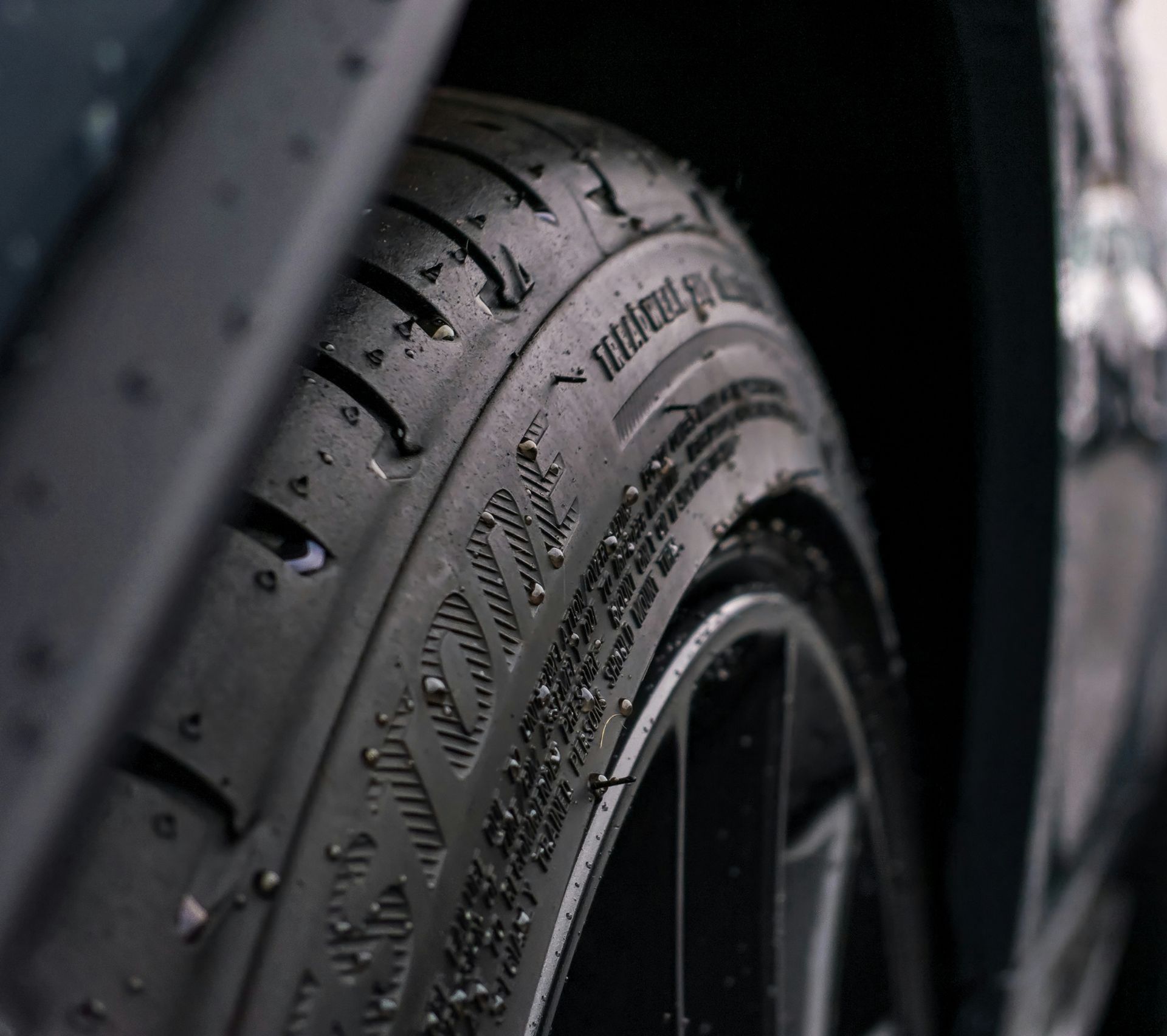
La banda de rodadura de sus neumáticos está diseñada específicamente para canalizar el agua hacia fuera mientras el neumático rueda sobre el pavimento mojado. Las ranuras y canales actúan como pequeños conductos de drenaje que ayudan a mantener el contacto con la carretera.
A medida que los neumáticos se desgastan, estas ranuras se vuelven menos profundas y menos eficaces para desplazar el agua. Con una menor profundidad de la banda de rodadura, incluso una lluvia moderada puede aumentar la probabilidad de perder tracción.
Las inspecciones periódicas de los neumáticos permiten a los técnicos supervisar el desgaste de la banda de rodadura y recomendar el reemplazo antes de que el rendimiento se vea significativamente afectado.

La presión de los neumáticos es más importante de lo que muchos conductores creen
Mantener la presión correcta de los neumáticos también contribuye al rendimiento en condiciones de lluvia.
Los neumáticos con baja presión pueden cambiar la forma de la superficie de contacto con la carretera, afectando la eficiencia con la que se dispersa el agua. Los neumáticos con exceso de presión también pueden alterar la manera en que hacen contacto con el pavimento. Mantener la presión recomendada por el fabricante ayuda a optimizar el manejo, el frenado y la tracción en una amplia variedad de condiciones de conducción.
Revisar la presión de los neumáticos regularmente es una tarea de mantenimiento sencilla que favorece tanto la seguridad como la vida útil de los neumáticos.
¿Qué debe hacer si su vehículo entra en hidroplaneo?
Si experimenta hidroplaneo, mantener la calma es fundamental.
Evite frenar bruscamente o realizar movimientos repentinos con el volante. En su lugar, suelte gradualmente el acelerador y permita que los neumáticos recuperen el contacto con la carretera. Mantenga el volante apuntando hacia la dirección en la que desea que se desplace el vehículo y realice únicamente correcciones suaves y controladas mientras recupera la tracción.
Una vez que haya recuperado el control, reduzca la velocidad y continúe conduciendo con precaución hasta que mejoren las condiciones de la carretera.

Reduzca el riesgo antes de que empiece a llover
Aunque ningún neumático puede eliminar por completo la posibilidad de hidroplaneo, un mantenimiento adecuado puede mejorar considerablemente el rendimiento sobre superficies mojadas.
Realizar inspecciones periódicas de los neumáticos permite detectar y corregir el desgaste excesivo, los patrones de desgaste irregular o una presión inadecuada antes de que se conviertan en problemas mayores de seguridad. Las rotaciones periódicas de los neumáticos, las alineaciones de las ruedas y el balanceo también ayudan a promover un desgaste uniforme de la banda de rodadura, permitiendo que los neumáticos funcionen como fueron diseñados durante toda su vida útil.
Reemplazar los neumáticos antes de que la banda de rodadura esté excesivamente desgastada es otro paso importante para mantener una tracción confiable durante las condiciones de lluvia.

Conduzca con confianza en cualquier época del año
La lluvia es una parte inevitable de la conducción, pero el hidroplaneo no tiene por qué tomarle por sorpresa. Comprender cómo interactúan el agua, la velocidad, la banda de rodadura y la presión de los neumáticos puede ayudarle a tomar decisiones más seguras cada vez que las carreteras estén mojadas.
En Raymond’s Tire Shop, nuestro experimentado equipo está listo para ayudarle a obtener el máximo rendimiento de sus neumáticos. Ya sea que necesite una inspección de neumáticos, una alineación de ruedas, un servicio de balanceo o un juego nuevo de neumáticos, estamos comprometidos a ayudarle a conducir con confianza durante todo el año. Comuníquese con Raymond’s Tire Shop hoy mismo para programar su próximo servicio de neumáticos y asegurarse de que su vehículo esté preparado para cualquier condición que encuentre en el camino.