Como saber se uma roda está empenada depois de passar por um buraco

Um forte impacto contra um buraco pode fazer mais do que danificar um pneu.


A força do impacto também pode empenar uma roda, especialmente se o buraco for profundo, se o veículo estiver em alta velocidade ou se o pneu tiver um perfil mais baixo, com menos amortecimento entre a estrada e a roda.


Às vezes, o dano é evidente. Em outros casos, a roda pode parecer normal, mas causar vibrações, perda de ar ou problemas de dirigibilidade.


Saber o que observar depois de passar por um buraco pode ajudar os motoristas a identificar danos na roda antes que eles causem problemas adicionais nos pneus ou na suspensão.
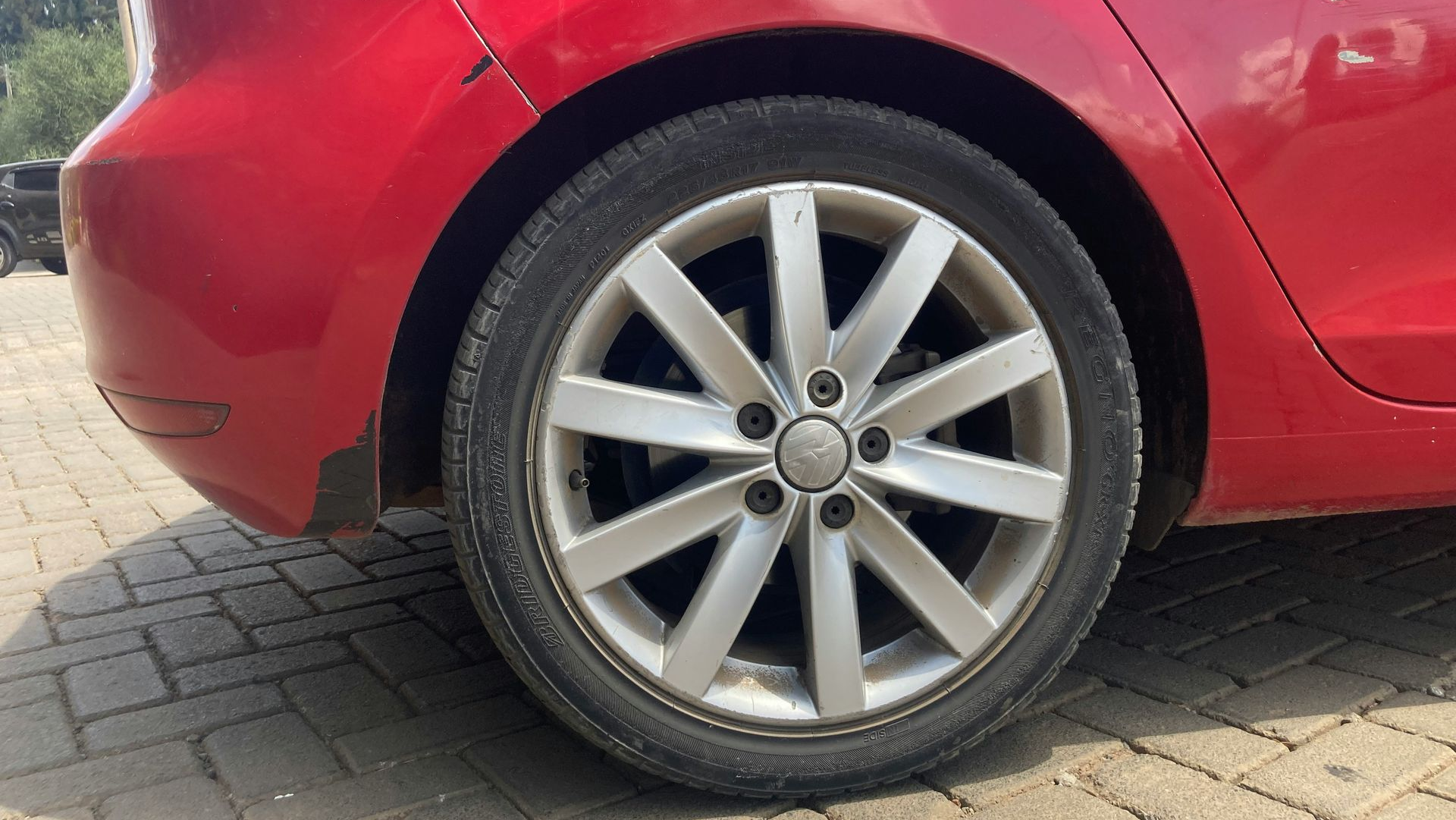
Rear side of a red car, showing the wheel and tire parked on a paved surface

A vibração é um dos sinais mais comuns

Uma roda empenada pode causar vibração porque não gira mais de maneira perfeitamente uniforme.


Os motoristas podem sentir a trepidação através do volante, do banco ou do assoalho.


A vibração pode ficar mais perceptível em determinadas velocidades, especialmente em rodovias.


Esse sintoma pode parecer um problema de balanceamento dos pneus, por isso uma inspeção é importante. Fazer novamente o balanceamento da roda não corrigirá uma deformação física no aro.

Car wheel with silver rim mounted on a balancing machine in a workshop, with a green bin and red tool chest nearby

O pneu pode começar a perder ar

Uma roda empenada também pode afetar a vedação entre o talão do pneu e o aro.


Se a roda estiver suficientemente deformada, o ar poderá escapar lentamente pela área afetada.


Os motoristas podem perceber que precisam adicionar ar repetidamente, mesmo que não haja um prego ou parafuso visível no pneu.


Essa é uma das razões pelas quais uma perda recorrente de pressão não deve ser automaticamente atribuída a uma perfuração. A roda, a haste da válvula, a área do talão e o próprio pneu devem ser examinados.

Close-up of a dark alloy car wheel rim with five spokes and lug nuts in low light

Procure por deformações visíveis

Algumas rodas empenadas podem ser identificadas por meio de uma inspeção visual.


Observe as bordas interna e externa do aro para encontrar áreas que pareçam achatadas, empurradas para dentro ou irregulares.


A borda interna é especialmente importante porque danos nessa área podem ser mais difíceis de enxergar enquanto a roda ainda está instalada no veículo.


Mesmo uma deformação relativamente pequena pode afetar a maneira como a roda gira. Uma oficina pode inspecionar a roda com mais cuidado depois que ela for removida.

Close-up of a car tire on a road at sunset, with trees and grass in the background

Um novo desgaste do pneu pode ser uma pista

Danos na roda podem, às vezes, contribuir para o desgaste irregular dos pneus.


Se a roda não estiver mais girando corretamente, o pneu pode não entrar em contato com a estrada de maneira tão uniforme quanto deveria.


No entanto, o desgaste irregular dos pneus também pode ser causado por problemas de alinhamento ou suspensão.


Um impacto em um buraco pode afetar vários componentes ao mesmo tempo. Por isso, geralmente é mais útil verificar todo o sistema de rodas e suspensão do que se concentrar em apenas um sintoma.

Close-up of a car tire with low tread, resting on rough pavement.

A direção pode parecer diferente

Um impacto forte pode fazer com que o veículo pareça menos estável.

Os motoristas podem perceber que o veículo puxa para um lado, uma resposta incomum da direção ou a sensação de que o veículo não mantém sua trajetória com a mesma suavidade de antes.


Uma roda empenada pode fazer parte do problema, mas os buracos também podem afetar o alinhamento, os pneus, as barras de direção, os braços de controle ou outros componentes da suspensão.


Se o comportamento da direção mudar imediatamente após um impacto, o veículo deve ser inspecionado.


O pneu também pode ser danificado

Uma roda pode empenar sem que o pneu esvazie imediatamente.


O pneu ainda pode apresentar danos internos, uma protuberância na lateral ou cordonéis enfraquecidos devido ao impacto. Isso significa que a inspeção deve incluir tanto o aro quanto o pneu.


Continuar dirigindo com um pneu ou uma roda danificados pode aumentar o risco de uma falha adicional e tornar o problema original mais caro.
Stacks of black car tires in a warehouse, with one treaded tire centered in front.

Não ignore uma nova vibração

Se um veículo começar a vibrar logo depois de passar por um buraco, o momento em que o problema aparece é importante. Às vezes, os motoristas presumem que o problema desaparecerá sozinho, mas uma vibração persistente geralmente merece atenção.


Um técnico pode verificar o balanceamento da roda, o empenamento da roda, as condições do pneu e o alinhamento para determinar o que mudou.


Identificar o problema rapidamente pode ajudar a evitar o desgaste desnecessário dos pneus.


Verifique a roda após um impacto forte

Passar por um buraco nem sempre causa danos, mas uma nova vibração, perda lenta de ar, mudanças na direção, deformação visível do aro ou desgaste incomum dos pneus são motivos para que a roda seja inspecionada.


A Raymond’s Tire Shop oferece serviços de pneus, balanceamento, alinhamento, serviços de rodas e reparo de pneus furados para ajudar os motoristas a identificar problemas após impactos na estrada.


Se você passou por um buraco e o veículo não parece mais o mesmo, entre em contato com a Raymond’s Tire Shop. Uma inspeção profissional pode ajudar a determinar se a roda está empenada, se o pneu está danificado ou se outra parte do sistema de suspensão ou alinhamento precisa de atenção.

Close-up of a car’s black alloy wheel and tire on wet pavement, with gray body panel above
Person mounting a black tire on a vehicle wheel in a dusty outdoor setting
Close-up of a black tire tread with grooves, against a blurred green background
Close-up of a car’s black alloy wheel and tire on a dark vehicle.
Cracked pavement with a puddle reflecting an orange building and a storm drain grate nearby
Stack of worn black tires on dirt ground
Close-up of a black car tire and silver alloy wheel rim
October 1, 2026
A hard pothole impact can do more than damage a tire. The force can also bend a wheel, especially if the pothole is deep, the vehicle is moving quickly, or the tire has a lower-profile sidewall with less cushioning between the road and rim. Sometimes the damage is obvious. In other cases, the wheel may look normal but cause vibration, air loss, or handling problems.  Knowing what to watch for after a pothole strike can help drivers catch wheel damage before it creates additional tire or suspension problems.
September 23, 2026
Most drivers are familiar with the tire pressure monitoring system , or TPMS, warning light. When it stays on steadily, it usually means one or more tires may be underinflated. A flashing TPMS light often means something different. Instead of simply warning about low tire pressure, a flashing light can indicate a problem with the monitoring system itself. That could involve a sensor, sensor battery, communication issue, or another TPMS-related fault.  Knowing the difference can help drivers avoid assuming that adding air will automatically solve the problem.
September 22, 2026
Tread depth is one of the first things drivers look at when deciding whether a tire still has life left. Deep grooves can make a tire appear healthy, especially if the vehicle is not driven very often. But tread is only part of the picture. Tires age even when they are not being used heavily. Over time, rubber compounds can harden, dry out, and become less flexible. That means an older tire may still have plenty of tread while no longer performing the way it did when it was newer. Rubber Changes With Age Tires are constantly exposed to oxygen, heat, sunlight, moisture, and changing temperatures. Those conditions gradually affect the rubber. As a tire ages, the material can lose some of its elasticity. That may reduce its ability to flex properly as it rolls and responds to the road. A tire that looks acceptable at a quick glance may therefore be significantly older than its appearance suggests. This is especially important for vehicles that accumulate very few miles each year.
September 11, 2026
A flat tire does not always mean the tire has to be replaced. In many cases, a small puncture can be repaired safely and returned to service. The key is where the puncture occurred, how large it is, and whether the tire suffered additional damage while losing air. That is why a professional inspection matters. Two punctures that lo ok similar from the outside may require completely different solutions once the tire is removed and examined internally. Location Matters Most One of the first things a technician looks at is where the puncture is located. Damage in the central tread area is often the best candidate for repair. This part of the tire is designed to handle contact with the road and can sometimes be repaired when the puncture is small and otherwise straightforward. Punctures near the shoulder or sidewall are much more concerning.  These areas flex significantly while the tire is moving and cannot usually be repaired safely using standard puncture-repair methods. If a nail, screw, or other object damages the sidewall or outer shoulder, replacement is often the safer option.
September 6, 2026
A wheel alignment can correct important steering and tire-angle settings, but the alignment itself depends on the suspension being in good mechanical condition. If ball joints, tie rods, control arm bushings, wheel bearings, or other components are worn, the wheels may not stay in the position the technician sets.  That is why some vehicles continue pulling , wearing tires unevenly, or developing an off-center steering wheel even after an alignment. In those cases, the problem may not be the alignment machine or the adjustment. It may be worn suspension or steering components underneath the vehicle.
August 28, 2026
When a tire repeatedly loses air but there is no obvious nail, screw, or visible puncture, the problem may be where the tire meets the wheel. This area is known as the tire bead, and a poor seal between the bead and the rim can allow air to escape gradually. Tire bead leaks are a common cause of slow pressure loss. Understanding why they happen can help drivers recognize when a tire needs professional inspection rather than repeatedly adding air. What Is the Tire Bead? The bead is the reinforced inner edge of the tire that sits tightly against the wheel rim. When a tire is properly mounted and inflated, air pressure helps hold the bead securely against the wheel, creating an airtight seal. If that sealing surface becomes damaged, dirty, corroded, or distorted, a small pathway can develop for air to escape.  Because these leaks may be very small, the tire can lose pressure over several days or weeks rather than going flat immediately.