Entendendo a aquaplanagem antes que ela aconteça: como a manutenção adequada dos pneus melhora a segurança em pistas molhadas

Entender como os seus pneus interagem com o pavimento molhado é uma das partes mais importantes da condução segura. Embora a maioria dos motoristas saiba que a chuva pode tornar as estradas escorregadias, poucos entendem como a aquaplanagem acontece ou por que ela pode fazer com que um veículo perca tração repentinamente. Saber o que causa a aquaplanagem — e como a manutenção adequada dos pneus pode reduzir esse risco — pode ajudá-lo a dirigir com mais segurança durante o tempo chuvoso.


Na Raymond’s Tire Shop, acreditamos que motoristas bem informados tomam decisões mais seguras. Manter os seus pneus em excelentes condições é uma das melhores maneiras de melhorar o desempenho do veículo quando as condições da estrada não são ideais.

Car ahead driving on a wet, curving highway on a rainy day, seen through a car windshield.

O que é aquaplanagem?

A aquaplanagem ocorre quando uma camada de água se acumula entre os pneus e a superfície da estrada. Em vez de manter contato direto com o pavimento, os pneus começam a deslizar sobre a água. Quando isso acontece, a direção, a frenagem e a aceleração tornam-se muito menos eficazes, pois os pneus deixam de ter aderência ao solo.


A aquaplanagem pode variar de uma breve perda de tração até uma perda mais significativa do controle do veículo, dependendo das condições da estrada, do estado dos pneus e da velocidade de condução.


Por que a aquaplanagem acontece?

Diversos fatores contribuem para a aquaplanagem, sendo a água acumulada na pista o mais evidente. No entanto, a quantidade de água é apenas parte da equação.


A velocidade do veículo desempenha um papel fundamental. À medida que a velocidade aumenta, os pneus têm menos tempo para expulsar a água da área de contato onde a borracha encontra o pavimento. Se a água não conseguir escapar rapidamente pelos sulcos da banda de rodagem, ela começa a levantar o pneu da superfície da estrada.


As condições da superfície da estrada também são importantes. Pavimentos lisos, asfalto desgastado e áreas baixas onde a água se acumula podem aumentar a probabilidade de aquaplanagem durante chuvas intensas.

Cars driving on a wet, foggy road through a dark forest

A importância da banda de rodagem

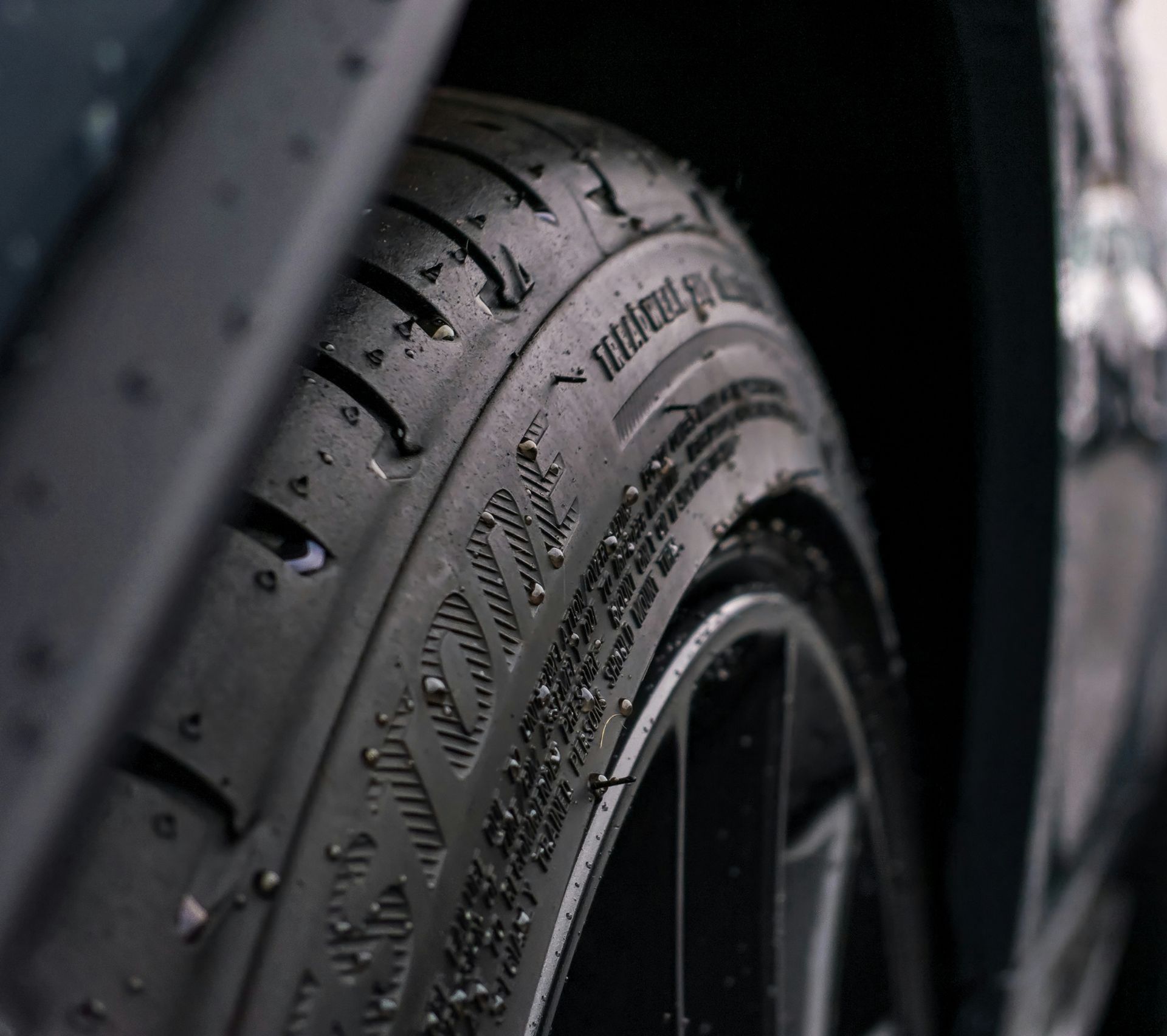
A banda de rodagem dos pneus é projetada especificamente para canalizar a água para longe do pneu enquanto ele roda sobre o pavimento molhado. Os sulcos e canais funcionam como pequenos sistemas de drenagem, ajudando a manter o contato com a estrada.


À medida que os pneus se desgastam, esses sulcos tornam-se mais rasos e menos eficientes na remoção da água. Com menos profundidade na banda de rodagem, até mesmo uma chuva moderada pode aumentar a probabilidade de redução da tração.


As inspeções regulares dos pneus permitem que os técnicos monitorem o desgaste da banda de rodagem e recomendem a substituição antes que o desempenho seja significativamente afetado.

Rainy night driving in traffic, with red taillights and blurred streetlights ahead

A pressão dos pneus é mais importante do que muitos motoristas imaginam

A calibragem correta dos pneus também contribui para um melhor desempenho em pistas molhadas.


Pneus com pressão abaixo da recomendada podem alterar o formato da área de contato com o solo, afetando a eficiência com que a água é dispersada. Pneus com pressão excessiva também podem modificar a forma como o pneu entra em contato com a estrada.

Manter a pressão recomendada pelo fabricante ajuda a otimizar a dirigibilidade, a frenagem e a tração em diversas condições de condução.


Verificar regularmente a pressão dos pneus é uma tarefa simples de manutenção que contribui tanto para a segurança quanto para a maior durabilidade dos pneus.


O que fazer se o seu veículo entrar em aquaplanagem?

Se você passar por uma situação de aquaplanagem, manter a calma é essencial.


Evite pisar bruscamente no freio ou fazer movimentos repentinos com o volante. Em vez disso, alivie gradualmente o acelerador e permita que os pneus recuperem o contato com a estrada. Mantenha o volante apontado na direção em que deseja seguir, fazendo apenas ajustes suaves e controlados à medida que a tração retorna.


Depois de recuperar o controle do veículo, reduza a velocidade e continue dirigindo com cautela até que as condições da estrada melhorem.

Rainy rural road with a car driving through mist beside autumn trees and a fenced field

Reduzindo o risco antes da chuva começar

Embora nenhum pneu possa eliminar completamente a possibilidade de aquaplanagem, a manutenção adequada pode melhorar significativamente o desempenho em pistas molhadas.


Realizar inspeções regulares nos pneus permite identificar banda de rodagem desgastada, padrões de desgaste irregular ou pressão inadequada antes que esses problemas se tornem riscos maiores à segurança. O rodízio periódico dos pneus, o alinhamento das rodas e o balanceamento também ajudam a promover um desgaste uniforme da banda de rodagem, permitindo que os pneus ofereçam o desempenho esperado durante toda a sua vida útil.


Substituir os pneus antes que a banda de rodagem esteja excessivamente desgastada também é uma medida importante para manter uma tração confiável em condições de chuva.

Car on a wet winding road through a dark forest in autumn

Dirija com confiança em todas as estações

A chuva é uma parte inevitável da condução, mas a aquaplanagem não precisa pegá-lo de surpresa. Entender como a água, a velocidade, a banda de rodagem e a pressão dos pneus trabalham em conjunto pode ajudá-lo a tomar decisões mais seguras sempre que as estradas estiverem molhadas.


Na Raymond’s Tire Shop, nossa equipe experiente está pronta para ajudá-lo a obter o máximo desempenho dos seus pneus. Se você precisa de uma inspeção dos pneus, alinhamento de rodas, balanceamento ou um novo jogo de pneus, estamos comprometidos em ajudá-lo a dirigir com confiança durante todo o ano. Entre em contato com a Raymond’s Tire Shop hoje mesmo para agendar o seu próximo serviço de pneus e garantir que o seu veículo esteja preparado para enfrentar qualquer condição que a estrada apresentar.

Dark blue car drifting on a wet road, with headlights on and water spraying from the tires.
Driver’s view from a car in heavy rain, with a hand on the steering wheel and blurred windshield.
Car splashes through a wet street at night, headlights glowing in the rain.
Rainy street view from a car, with traffic lights, wet road, and dashboard visible.
Dark car driving on a wet, winding road through a misty autumn forest
Dark sedan on a wet, winding road at night, with red taillights reflecting on the pavement.
September 11, 2026
A flat tire does not always mean the tire has to be replaced. In many cases, a small puncture can be repaired safely and returned to service. The key is where the puncture occurred, how large it is, and whether the tire suffered additional damage while losing air. That is why a professional inspection matters. Two punctures that lo ok similar from the outside may require completely different solutions once the tire is removed and examined internally. Location Matters Most One of the first things a technician looks at is where the puncture is located. Damage in the central tread area is often the best candidate for repair. This part of the tire is designed to handle contact with the road and can sometimes be repaired when the puncture is small and otherwise straightforward. Punctures near the shoulder or sidewall are much more concerning.  These areas flex significantly while the tire is moving and cannot usually be repaired safely using standard puncture-repair methods. If a nail, screw, or other object damages the sidewall or outer shoulder, replacement is often the safer option.
September 6, 2026
A wheel alignment can correct important steering and tire-angle settings, but the alignment itself depends on the suspension being in good mechanical condition. If ball joints, tie rods, control arm bushings, wheel bearings, or other components are worn, the wheels may not stay in the position the technician sets.  That is why some vehicles continue pulling , wearing tires unevenly, or developing an off-center steering wheel even after an alignment. In those cases, the problem may not be the alignment machine or the adjustment. It may be worn suspension or steering components underneath the vehicle.
August 28, 2026
When a tire repeatedly loses air but there is no obvious nail, screw, or visible puncture, the problem may be where the tire meets the wheel. This area is known as the tire bead, and a poor seal between the bead and the rim can allow air to escape gradually. Tire bead leaks are a common cause of slow pressure loss. Understanding why they happen can help drivers recognize when a tire needs professional inspection rather than repeatedly adding air. What Is the Tire Bead? The bead is the reinforced inner edge of the tire that sits tightly against the wheel rim. When a tire is properly mounted and inflated, air pressure helps hold the bead securely against the wheel, creating an airtight seal. If that sealing surface becomes damaged, dirty, corroded, or distorted, a small pathway can develop for air to escape.  Because these leaks may be very small, the tire can lose pressure over several days or weeks rather than going flat immediately.
August 23, 2026
A pothole impact can feel like a quick jolt, but the forces involved can affect several parts of the tire and wheel assembly. The faster the vehicle is moving, the less time the tire has to absorb the impact. In some cases, the damage is immediately obvious. In others, problems may not become noticeable until later. Raymond’s Tire Shop helps drivers inspect tires, wheels, balancing, and alignment after hard road impacts. Understanding what can happen during a pothole strike can make it easier to recognize when a tire needs professional attention. The Tire Is Compressed Extremely Quickly When a tire drops into a pothole and strikes the far edge, the sidewall and tread can be compressed between the road and the wheel. Tires are designed to flex, but a severe impact can exceed what the internal structure can safely absorb.  The risk can be greater when tire pressure is too low because there is less air cushioning between the road surface and the wheel. However, even a properly inflated tire can be damaged by a deep pothole at sufficient speed.
August 16, 2026
Tires are one of the most important safety components on any vehicle because they are the only parts that maintain direct contact with the road. As tires wear, their ability to grip pavement, channel water, and respond predictably can gradually decline. The challenge is that unsafe tire conditions are not always obvious until performance has already been affected.  Raymond’s Tire Shop helps drivers evaluate tread wear, tire damage, pressure issues, alignment problems, and other conditions that can affect tire safety. Knowing what to look for can help you recognize when a tire needs professional attention or replacement.
August 7, 2026
Most drivers think of tires simply as the round rubber components that allow a vehicle to roll down the road. In reality, tires are sophisticated pieces of engineering that perform several essential functions every time a vehicle is in motion. They support the weight of the vehicle, transmit steering and braking forces, absorb road irregularities, and maintain traction in changing driving conditions. Every acceleration, turn, and stop depends on these four small contact patches where the tires meet the road.  Understanding the primary functions of a tire helps drivers appreciate why routine maintenance and timely replacement are so important. Raymond’s Tire Shop helps customers choose quality tires and maintain them properly so their vehicles continue to perform safely and efficiently throughout the life of the tire.