Por qué la rotación de neumáticos es fundamental para un desgaste uniforme

Los neumáticos son uno de los componentes más importantes de cualquier vehículo, sin embargo, a menudo se pasan por alto hasta que surge un problema. Aunque muchos conductores entienden la importancia de mantener la presión adecuada o de reemplazar neumáticos desgastados, menos reconocen el valor de realizar rotaciones periódicas. La rotación de neumáticos es una tarea de mantenimiento sencilla, pero desempeña un papel clave para prolongar la vida útil, mejorar el rendimiento y mantener la seguridad general del vehículo.


Comprender por qué la rotación de neumáticos es importante puede ayudar a los conductores a proteger su inversión y garantizar que su vehículo continúe funcionando como se espera.
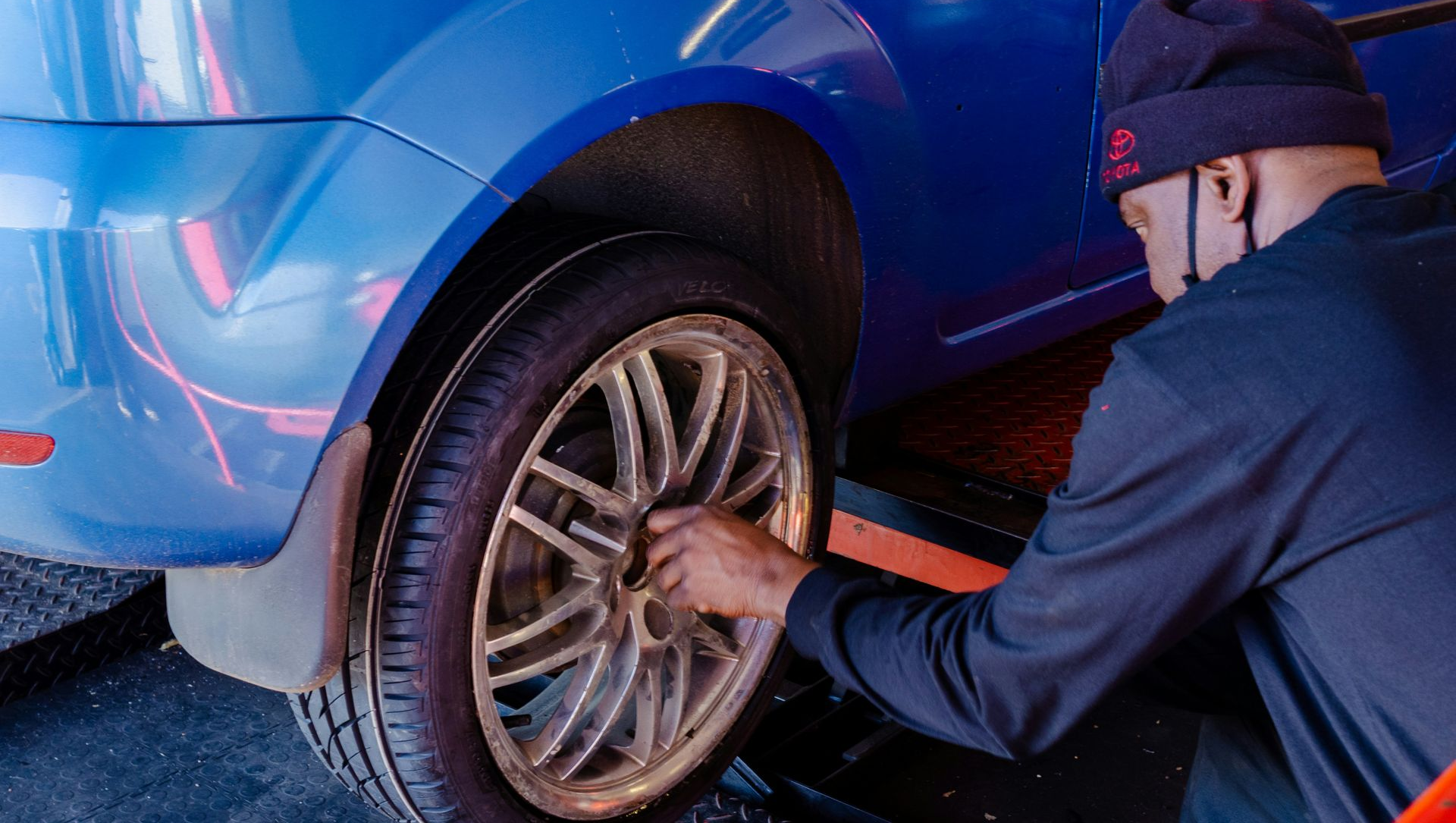
A person in a dark uniform and beanie works on the rear wheel of a blue car in an auto shop.

Qué significa la rotación de neumáticos

La rotación de neumáticos consiste en mover los neumáticos de una posición del vehículo a otra siguiendo un patrón específico. Este proceso permite que cada neumático experimente diferentes fuerzas de conducción con el tiempo.


Por ejemplo, los neumáticos delanteros en la mayoría de los vehículos se encargan de la dirección y soportan una parte importante de las fuerzas de frenado. Como resultado, tienden a desgastarse más rápidamente que los traseros. Al rotar los neumáticos regularmente, el desgaste se distribuye de manera más uniforme entre los cuatro.


Esto ayuda a evitar que un conjunto de neumáticos se desgaste mucho más rápido que los demás.

A car tire with a deep, directional tread pattern driving through fresh, white snow, leaving a clear track behind it.

Por qué los neumáticos se desgastan de forma desigual

Los neumáticos no se desgastan al mismo ritmo porque cada posición en el vehículo impone diferentes exigencias. Los neumáticos delanteros suelen estar sometidos a mayor estrés debido a la dirección y a la distribución del peso. Los traseros pueden desgastarse menos, pero aún enfrentan fuerzas distintas según el tipo de vehículo.


Los hábitos de conducción también influyen en el desgaste. Frenadas frecuentes, giros bruscos y aceleraciones rápidas pueden provocar que ciertos neumáticos se desgasten más rápidamente. Las condiciones de la carretera, incluyendo pavimento irregular y baches, también contribuyen a patrones de desgaste desigual.


Sin rotaciones regulares, estas diferencias pueden acentuarse con el tiempo.
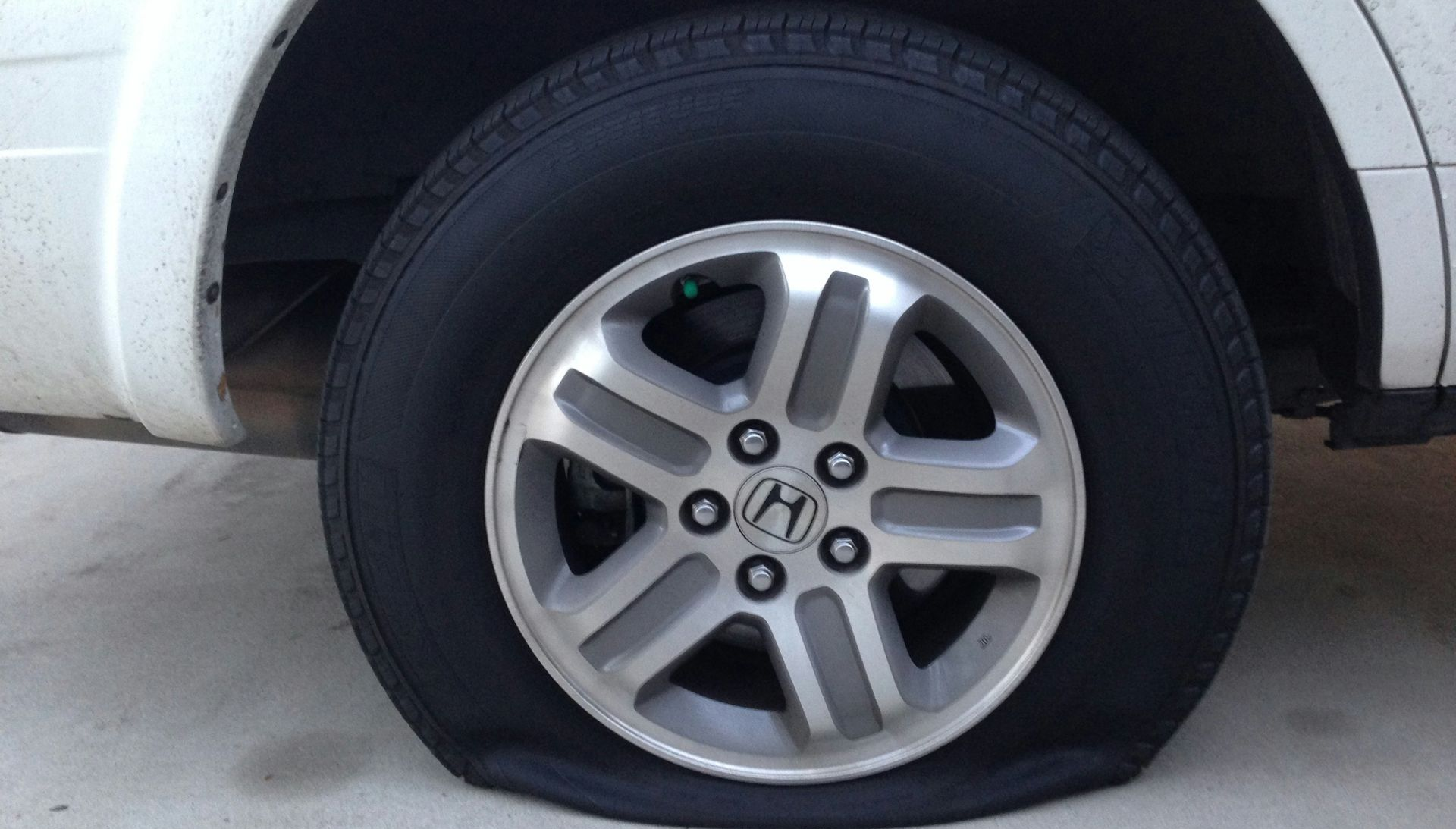
A white vehicle with a flat tire resting on a concrete surface.

Los beneficios de un desgaste uniforme

Un desgaste uniforme es esencial para mantener un rendimiento constante. Cuando los cuatro neumáticos se desgastan a un ritmo similar, el vehículo conserva un equilibrio en la tracción y el manejo.


El desgaste desigual puede reducir el agarre, especialmente en condiciones húmedas o resbaladizas. También puede afectar el rendimiento de frenado, dificultando que el vehículo se detenga de manera rápida y segura. Al rotar los neumáticos regularmente, los conductores ayudan a asegurar que todos contribuyan por igual al desempeño del vehículo.


Prolongar la vida útil de los neumáticos

Uno de los beneficios más prácticos de la rotación de neumáticos es extender su vida útil. Cuando el desgaste se distribuye de manera uniforme, ningún neumático se deteriora en exceso antes que los demás.


Esto permite reemplazar los cuatro neumáticos al mismo tiempo, en lugar de cambiar uno o dos de forma prematura. Con el tiempo, esto puede generar ahorros y facilitar una planificación de mantenimiento más predecible. La rotación regular ayuda a maximizar el valor de cada neumático al asegurar un desgaste equilibrado durante toda su vida útil.
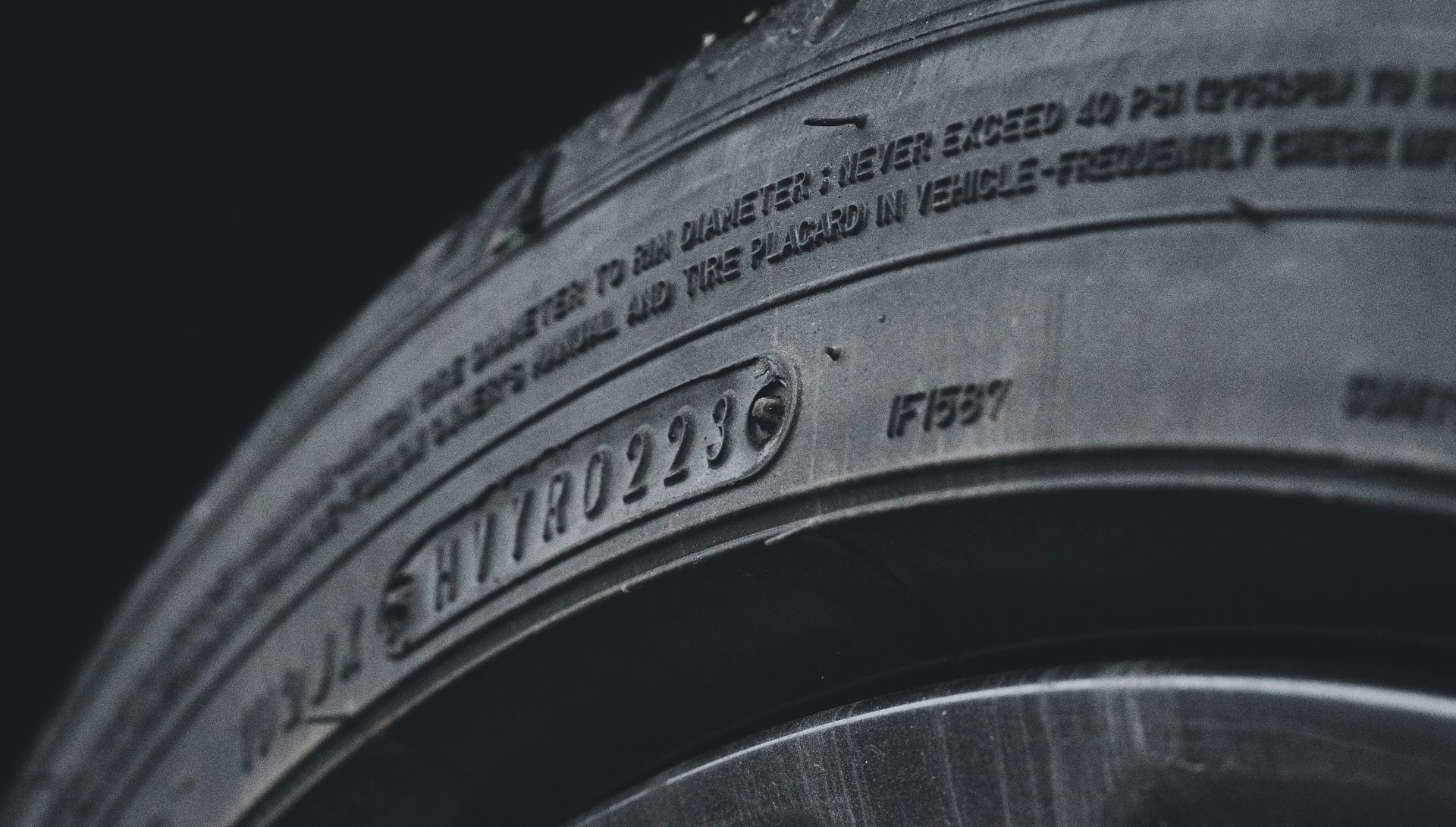
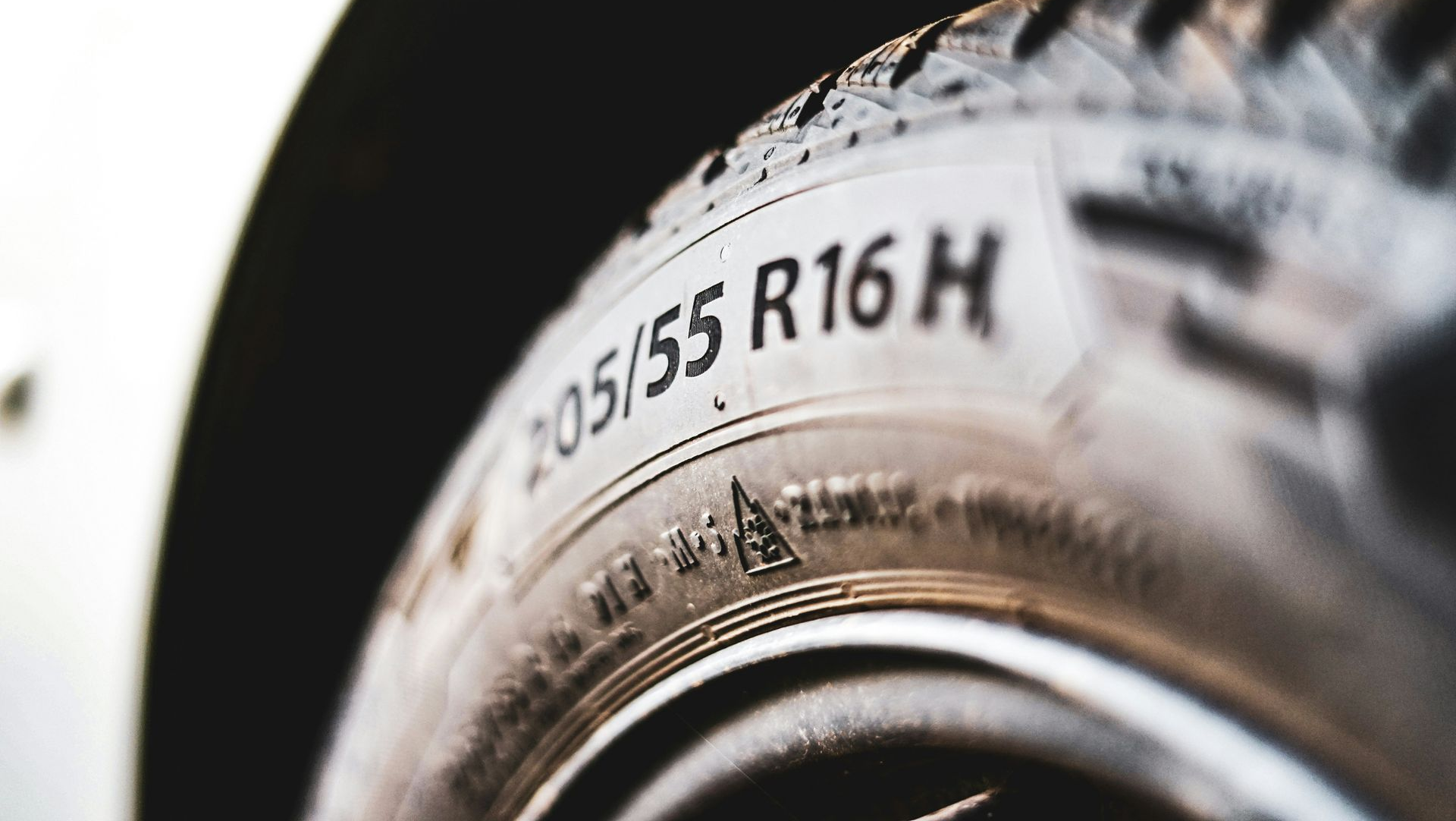
Close-up of a black tire sidewall highlighting the alphanumeric manufacturing and safety code markings.

Apoyo al rendimiento general del vehículo

Los neumáticos influyen directamente en cómo un vehículo se maneja, acelera y frena. Mantener un desgaste uniforme ayuda a garantizar un rendimiento constante en distintas condiciones de conducción.


Cuando el desgaste es desigual, puede generar una carga adicional en otros componentes, como la suspensión y el sistema de alineación. Con el tiempo, esto puede provocar la necesidad de más mantenimiento. La rotación regular contribuye a la salud general del vehículo al reducir el estrés innecesario en estos sistemas.


Cuándo rotar los neumáticos

La mayoría de los fabricantes recomienda rotar los neumáticos cada 5,000 a 7,500 millas, aunque esto puede variar según el vehículo y las condiciones de manejo. Muchos conductores optan por realizar la rotación durante visitas de mantenimiento rutinarias, como los cambios de aceite.


Seguir un programa constante de rotación ayuda a prevenir el desgaste desigual y mantiene los neumáticos funcionando como deben.
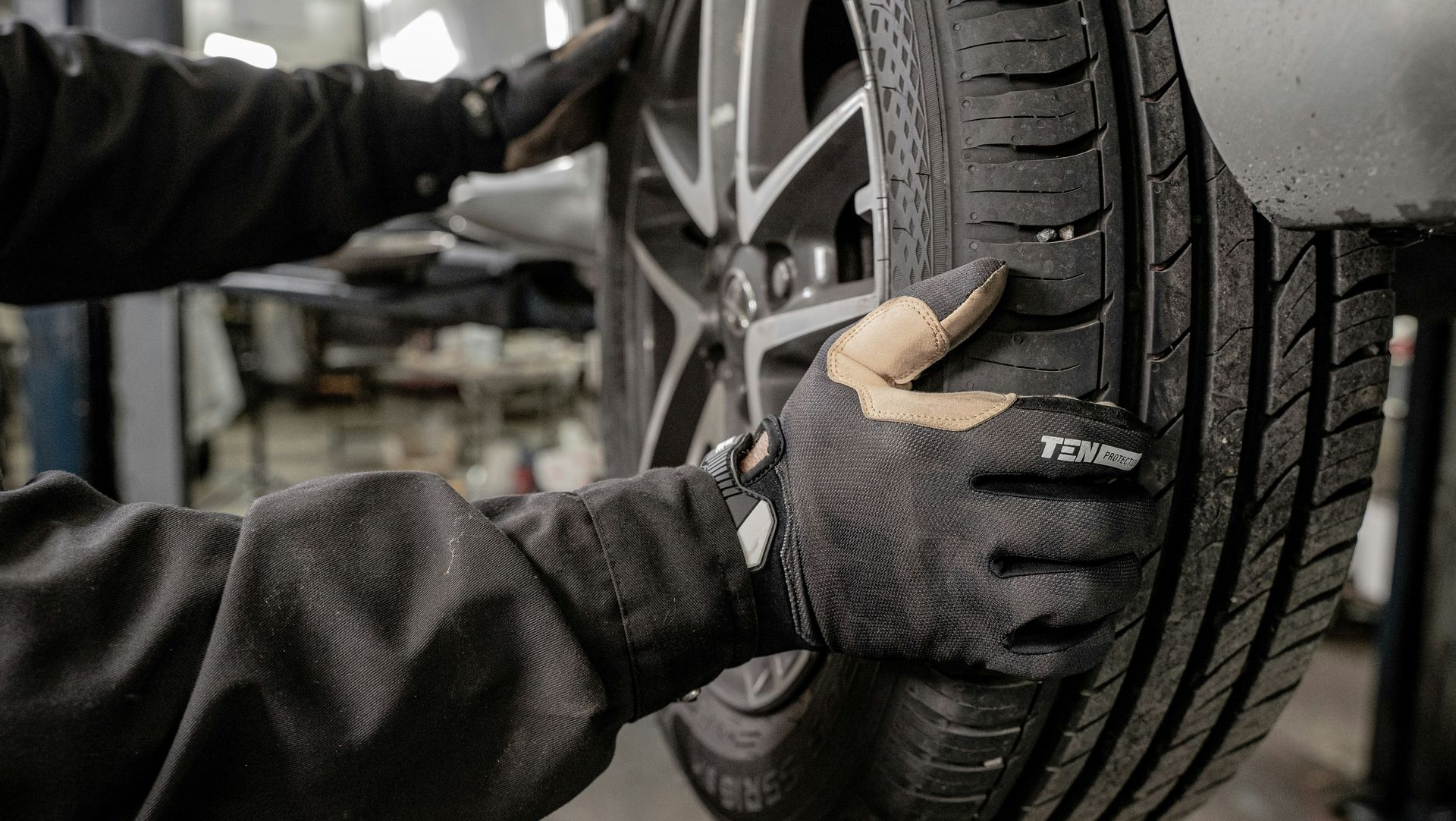
A mechanic in black workwear and gloves inspecting a car tire at a repair shop.

La importancia del servicio profesional de neumáticos

Aunque la rotación de neumáticos es un proceso sencillo, es importante que se realice correctamente. Diferentes vehículos requieren distintos patrones de rotación según factores como el tipo de neumático y la configuración del tren motriz.


En Raymond’s Tire Shop, ofrecemos servicios profesionales de rotación diseñados para mantener sus neumáticos con un desgaste uniforme y un rendimiento óptimo. Nuestro equipo se asegura de que cada neumático esté correctamente colocado y revisado para detectar signos de desgaste o daños durante el proceso.


Un paso sencillo con beneficios duraderos

La rotación de neumáticos es una tarea de mantenimiento simple, pero tiene un impacto duradero en la seguridad, el rendimiento y los costos. Al mantener un desgaste uniforme en los cuatro neumáticos, los conductores pueden prolongar su vida útil, mejorar el manejo y disfrutar de una conducción más suave.


La rotación regular es una pequeña inversión de tiempo que ayuda a proteger una de las partes más importantes de su vehículo.
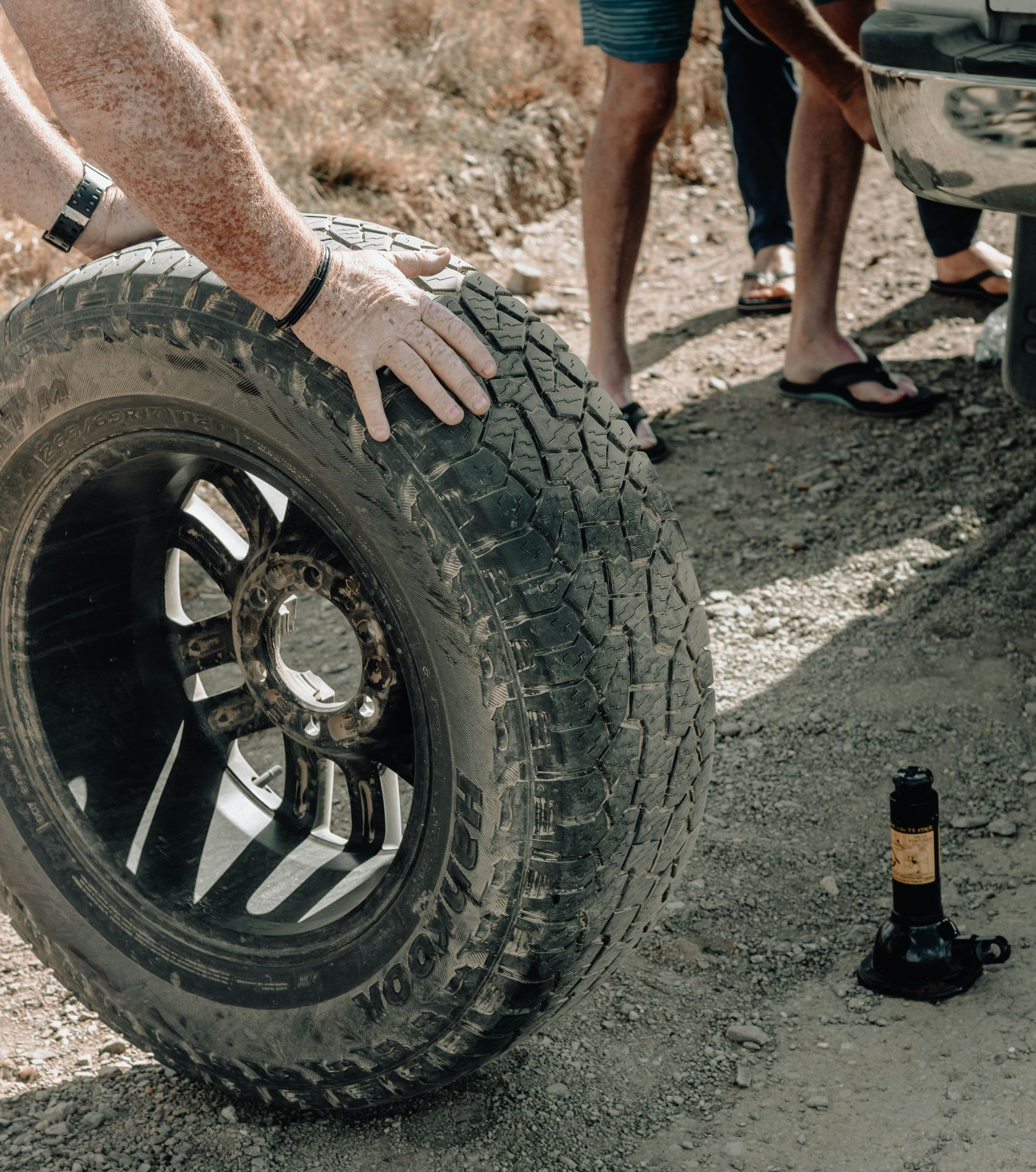
Two people changing a vehicle tire on a dirt road, with a jack positioned on the ground nearby.
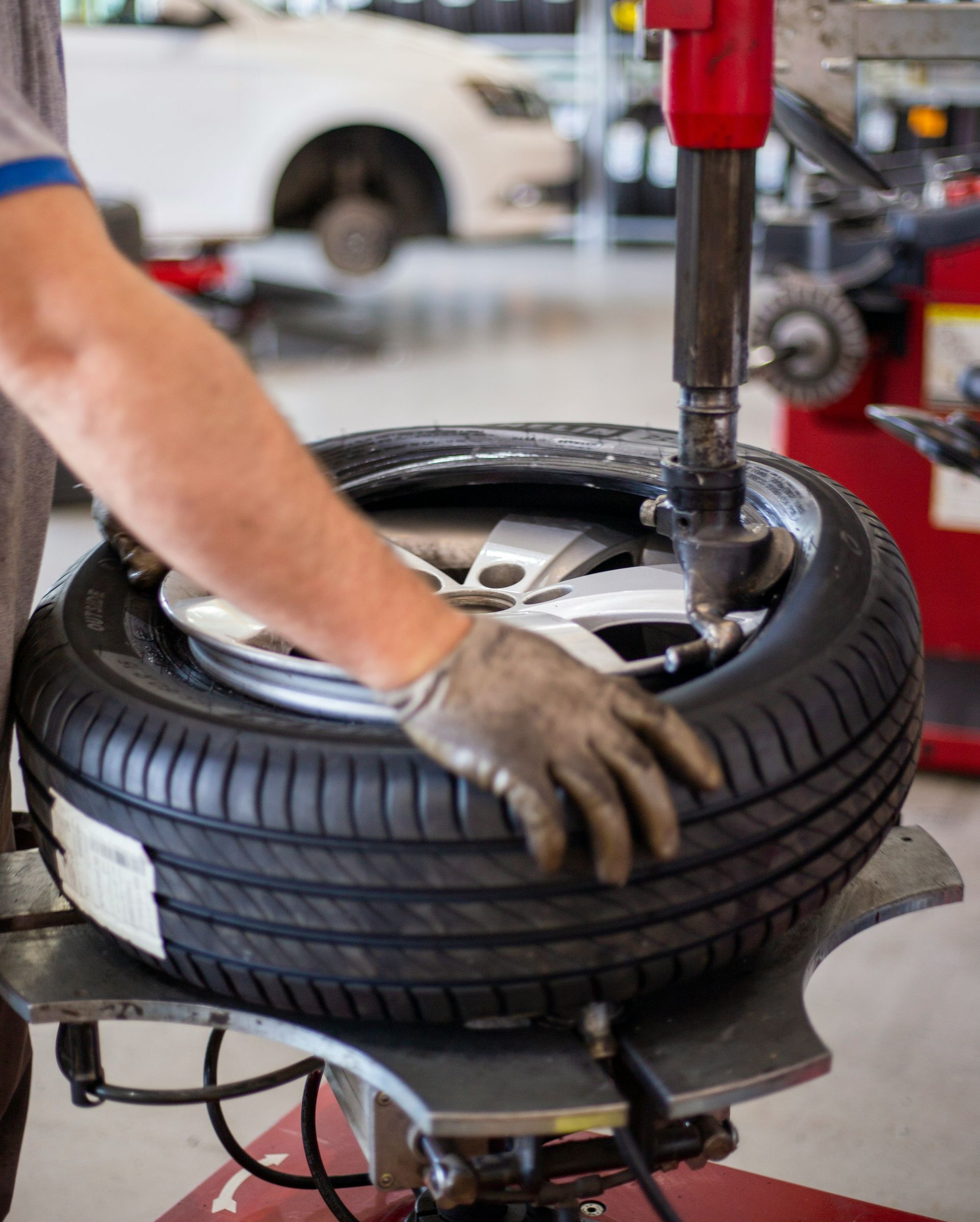
A technician wearing a glove uses a tire changing machine to mount a tire onto a car wheel in a workshop.
A low-angle, close-up shot of a dark car wheel with a metallic rim parked on a wet, grey concrete surface.
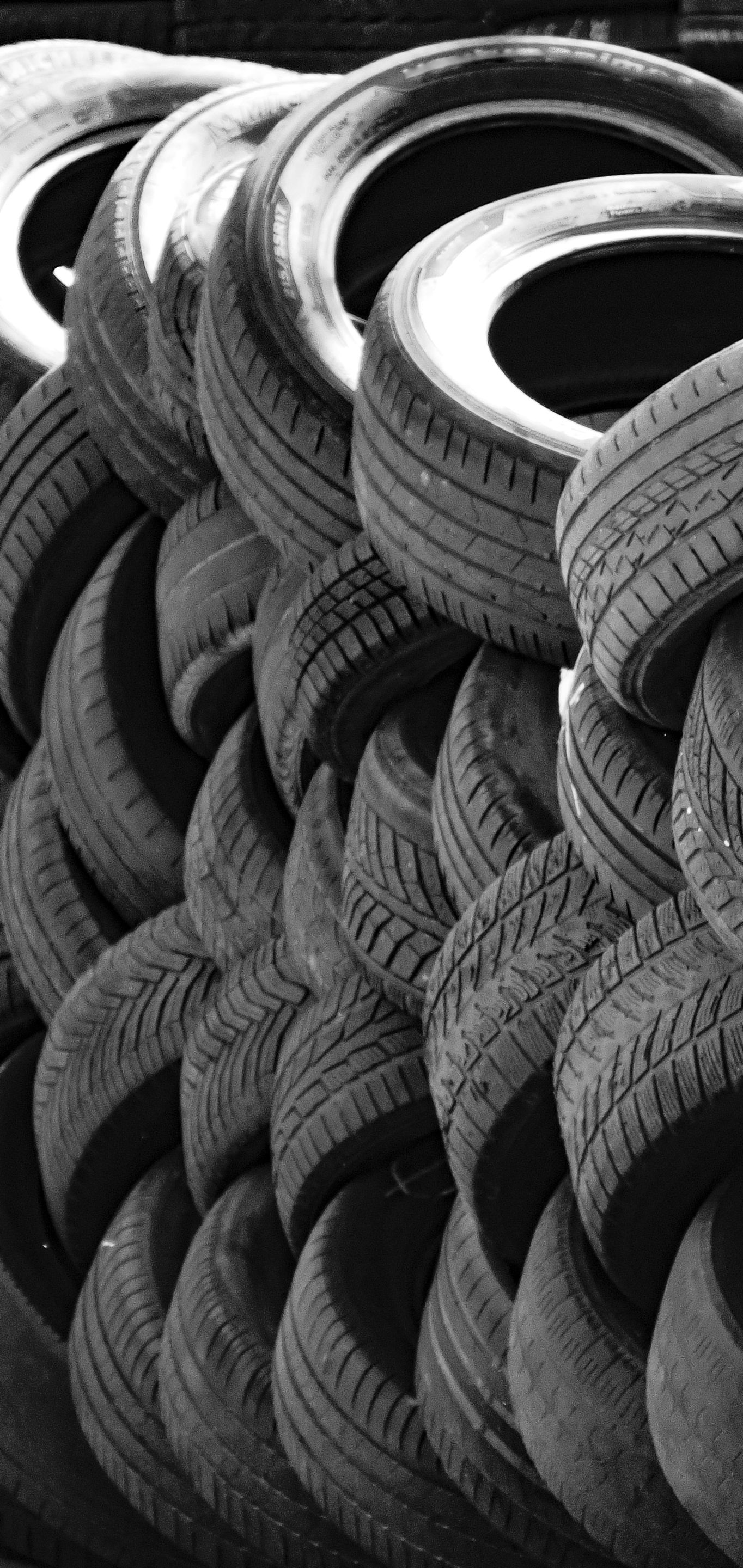
A black and white close-up of a stacked pile of used vehicle tires.
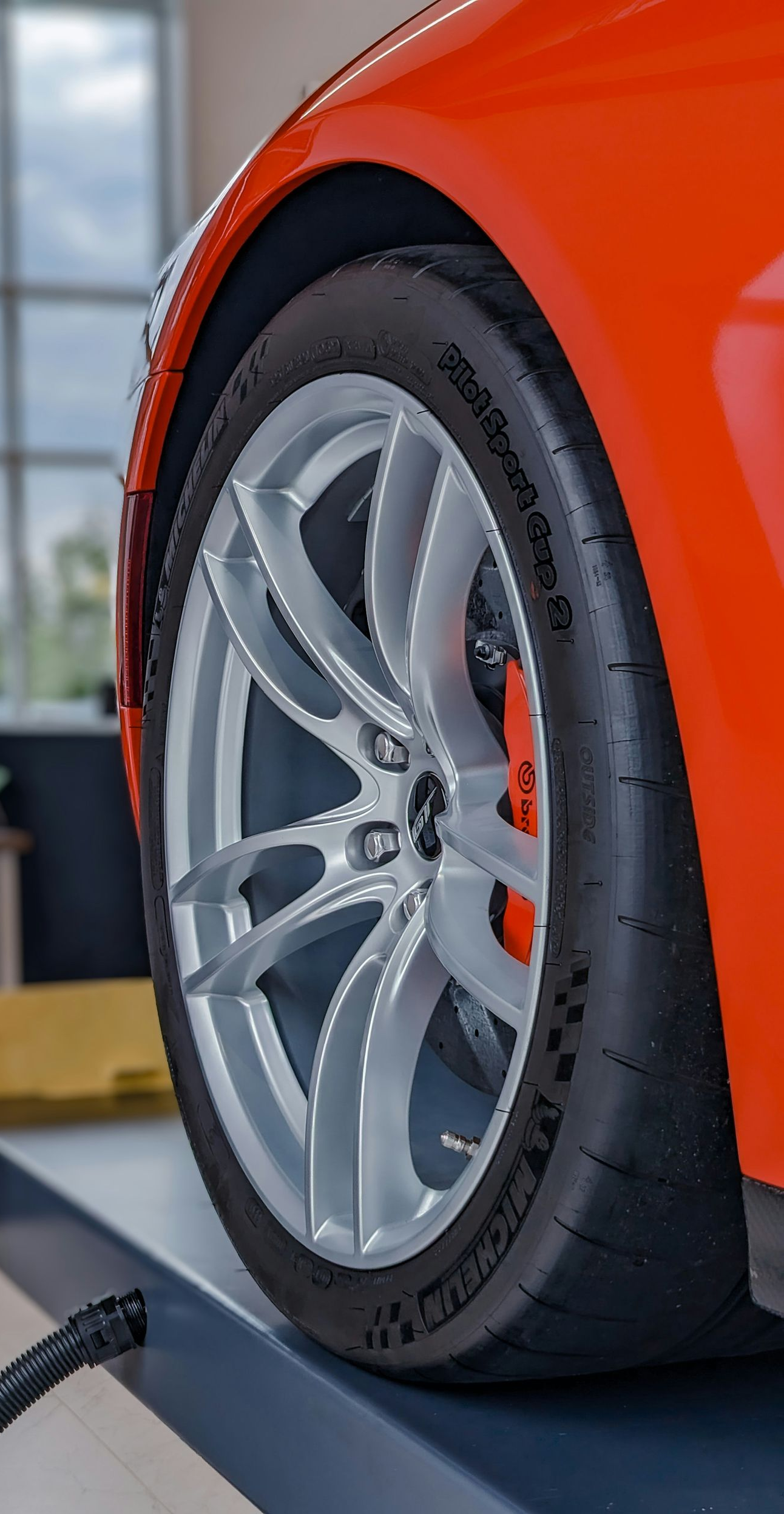
A bright orange car on a mechanic’s lift, showcasing a silver alloy wheel and high-performance tire in a shop.
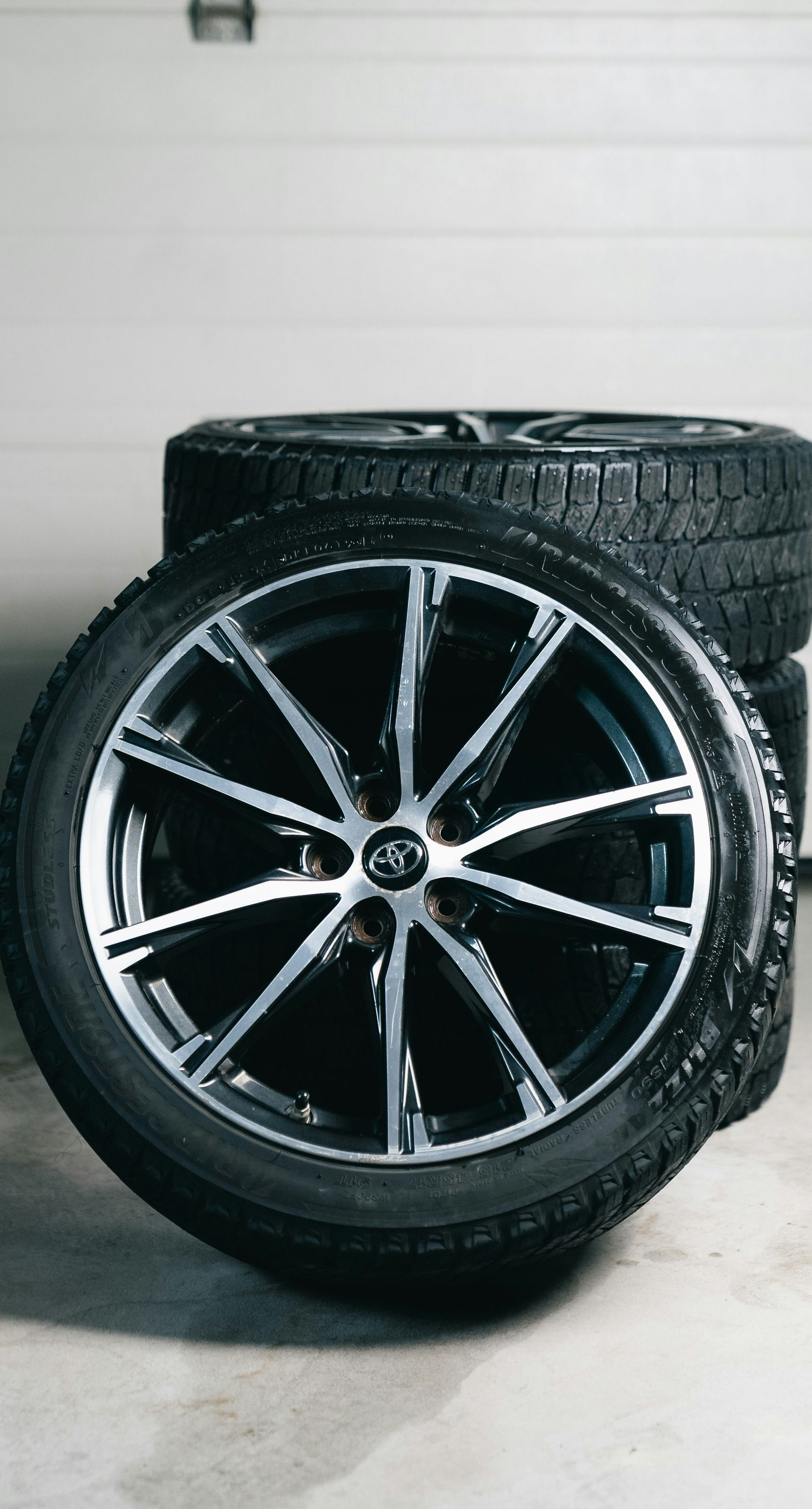
A stack of black tires with sleek, silver-accented alloy rims resting on a concrete floor in a garage.
September 23, 2026
Most drivers are familiar with the tire pressure monitoring system , or TPMS, warning light. When it stays on steadily, it usually means one or more tires may be underinflated. A flashing TPMS light often means something different. Instead of simply warning about low tire pressure, a flashing light can indicate a problem with the monitoring system itself. That could involve a sensor, sensor battery, communication issue, or another TPMS-related fault.  Knowing the difference can help drivers avoid assuming that adding air will automatically solve the problem.
September 22, 2026
Tread depth is one of the first things drivers look at when deciding whether a tire still has life left. Deep grooves can make a tire appear healthy, especially if the vehicle is not driven very often. But tread is only part of the picture. Tires age even when they are not being used heavily. Over time, rubber compounds can harden, dry out, and become less flexible. That means an older tire may still have plenty of tread while no longer performing the way it did when it was newer. Rubber Changes With Age Tires are constantly exposed to oxygen, heat, sunlight, moisture, and changing temperatures. Those conditions gradually affect the rubber. As a tire ages, the material can lose some of its elasticity. That may reduce its ability to flex properly as it rolls and responds to the road. A tire that looks acceptable at a quick glance may therefore be significantly older than its appearance suggests. This is especially important for vehicles that accumulate very few miles each year.
September 11, 2026
A flat tire does not always mean the tire has to be replaced. In many cases, a small puncture can be repaired safely and returned to service. The key is where the puncture occurred, how large it is, and whether the tire suffered additional damage while losing air. That is why a professional inspection matters. Two punctures that lo ok similar from the outside may require completely different solutions once the tire is removed and examined internally. Location Matters Most One of the first things a technician looks at is where the puncture is located. Damage in the central tread area is often the best candidate for repair. This part of the tire is designed to handle contact with the road and can sometimes be repaired when the puncture is small and otherwise straightforward. Punctures near the shoulder or sidewall are much more concerning.  These areas flex significantly while the tire is moving and cannot usually be repaired safely using standard puncture-repair methods. If a nail, screw, or other object damages the sidewall or outer shoulder, replacement is often the safer option.
September 6, 2026
A wheel alignment can correct important steering and tire-angle settings, but the alignment itself depends on the suspension being in good mechanical condition. If ball joints, tie rods, control arm bushings, wheel bearings, or other components are worn, the wheels may not stay in the position the technician sets.  That is why some vehicles continue pulling , wearing tires unevenly, or developing an off-center steering wheel even after an alignment. In those cases, the problem may not be the alignment machine or the adjustment. It may be worn suspension or steering components underneath the vehicle.
August 28, 2026
When a tire repeatedly loses air but there is no obvious nail, screw, or visible puncture, the problem may be where the tire meets the wheel. This area is known as the tire bead, and a poor seal between the bead and the rim can allow air to escape gradually. Tire bead leaks are a common cause of slow pressure loss. Understanding why they happen can help drivers recognize when a tire needs professional inspection rather than repeatedly adding air. What Is the Tire Bead? The bead is the reinforced inner edge of the tire that sits tightly against the wheel rim. When a tire is properly mounted and inflated, air pressure helps hold the bead securely against the wheel, creating an airtight seal. If that sealing surface becomes damaged, dirty, corroded, or distorted, a small pathway can develop for air to escape.  Because these leaks may be very small, the tire can lose pressure over several days or weeks rather than going flat immediately.
August 23, 2026
A pothole impact can feel like a quick jolt, but the forces involved can affect several parts of the tire and wheel assembly. The faster the vehicle is moving, the less time the tire has to absorb the impact. In some cases, the damage is immediately obvious. In others, problems may not become noticeable until later. Raymond’s Tire Shop helps drivers inspect tires, wheels, balancing, and alignment after hard road impacts. Understanding what can happen during a pothole strike can make it easier to recognize when a tire needs professional attention. The Tire Is Compressed Extremely Quickly When a tire drops into a pothole and strikes the far edge, the sidewall and tread can be compressed between the road and the wheel. Tires are designed to flex, but a severe impact can exceed what the internal structure can safely absorb.  The risk can be greater when tire pressure is too low because there is less air cushioning between the road surface and the wheel. However, even a properly inflated tire can be damaged by a deep pothole at sufficient speed.