Por Qué Los Neumáticos Más Antiguos Pueden Necesitar Reemplazo Incluso Con Una Buena Profundidad De Banda De Rodadura

Modern car interior with steering wheel, dashboard display, and center console in black and red accents

El Bajo Kilometraje No Detiene El Envejecimiento De Los Neumáticos

Algunos conductores suponen que los neumáticos duran indefinidamente si casi no se utilizan.


Ese no es el caso.


Un vehículo que pasa la mayor parte del tiempo estacionado aún puede desarrollar problemas en los neumáticos relacionados con la edad. De hecho, el uso poco frecuente a veces puede hacer que el deterioro sea más difícil de notar porque la banda de rodadura no se desgasta al mismo ritmo.


Los vehículos utilizados los fines de semana, los autos de colección, los remolques, los vehículos secundarios y los autos que solo recorren distancias cortas pueden terminar con neumáticos que parecen casi nuevos, pero que tienen muchos años.


Las Grietas Pueden Ser Una Señal De Advertencia Importante

Una señal visible del envejecimiento es la aparición de grietas.


Pueden aparecer pequeñas grietas a lo largo del costado del neumático o entre los bloques de la banda de rodadura. Esto a veces se describe como agrietamiento por exposición al clima o resequedad del caucho.


No todas las grietas superficiales significan que un neumático sea inmediatamente inseguro, pero las grietas extensas o profundas requieren atención profesional.


Los costados de los neumáticos son especialmente importantes porque se flexionan constantemente mientras el vehículo está en movimiento.


Cualquier deterioro visible en esta zona debe tomarse en serio.
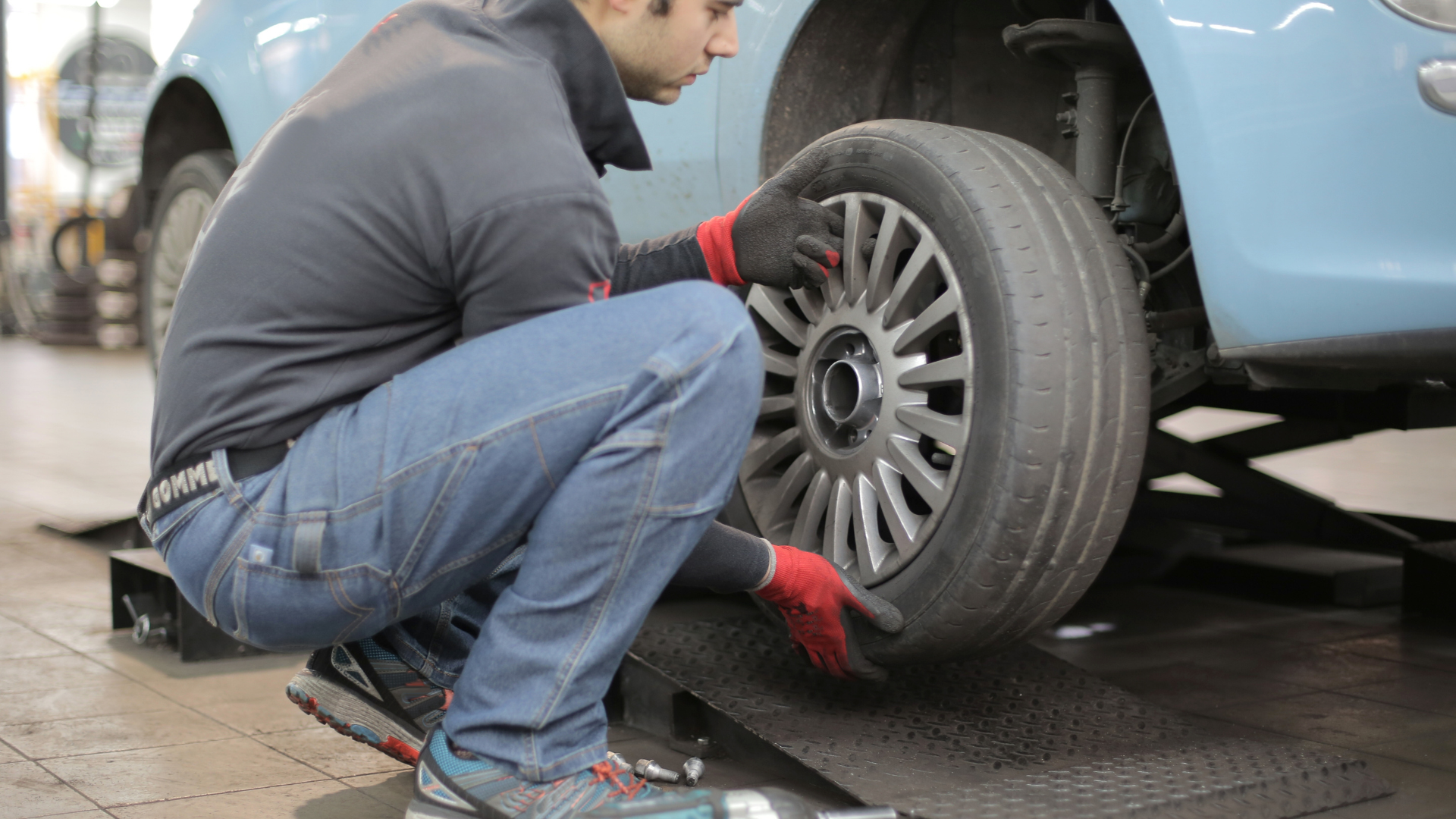
Mechanic kneeling beside a light blue car, checking or replacing a front wheel in a garage.

Los Neumáticos Más Antiguos Pueden Volverse Más Duros

A medida que el caucho envejece, puede volverse menos flexible.


Esto es importante porque el agarre de los neumáticos depende en parte de la capacidad del caucho para interactuar con el pavimento.


Un neumático endurecido puede no responder tan bien en condiciones de humedad, durante un frenado de emergencia o al tomar curvas.


Esto puede ser difícil de detectar durante la conducción normal del día a día.

El neumático puede sentirse bien hasta que de repente se necesita mayor tracción.


Las Condiciones De Almacenamiento Son Importantes

El envejecimiento de los neumáticos está influenciado por dónde y cómo se almacena un vehículo.


La exposición prolongada a la luz solar directa, altas temperaturas o condiciones climáticas adversas puede acelerar el deterioro.


Los vehículos guardados en garaje pueden tener una mejor protección, pero el almacenamiento por sí solo no detiene completamente el envejecimiento.


Los neumáticos aún deben evaluarse según su edad, condición, daños visibles y las recomendaciones del fabricante.


Por eso el código de fecha del neumático es importante.
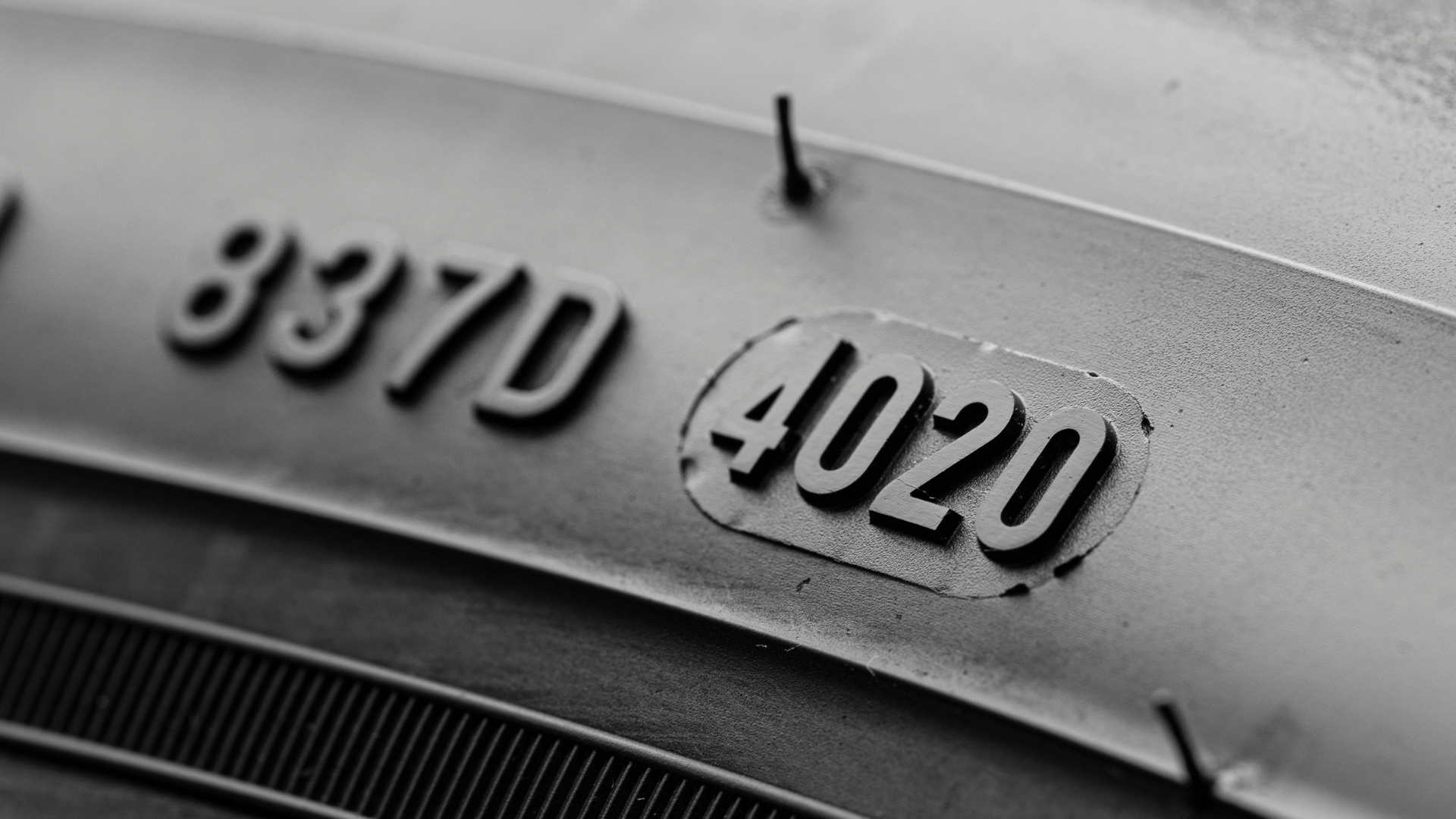
Close-up of a black metal surface stamped with raised numbers “8370” and “402U”

Revise El Código De Fecha Del Neumático

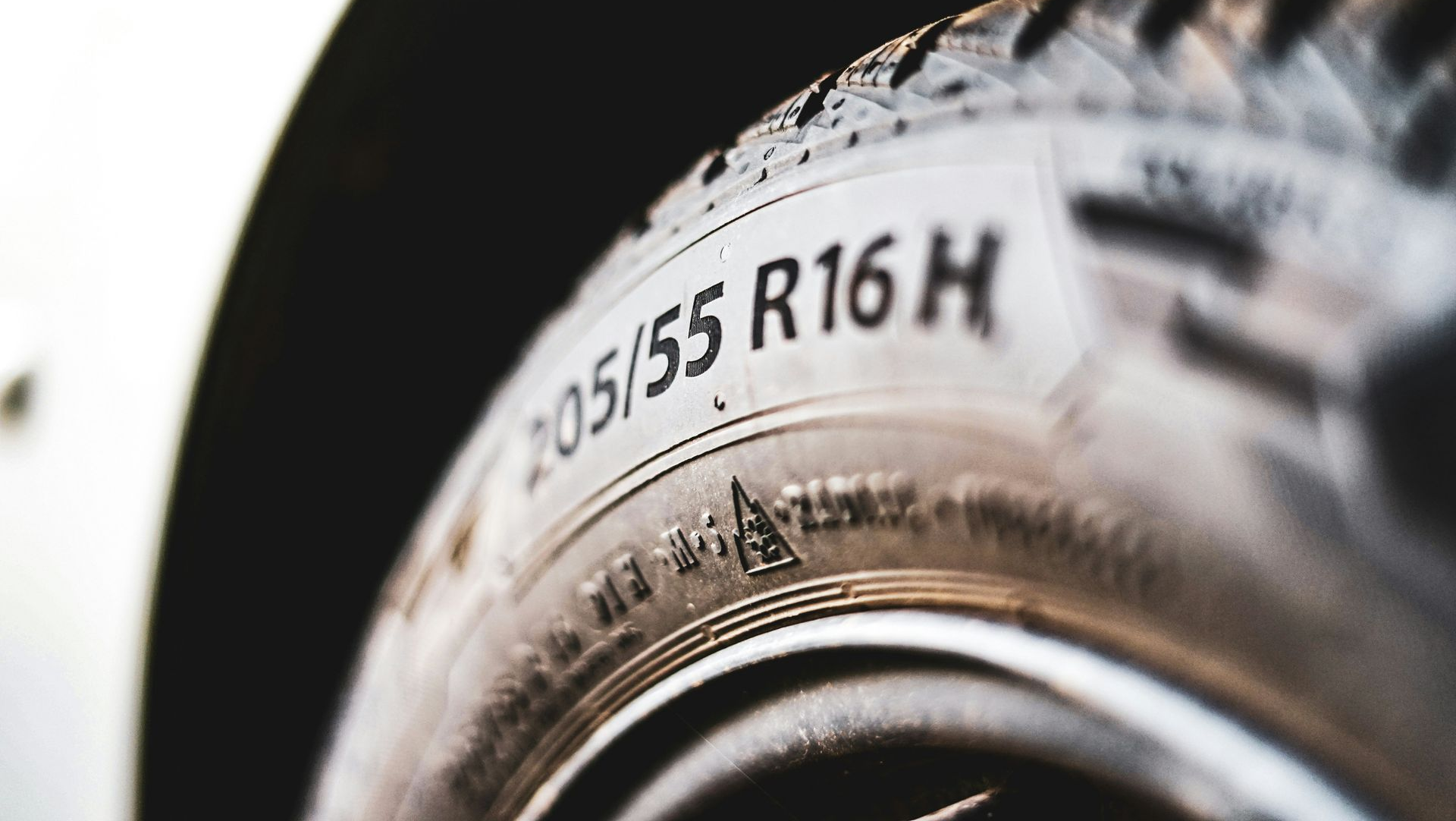
Cada neumático tiene un código del Department of Transportation grabado en el costado.


Los últimos cuatro dígitos identifican cuándo fue fabricado el neumático.


Por ejemplo, un código que termina en 2322 significa que el neumático fue fabricado durante la semana 23 del año 2022.


Esto puede ser útil al comprar un vehículo usado, inspeccionar un neumático de repuesto o intentar determinar la antigüedad real de un juego de neumáticos existente.


Los conductores a veces se sorprenden al descubrir que los neumáticos de un vehículo con poco kilometraje son mucho más antiguos de lo esperado.


Los Neumáticos De Repuesto También Envejecen

Los neumáticos de repuesto son fáciles de olvidar porque es posible que nunca lleguen a tocar la carretera.


Pero también envejecen.


Un neumático de repuesto que ha estado guardado en el maletero o debajo de un vehículo durante muchos años no debe considerarse automáticamente listo para su uso.


Su presión, antigüedad, condición del costado e integridad general deben revisarse periódicamente.


Descubrir que un neumático de repuesto antiguo ya no es confiable durante una emergencia en carretera no es lo ideal.
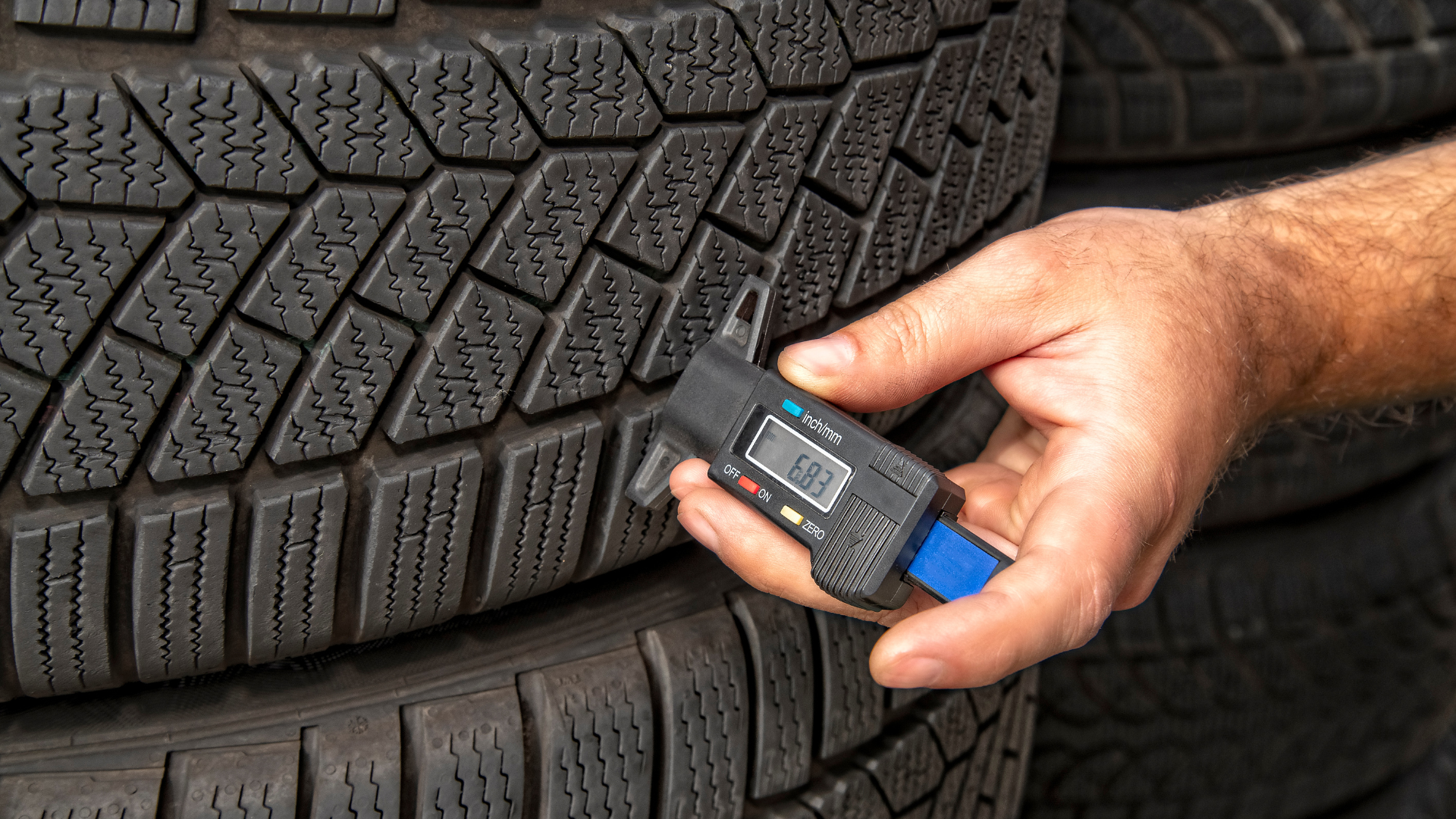
Hand checking tire tread depth with a gauge on a car tire.

La Profundidad De La Banda De Rodadura Sigue Siendo Importante

La edad no reemplaza una inspección normal de la banda de rodadura.


Ambos factores son importantes.


Un neumático puede necesitar reemplazo porque la banda de rodadura está desgastada, porque el caucho ha envejecido, porque el costado está dañado o debido a una combinación de estos problemas.


La decisión más segura se toma al revisar todo el neumático en lugar de depender de una sola medida.


Haga Evaluar Los Neumáticos Más Antiguos

Si sus neumáticos todavía tienen una buena banda de rodadura, pero han estado instalados en el vehículo durante muchos años, puede ser momento de realizar una inspección más detallada.


Raymond’s Tire Shop puede evaluar la antigüedad de los neumáticos, el estado de la banda de rodadura, los costados, la presión, los patrones de desgaste y otros factores que afectan el rendimiento de los neumáticos.


Si no está seguro de cuántos años tienen sus neumáticos o si todavía son adecuados para la conducción diaria, comuníquese con Raymond’s Tire Shop para una inspección. Reemplazar un neumático envejecido antes de que el desgaste visible sea grave puede ayudar a reducir la posibilidad de descubrir un problema cuando más necesite el neumático.
September 22, 2026
Tread depth is one of the first things drivers look at when deciding whether a tire still has life left. Deep grooves can make a tire appear healthy, especially if the vehicle is not driven very often. But tread is only part of the picture. Tires age even when they are not being used heavily. Over time, rubber compounds can harden, dry out, and become less flexible. That means an older tire may still have plenty of tread while no longer performing the way it did when it was newer. Rubber Changes With Age Tires are constantly exposed to oxygen, heat, sunlight, moisture, and changing temperatures. Those conditions gradually affect the rubber. As a tire ages, the material can lose some of its elasticity. That may reduce its ability to flex properly as it rolls and responds to the road. A tire that looks acceptable at a quick glance may therefore be significantly older than its appearance suggests. This is especially important for vehicles that accumulate very few miles each year.
September 11, 2026
A flat tire does not always mean the tire has to be replaced. In many cases, a small puncture can be repaired safely and returned to service. The key is where the puncture occurred, how large it is, and whether the tire suffered additional damage while losing air. That is why a professional inspection matters. Two punctures that lo ok similar from the outside may require completely different solutions once the tire is removed and examined internally. Location Matters Most One of the first things a technician looks at is where the puncture is located. Damage in the central tread area is often the best candidate for repair. This part of the tire is designed to handle contact with the road and can sometimes be repaired when the puncture is small and otherwise straightforward. Punctures near the shoulder or sidewall are much more concerning.  These areas flex significantly while the tire is moving and cannot usually be repaired safely using standard puncture-repair methods. If a nail, screw, or other object damages the sidewall or outer shoulder, replacement is often the safer option.
September 6, 2026
A wheel alignment can correct important steering and tire-angle settings, but the alignment itself depends on the suspension being in good mechanical condition. If ball joints, tie rods, control arm bushings, wheel bearings, or other components are worn, the wheels may not stay in the position the technician sets.  That is why some vehicles continue pulling , wearing tires unevenly, or developing an off-center steering wheel even after an alignment. In those cases, the problem may not be the alignment machine or the adjustment. It may be worn suspension or steering components underneath the vehicle.
August 28, 2026
When a tire repeatedly loses air but there is no obvious nail, screw, or visible puncture, the problem may be where the tire meets the wheel. This area is known as the tire bead, and a poor seal between the bead and the rim can allow air to escape gradually. Tire bead leaks are a common cause of slow pressure loss. Understanding why they happen can help drivers recognize when a tire needs professional inspection rather than repeatedly adding air. What Is the Tire Bead? The bead is the reinforced inner edge of the tire that sits tightly against the wheel rim. When a tire is properly mounted and inflated, air pressure helps hold the bead securely against the wheel, creating an airtight seal. If that sealing surface becomes damaged, dirty, corroded, or distorted, a small pathway can develop for air to escape.  Because these leaks may be very small, the tire can lose pressure over several days or weeks rather than going flat immediately.
August 23, 2026
A pothole impact can feel like a quick jolt, but the forces involved can affect several parts of the tire and wheel assembly. The faster the vehicle is moving, the less time the tire has to absorb the impact. In some cases, the damage is immediately obvious. In others, problems may not become noticeable until later. Raymond’s Tire Shop helps drivers inspect tires, wheels, balancing, and alignment after hard road impacts. Understanding what can happen during a pothole strike can make it easier to recognize when a tire needs professional attention. The Tire Is Compressed Extremely Quickly When a tire drops into a pothole and strikes the far edge, the sidewall and tread can be compressed between the road and the wheel. Tires are designed to flex, but a severe impact can exceed what the internal structure can safely absorb.  The risk can be greater when tire pressure is too low because there is less air cushioning between the road surface and the wheel. However, even a properly inflated tire can be damaged by a deep pothole at sufficient speed.
August 16, 2026
Tires are one of the most important safety components on any vehicle because they are the only parts that maintain direct contact with the road. As tires wear, their ability to grip pavement, channel water, and respond predictably can gradually decline. The challenge is that unsafe tire conditions are not always obvious until performance has already been affected.  Raymond’s Tire Shop helps drivers evaluate tread wear, tire damage, pressure issues, alignment problems, and other conditions that can affect tire safety. Knowing what to look for can help you recognize when a tire needs professional attention or replacement.